Representative Jeremiah Wadsworth
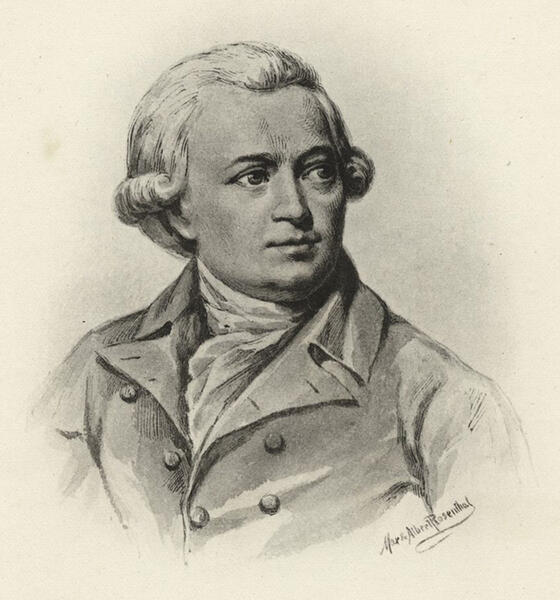
Here you will find contact information for Representative Jeremiah Wadsworth, including email address, phone number, and mailing address.
| Name | Jeremiah Wadsworth |
| Position | Representative |
| State | Connecticut |
| District | -1 |
| Party | Unknown |
| Status | Former Representative |
| Term Start | March 4, 1789 |
| Term End | March 3, 1795 |
| Terms Served | 3 |
| Born | July 12, 1743 |
| Gender | Male |
| Bioguide ID | W000013 |
About Representative Jeremiah Wadsworth
Jeremiah Wadsworth (July 12, 1743 – April 30, 1804) was an American sea captain, merchant, and statesman from Hartford, Connecticut, who profited from his position as a government official charged with supplying the Continental Army and later served as a Representative from Connecticut in the United States Congress from 1789 to 1795. He was born in Hartford, the son of Daniel Wadsworth and Abigail (née Talcott) Wadsworth, and was a descendant of William Wadsworth, one of the founders of Hartford and a pastor of the town’s Center Congregational Church. Like many members of Connecticut’s colonial elite, his family background placed him within the social and economic leadership of the colony.
For health reasons, Wadsworth went to sea in 1761 at the age of eighteen, beginning his maritime career as a regular sailor on one of his uncle’s ships. Over time he advanced through the ranks, eventually becoming first mate and then captain. He made his fortune in the West India trade, building both commercial experience and capital that would later underpin his role as a major wartime contractor and postwar businessman. In 1767 he married Mehithabel Russell, daughter of William H. Russell and Mary (née Pierpont) Russell, further cementing his ties to prominent New England families.
With the outbreak of the American Revolutionary War, Wadsworth’s business skills and shipping experience drew him into public service in military supply. Early in the conflict he was appointed to a committee charged with buying 5,000 pairs of yarn stockings for the army, which had already been sent to Canada. He served on another committee to procure 1,800 pounds of “lawful money in specie” in exchange for bills for use by the army. The Connecticut General Assembly later commissioned him, together with Colonel Jonathan Fitch, to obtain a large number of tin kettles for the troops. He was next directed to purchase as much pork as he could, both to provision the American army and to keep supplies out of British hands. Having served effectively in these assignments, Congress elected him Deputy Commissary General of Purchases on June 17, 1777, a post he resigned in August. When Congress reorganized the supply system, he became Commissary General in April 1778, resigning that position in December 1779. Reaching the rank of colonel, he subsequently served as commissary for the French forces under Comte de Rochambeau until the end of the war and traveled to Paris in the summer of 1783 to report to the French government on his activities. He is said to have turned a good profit for himself in these supply transactions. During this period he formed investment partnerships with his close friend General Nathanael Greene, who was then serving as Quartermaster General of the Continental Army.
Wadsworth’s wealth and status were also tied to slavery, in common with many of Connecticut’s elite of the era. He owned slaves, at one point purchasing an entire family that included Peleg Nott, who later became a Black Governor of Connecticut, an informal office within the state’s Black community. Wadsworth freed Nott around 1780. For a time he owned a 6,600‑acre plantation in South Carolina, along with the 129 enslaved people who worked it. After the war he expanded his business interests and, according to historian North Callahan, became a “pioneer in banking, insurance, and the breeding of cattle.” He served as the second president of the Bank of New York from 1785 to 1786, reflecting his growing prominence in early American finance and commerce.
In the political sphere, Wadsworth represented Connecticut in both the Continental Congress and the United States House of Representatives. He was a member of the Continental Congress in 1788 and also served that year as a member of the Connecticut convention that ratified the United States Constitution, participating in the critical debates over the new federal framework. Following the establishment of the federal government, he was elected as a Representative from Connecticut in the United States Congress, serving from 1789 to 1795. During these three terms in the House of Representatives, he contributed to the legislative process and represented the interests of his Connecticut constituents during a formative period in American national governance. Although he initially lost reelection in 1790, he was specially reelected when his designated successor, Pierpont Edwards, declined to take his seat. A member of an emerging national political class, Wadsworth’s specific party affiliation in some contemporary records is unclear, and he has been described in later summaries as a member of an “Unknown Party,” but he was closely aligned with the commercial and Federalist interests of his state.
After leaving the U.S. House of Representatives in 1795, Wadsworth remained active in Connecticut politics and public affairs. He served in the Connecticut House of Representatives in 1795 and was a member of the state Executive Council from 1795 to 1801. During this period he also served as a judge of the Connecticut Supreme Court of Errors, then the state’s highest appellate tribunal, holding judicial responsibilities alongside his executive duties. In 1797 President George Washington appointed him Treaty Commissioner at the Treaty of Big Tree, negotiated between the United States and the Seneca nation in western New York, where he helped oversee the complex land and diplomatic arrangements that opened large tracts of territory to American settlement.
In his private life, Wadsworth established a substantial household in Hartford. His domestic arrangements were later described by writer Lydia Sigourney, who portrayed the scale and style of his establishment. Near his own residence he built two mansions for his children: one for his daughter Catharine, who married Nathaniel Terry, and one for his son Daniel Wadsworth, who would become a notable patron of the arts in Hartford. These family residences reflected both his wealth and his desire to create a lasting presence for his descendants in the city.
Jeremiah Wadsworth died in Hartford, Connecticut, on April 30, 1804, and was interred in the Ancient Burying Ground there. His memory endured into the twentieth century; during World War II, the United States Liberty ship SS Jeremiah Wadsworth was named in his honor, recognizing his role as a Revolutionary-era supplier, merchant, and early national legislator.