Senator Jesse Bledsoe
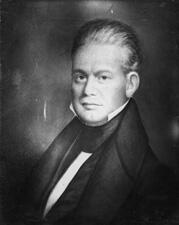
Here you will find contact information for Senator Jesse Bledsoe, including email address, phone number, and mailing address.
| Name | Jesse Bledsoe |
| Position | Senator |
| State | Kentucky |
| Party | Republican |
| Status | Former Representative |
| Term Start | May 24, 1813 |
| Term End | March 3, 1815 |
| Terms Served | 1 |
| Born | April 6, 1776 |
| Gender | Male |
| Bioguide ID | B000554 |
About Senator Jesse Bledsoe
Jesse Bledsoe (April 6, 1776 – June 25, 1836) was a slave owner, lawyer, jurist, and United States Senator from Kentucky. He was born in Culpeper County, Virginia, in 1776. When he was very young, his family migrated with a Baptist congregation through the Cumberland Gap into Kentucky, a movement characteristic of early westward expansion. Many of the adults in this traveling congregation were enslaved African Americans, reflecting the entrenchment of slavery in the social and economic life of the migrating community in which Bledsoe was raised.
Bledsoe pursued his education in Kentucky, attending Transylvania Seminary and later Transylvania University in Lexington, where he studied law. He was admitted to the bar around 1800 and commenced legal practice, establishing himself in the growing legal and political circles of the state. His training at Transylvania, then a leading institution in the West, helped position him for a prominent role in Kentucky’s early legal and political development.
Bledsoe’s public career began in state office. In 1808, he was appointed Secretary of State of Kentucky, a post that placed him at the center of the state’s executive administration. He later served as a member of the Kentucky House of Representatives in 1812, further consolidating his influence in state politics. His legislative experience in the Kentucky House helped prepare him for national office at a time when Kentucky was becoming an increasingly important voice in the young republic.
Bledsoe was elected as a Democratic Republican (often referred to at the time as a Republican) to the United States Senate from Kentucky and served from March 4, 1813, until his resignation on December 24, 1814. His single term in the Senate, which is often described as running from 1813 to 1815, coincided with the War of 1812, a significant period in American history marked by conflict with Great Britain and debates over national defense, trade, and expansion. As a member of the Senate, Bledsoe participated in the legislative process and represented the interests of his Kentucky constituents during this critical wartime period. After leaving the Senate, he returned to state politics and served as a member of the Kentucky Senate from 1817 to 1820. In 1820, he was a member of the Electoral College and cast his vote for President James Monroe, reflecting his continued engagement in national affairs through the presidential election process.
In addition to his legislative roles, Bledsoe held important judicial and academic positions. He served as judge of the Lexington circuit in 1822, a role that underscored his standing as a prominent jurist in Kentucky. He settled in Lexington and became a professor of law at Transylvania University, contributing to the education and training of a new generation of lawyers in the state. His legal scholarship and teaching extended his influence beyond the courtroom and legislature into the intellectual life of the region.
Later in life, Bledsoe underwent a notable personal and professional transformation. He became a minister in the Disciples Church, aligning himself with the emerging Disciples of Christ movement that was gaining adherents in the American frontier. In 1833, he moved from Kentucky to Mississippi, and in 1835 he relocated again, this time to Texas, then still a Mexican territory on the eve of revolution. He died near Nacogdoches, Texas, on June 25, 1836, under circumstances that his contemporaries and relatives described as a significant fall from grace, suggesting a troubled and difficult final chapter to an otherwise distinguished public career.
Bledsoe’s personal character and family connections were well known to his contemporaries. Sometimes described as a volatile figure, he earned the sobriquet “Hot headed” Jesse Bledsoe, a reputation that reflected his temperament in both political and personal affairs. Through his extended family, he was connected to several notable figures in Southern and frontier politics and law. He was the maternal uncle of Robert Emmett Bledsoe Baylor, who studied law under him and later became a prominent jurist and namesake of Baylor University; Walker Keith Baylor, who served in both chambers of the Alabama Legislature and as a judge; Thomas Chilton, who, like Bledsoe, represented Kentucky in the United States Congress; and William Parish Chilton, who served as a provisional congressman of the Confederacy from Alabama. These connections, together with his own varied career as lawyer, legislator, judge, professor, and minister, made Jesse Bledsoe a significant, if complex, figure in the early political and legal history of Kentucky and the American frontier.