Senator Jesse Houghton Metcalf
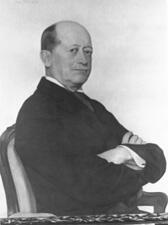
Here you will find contact information for Senator Jesse Houghton Metcalf, including email address, phone number, and mailing address.
| Name | Jesse Houghton Metcalf |
| Position | Senator |
| State | Rhode Island |
| Party | Republican |
| Status | Former Representative |
| Term Start | November 5, 1924 |
| Term End | January 3, 1937 |
| Terms Served | 3 |
| Born | November 16, 1860 |
| Gender | Male |
| Bioguide ID | M000670 |
About Senator Jesse Houghton Metcalf
Jesse Houghton Metcalf (November 16, 1860 – October 9, 1942) was an American politician and industrialist who served as a United States senator from Rhode Island from 1924 to 1937. A member of the Republican Party, he represented Rhode Island in the Senate for three terms during a significant period in American history, contributing to the legislative process and participating actively in the democratic governance of the nation.
Metcalf was born in Providence, Rhode Island, where he was educated in private schools. He pursued specialized training in textile manufacturing in Yorkshire, England, reflecting both his family background and his own professional interests. His father, Jesse Metcalf, was a textile manufacturer, and his mother, Helen Adelia Rowe Metcalf, was the co-founder of the Rhode Island School of Design, an institution that would become central to the cultural and artistic life of the state. Returning from England, Metcalf engaged in textile manufacturing himself, continuing the family’s involvement in the industry. In 1889 he received a large bequest from his father’s business partner, Henry J. Steere, which further strengthened his position in Rhode Island’s economic and civic life.
Metcalf’s early public service began at the municipal level. He served on the Providence Common Council from 1888 to 1892, participating in the governance of the city during a period of industrial and urban growth. He was elected to the Rhode Island House of Representatives, serving from 1889 to 1891 and again in 1907, where he gained experience in state-level legislation and public policy. Beyond elective office, he held several important appointed positions in Rhode Island’s public administration. He was chairman of the Metropolitan Park Commission of Rhode Island from 1909 to 1924, overseeing the development and preservation of public parklands, and he served as a member of the state penal and charitable board from 1917 to 1923, contributing to oversight of correctional and welfare institutions.
In addition to his governmental roles, Metcalf was deeply involved in the civic, educational, and medical institutions of Rhode Island. He served as president of Rhode Island Hospital, reflecting his engagement with public health and charitable work. He was a trustee of the Rhode Island School of Design in Providence, continuing the family’s longstanding association with the institution founded in part by his mother, and he also served as a trustee of Brown University, one of the nation’s leading institutions of higher education. Metcalf was a part owner of The Providence Journal, giving him a stake in one of the state’s principal newspapers and in the broader public discourse. His family’s influence in Rhode Island’s cultural life extended through his sister, Eliza G. Radeke, who served as president of the Rhode Island School of Design from 1913 to 1931.
Metcalf’s national political career began with his election to the United States Senate as a Republican on November 4, 1924, to fill the vacancy caused by the death of Senator LeBaron B. Colt. On the same day, he was also elected for the full term commencing March 4, 1925. He was reelected in 1930, and his Senate service extended from November 5, 1924, to January 3, 1937, encompassing three terms in office. During his tenure, he was chairman of the Committee on Patents in the Sixty-ninth and Seventieth Congresses, where he oversaw matters related to intellectual property and innovation, and he served as a member of the Committee on Education and Labor in the Seventy-first and Seventy-second Congresses, participating in deliberations on issues affecting schools, workers, and employment. His Senate career coincided with major national developments, including the later years of the Roaring Twenties and the onset of the Great Depression, and he represented the interests of his Rhode Island constituents throughout these turbulent times. He was an unsuccessful candidate for reelection in 1936, and he is the last Republican to date to hold Rhode Island’s Class 2 Senate seat.
Even after leaving the Senate, Metcalf remained active in Republican Party affairs and civic life. From 1935 to 1940 he served as a Republican National Committeeman, helping to guide party strategy and organization at the national level. In 1930 he was elected as a Compatriot of the Rhode Island Society of the Sons of the American Revolution, reflecting his interest in American history and his ancestral ties to the nation’s founding generation. His public and private activities also extended beyond Rhode Island. In the early 1920s, as ancient redwood forests in Northern California faced near-extinction from intensive logging, Metcalf and his wife participated in a conservation effort to preserve a grove of coastal redwoods (Sequoia sempervirens). Within Jedediah Smith Redwoods State Park, now part of the Redwoods National Park system, a plaque marks “The Metcalf Grove,” noting that the grove was given to the State of California “for the preservation of these ancient trees” by Mr. and Mrs. Jesse M. Metcalf of Rhode Island.
Jesse Houghton Metcalf died in Providence on October 9, 1942. He was interred in Swan Point Cemetery, a historic burial ground in his native city. His legacy in Rhode Island is reflected not only in his long record of public service and his contributions to state and national politics, but also in the institutions he supported and the conservation efforts he and his family undertook. At Camp Yawgoog, a long-established Boy Scout camp in Rhode Island, the Jesse H. Metcalf Lodge, whose funds were donated by his wife, houses the Camp Sandy Beach dining hall and bears his name in recognition of his and his family’s philanthropy and civic engagement.