Representative Jesse Francis Stallings
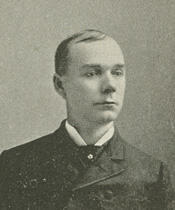
Here you will find contact information for Representative Jesse Francis Stallings, including email address, phone number, and mailing address.
| Name | Jesse Francis Stallings |
| Position | Representative |
| State | Alabama |
| District | 2 |
| Party | Democratic |
| Status | Former Representative |
| Term Start | August 7, 1893 |
| Term End | March 3, 1901 |
| Terms Served | 4 |
| Born | April 4, 1856 |
| Gender | Male |
| Bioguide ID | S000784 |
About Representative Jesse Francis Stallings
Jesse Francis Stallings (April 4, 1856 – March 18, 1928) was an American lawyer and Democratic politician who served four terms as a U.S. Representative from Alabama from 1893 to 1901. His service in Congress occurred during a significant period in American history, and as a member of the House of Representatives he participated in the legislative process and represented the interests of his constituents during four consecutive terms in office.
Stallings was born near Manningham, Butler County, Alabama, to Reuben Stallings and Lucinda Ferguson. He completed his early education in local schools and preparatory studies before enrolling at the University of Alabama in Tuscaloosa. He was graduated from the University of Alabama in 1877. While at the university he studied law, preparing for a professional career in the legal field. Through his father, Stallings was descended from Jacob Astley, 1st Baron Astley of Reading, and Edward Ford, a lineage that connected him to English gentry, although his own life and career were rooted in the post–Civil War South.
After completing his legal studies, Stallings was admitted to the bar in April 1880 and commenced the practice of law in Greenville, Alabama. He quickly became active in public affairs and in the Democratic Party, which dominated Alabama politics in the late nineteenth century. In November 1886, the legislature of Alabama elected him solicitor for the second judicial circuit, a prosecutorial office he held until his resignation in September 1892. During this period he gained prominence as a courtroom lawyer and public official. He also participated in national party politics, serving as a delegate to the Democratic National Convention in 1888, which further raised his profile within the party.
Stallings was elected as a Democrat to the Fifty-third Congress and to the three succeeding Congresses, serving from March 4, 1893, to March 3, 1901. Representing Alabama in the U.S. House of Representatives, he took part in the legislative debates of the era, which included issues of currency, tariffs, and the evolving regulatory role of the federal government in the economy. His tenure coincided with the rise of Populism and the early stirrings of Progressivism in the South, and later scholarly studies have described him as a Democratic adherent of Populism and a precursor of Progressivism. Stallings chose not to be a candidate for renomination in 1900, thus concluding eight years of continuous congressional service.
Following his retirement from Congress, Stallings resumed the practice of law, relocating his professional activities to Birmingham, Alabama, which was emerging as an important industrial and commercial center in the state. In addition to his legal work, he became involved in business and finance. From 1912 to 1928 he served as president of the Lincoln Reserve Life Insurance Company, reflecting his growing engagement with corporate leadership and the expanding insurance industry in the early twentieth century.
Stallings’s personal life included three marriages. He married Ella McAllister in 1883; she died in 1885. In 1887 he married Belle McAllister, further strengthening his ties to the McAllister family. After the end of his second marriage, he married Marie Hudmon in 1909. His family life unfolded alongside his legal, political, and business careers, and he remained a prominent figure in Alabama public life well into the twentieth century.
Jesse Francis Stallings died in Birmingham, Alabama, on March 18, 1928. He was interred in Elmwood Cemetery in Birmingham. His career, spanning law, public prosecution, congressional service, and corporate leadership, reflected the political and economic transformations of Alabama and the broader South in the decades following Reconstruction.