Representative Jesse Arthur Younger
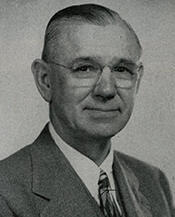
Here you will find contact information for Representative Jesse Arthur Younger, including email address, phone number, and mailing address.
| Name | Jesse Arthur Younger |
| Position | Representative |
| State | California |
| District | 11 |
| Party | Republican |
| Status | Former Representative |
| Term Start | January 3, 1953 |
| Term End | January 3, 1969 |
| Terms Served | 8 |
| Born | April 11, 1893 |
| Gender | Male |
| Bioguide ID | Y000060 |
About Representative Jesse Arthur Younger
Jesse Arthur Younger (April 11, 1893 – June 20, 1967) was a United States Representative from California and a member of the Republican Party who served in the U.S. House of Representatives from 1953 to 1969. He was the first representative from San Mateo County, California, and contributed to the legislative process during a period of significant political, social, and economic change in mid‑twentieth‑century America. Over the course of his service, he held his seat for seven terms from 1953 to 1967, and his tenure is also recorded as encompassing eight terms in office, reflecting his long-standing role in representing his district’s interests in Congress.
Younger’s early life and formative years preceded his entry into public office, but they laid the groundwork for his later political career in California. Born on April 11, 1893, he came of age at a time when California was rapidly developing, and San Mateo County was emerging as a distinct political and economic community within the San Francisco Bay Area. His early experiences in this evolving region helped shape his understanding of local needs and priorities, which later informed his approach to public service and representation at the national level.
Details of Younger’s formal education are not extensively documented in the surviving public record, but his subsequent professional and political achievements indicate a grounding in the civic and economic affairs of his community. As California expanded in population and influence during the first half of the twentieth century, Younger became part of a generation of leaders who translated local and regional concerns into legislative initiatives in Sacramento and Washington, D.C. His familiarity with the issues facing San Mateo County and the broader Bay Area positioned him to play a meaningful role once he entered federal office.
Before his election to Congress, Younger established himself in California public life, gaining the experience and local recognition that would support his later campaigns. His career developed alongside the growth of suburban communities on the Peninsula, the expansion of transportation networks, and the increasing integration of the region into the national economy. These developments provided the backdrop for his eventual bid for a seat in the U.S. House of Representatives, where he would become the first member of Congress to represent San Mateo County as a distinct constituency.
Younger began his congressional service in 1953, at the start of the 83rd Congress, and served continuously through the 1960s. As a Republican member of the House of Representatives, he participated in the democratic process during a significant period in American history that included the Eisenhower, Kennedy, and Johnson administrations, the early Cold War, the beginnings of the space race, and the initial phases of the modern civil rights movement. Throughout his seven terms from 1953 to 1967, and during what is also recorded as eight terms in office, he worked within the committee and legislative structures of the House to represent the interests of his San Mateo County constituents and the state of California more broadly.
During his years in Congress, Younger’s role included deliberation on national policy questions as well as advocacy for local and regional concerns. Representing a rapidly growing suburban district, he was positioned at the intersection of federal policymaking and local development, addressing issues such as infrastructure, economic growth, and the evolving needs of a postwar population. His service reflected the responsibilities of a mid‑century California representative, balancing party positions with the specific priorities of his district during a time of substantial demographic and technological change.
Jesse Arthur Younger’s congressional career concluded in the late 1960s, marking the end of more than a decade of continuous service in the House of Representatives. Having been the first representative from San Mateo County, he left a legacy as the initial federal voice for that community in Congress, establishing a precedent and framework for those who would follow him in representing the Peninsula at the national level. He died on June 20, 1967, closing a career that had been closely tied to the emergence of San Mateo County as a distinct and influential part of California’s political landscape.