Representative Jessica McCullough Weis
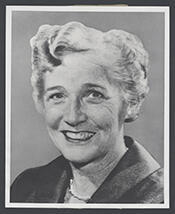
Here you will find contact information for Representative Jessica McCullough Weis, including email address, phone number, and mailing address.
| Name | Jessica McCullough Weis |
| Position | Representative |
| State | New York |
| District | 38 |
| Party | Republican |
| Status | Former Representative |
| Term Start | January 7, 1959 |
| Term End | January 3, 1963 |
| Terms Served | 2 |
| Born | July 8, 1901 |
| Gender | Female |
| Bioguide ID | W000256 |
About Representative Jessica McCullough Weis
Jessica “Judy” McCullough Weis (July 8, 1901 – May 1, 1963) was a two-term Republican member of the United States House of Representatives from Rochester, New York, serving as a Representative from New York in the United States Congress from January 3, 1959, to January 3, 1963. A prominent party leader and advocate for women’s political participation, she played an active role in local, state, and national Republican politics for decades before her election to Congress and contributed to the legislative process during a significant period in American history.
Weis was born in Chicago, Illinois, the daughter of Charles H. McCullough Jr. and Jessie Martin McCullough. Her father was president of the Lackawanna Steel Company in Lackawanna, New York, a position that situated the family within the industrial and civic life of western New York. She spent much of her youth in that region and was educated at the Franklin School in Buffalo, at Miss Wright’s School in Bryn Mawr, Pennsylvania, and at Madame Rieffel’s French School in New York City, receiving a finishing-school education typical of women of her social class in the early twentieth century. In 1921 she married Charles William Weis Jr. of Rochester, New York, who later became president of the Stecher Traung Lithographic Company. The couple made their home in Rochester and had three children.
As a young woman in Rochester, Weis immersed herself in civic and charitable work, volunteering for the American Red Cross, the Junior League, and other local organizations. In 1923 she founded the Chatterbox Club, a women’s social club that became a well-known gathering place for women in the community and reflected her interest in building networks of female leadership and sociability. Her volunteer and organizational activities provided an early platform for public engagement and helped prepare her for a more formal role in politics.
Weis first became active in partisan politics during the 1936 presidential campaign of Republican nominee Alf Landon, when she organized statewide road caravans in New York to support his election. Her effectiveness as an organizer led to a rapid rise within the Republican Party. She held various posts at the local, state, and national levels, becoming vice chairman of the Monroe County Republican Committee in 1937, a position she held until 1952. In 1944 she was elected a member of the Republican National Committee, a role she retained until her death in 1963, giving her nearly two decades of continuous influence in national party affairs.
Within the broader women’s Republican movement, Weis was a pioneering figure. She served as the first vice president of the newly founded National Federation of Republican Women and became its president in 1941, helping to shape the organization in its formative years and to expand women’s participation in party politics. She was a delegate at large to the Republican National Conventions of 1940, 1944, 1948, 1952, and 1956, reflecting her stature within the party. At the 1948 convention she seconded the nomination of New York Governor Thomas E. Dewey for president, becoming the first woman to perform that role at a Republican National Convention. She subsequently served as an associate campaign manager for the Republican Party in the 1948 election, working on national campaign strategy and outreach.
Weis’s prominence in party leadership brought her into close contact with national Republican figures in the postwar era. In 1952 she was a member of the caucus that assisted Dwight D. Eisenhower in selecting a running mate, an experience she later described in an essay contributed to the book Politics USA. Her service to the Eisenhower administration continued after his election. In 1953 President Eisenhower appointed her to the National Defense Advisory Council, where she provided civilian and political perspectives on defense-related issues; she was reappointed and served on the council until her resignation in 1958. She was also appointed to the Inter-American Commission of Women, reflecting an interest in hemispheric affairs and women’s status in the Americas. In 1956 she served as planning chair of the Republican National Convention in San Francisco, overseeing key organizational aspects of the gathering.
When Representative Kenneth B. Keating vacated his seat in the U.S. House of Representatives to run for the United States Senate, Weis sought and won the Republican nomination to succeed him in New York’s 38th Congressional District, centered on Rochester. She was elected to the Eighty-sixth Congress and reelected to the Eighty-seventh Congress, serving from January 3, 1959, until January 3, 1963. During her two terms in office, she served on the Committee on Government Operations, the Committee on the District of Columbia, and the newly formed Committee on Science and Astronautics, which had been created in the wake of the space race to oversee federal scientific and space policy. Her tenure in Congress coincided with a transformative period in American politics and society, including the early years of the civil rights movement and the expansion of federal involvement in science and technology.
In her legislative work, Weis was particularly noted for her support of measures advancing women’s legal and economic status. In 1961 she supported the Equal Rights Amendment and the Equal Pay Act, aligning her congressional record with her long-standing advocacy for women’s participation and equality within the political system. As a member of the House of Representatives, she participated in the democratic process and represented the interests of her Rochester-area constituents while also maintaining her national party responsibilities. A member of the Republican Party throughout her career, she was regarded as a loyal but independent-minded legislator with a strong interest in organizational effectiveness and women’s rights.
Weis declined to run for a third term in the House after being diagnosed with cancer, bringing to a close more than a quarter-century of continuous political activity at high levels of the Republican Party. She left office at the conclusion of her second term on January 3, 1963. She died a few months later, on May 1, 1963, in Rochester, New York, at the age of 61. She was interred at Mount Hope Cemetery in Rochester. Her papers, documenting her extensive work in party politics, women’s organizations, and Congress, are housed at Harvard University’s Schlesinger Library, where they serve as a resource for scholars studying women’s political leadership and mid-twentieth-century American politics.