Representative Joachim Octave Fernández
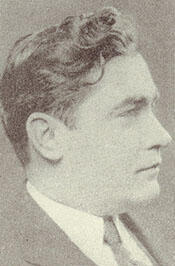
Here you will find contact information for Representative Joachim Octave Fernández, including email address, phone number, and mailing address.
| Name | Joachim Octave Fernández |
| Position | Representative |
| State | Louisiana |
| District | 1 |
| Party | Democratic |
| Status | Former Representative |
| Term Start | December 7, 1931 |
| Term End | January 3, 1941 |
| Terms Served | 5 |
| Born | August 14, 1896 |
| Gender | Male |
| Bioguide ID | F000086 |
About Representative Joachim Octave Fernández
Joachim Octave Fernández (August 14, 1896 – August 8, 1978) was a Democratic member of the United States House of Representatives from Louisiana’s 1st congressional district, serving five consecutive terms from 1931 to 1941. Son of Octave Gonzales Fernández and Mary Benson, he was born in New Orleans, Louisiana, where he lived for most of his life and where he died. Of Hispanic and mixed European ancestry, his forebears came from the Canary Islands, Spain, and were also of Cajun, Alsatian, and Galician descent. Settlers in Louisiana from the Canaries are known as Isleños, placing Fernández within that distinctive cultural community. He was raised in the Roman Catholic faith, a religious affiliation he maintained throughout his life.
Fernández’s early adult life was closely intertwined with the political culture of New Orleans. On June 3, 1920, he married Viola Murray; the couple had two sons and two daughters. He became active in local politics through the Old Regular political machine, the dominant Democratic organization in New Orleans in the early twentieth century. His involvement with this organization provided him with a base of support and experience in ward-level politics that would shape his subsequent rise to state and national office.
Before entering Congress, Fernández built a substantial record in Louisiana state government. He was a delegate to the Louisiana state constitutional convention of 1921, which drafted the state constitution that remained in effect until 1975. He then served as a member of the Louisiana House of Representatives from 1924 to 1928 and as a member of the Louisiana State Senate from 1928 to 1930. During this period he was aligned with the municipal administration of New Orleans Mayor T. Semmes Walmsley and remained associated with the Old Regulars. His legislative work in Baton Rouge coincided with a time of intense factional conflict in Louisiana’s Democratic Party, setting the stage for his later realignment.
In 1930, amid the growing influence of Governor Huey Pierce Long, Jr., Fernández broke with his earlier allies and defected from the Walmsley camp to join Long’s political organization. He became Long’s Ninth Ward political boss in New Orleans, a position that gave him considerable influence in local patronage and electoral mobilization. With Long’s backing, Fernández was elected to the U.S. House of Representatives in 1930 as a Democrat, beginning his first term on March 4, 1931. Like all other members of Louisiana’s congressional delegation at the time, he served as a Democrat and supported much of the New Deal–era agenda that dominated national politics during the Great Depression.
Fernández served in Congress from 1931 to 1941, representing Louisiana’s 1st congressional district for five terms. His tenure in the House coincided with a significant period in American history, encompassing the depths of the Great Depression and the initial stages of U.S. engagement with global crises preceding World War II. As a member of the House of Representatives, he participated in the legislative process and represented the interests of his New Orleans–area constituents, contributing to debates and votes on domestic recovery, infrastructure, and social welfare measures that characterized the era. In addition to his congressional duties, he was an alternate delegate to the 1936 Democratic National Convention, which renominated President Franklin D. Roosevelt and Vice President John Nance Garner, reflecting his continued involvement in national party affairs. His congressional career ended when he was defeated in the 1940 election by reform candidate Felix Edward Hébert, a former journalist for the New Orleans Times-Picayune, who capitalized on anti-machine sentiment in the district.
After leaving Congress in January 1941, Fernández remained active in public service and politics. During World War II, in his forties, he served in the United States Navy as a lieutenant commander, contributing to the nation’s military effort in a period of global conflict. Following his wartime service, he was appointed U.S. collector of internal revenue in New Orleans, a federal administrative post that placed him at the center of regional tax collection and enforcement. In the 1946 New Orleans mayoral election, Fernández briefly emerged as the reform candidate opposing incumbent Mayor Robert Maestri, a key figure in the city’s machine politics. He withdrew from the race at the last minute after Maestri offered to pay his campaign expenses, a maneuver that drew public attention and controversy. Despite Fernández’s withdrawal, Maestri was ultimately unseated by the reformers’ candidate, deLesseps Story Morrison, marking a turning point in the city’s political history.
In his later years, Fernández remained a notable figure in Louisiana’s political memory as one of the early Hispanic and Isleño members of Congress and as a participant in the state’s turbulent machine-versus-reform struggles. He was a member of the American Legion, reflecting his status as a veteran and his continued engagement with civic and veterans’ organizations. Joachim Octave Fernández died in New Orleans on August 8, 1978, just days before his eighty-second birthday. He was interred at Metairie Cemetery in New Orleans, one of the city’s largest and most prominent burial grounds, closing a life that had been deeply rooted in the political and social fabric of Louisiana.