Representative Joe Crail
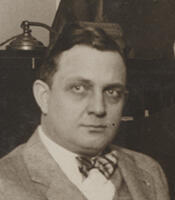
Here you will find contact information for Representative Joe Crail, including email address, phone number, and mailing address.
| Name | Joe Crail |
| Position | Representative |
| State | California |
| District | 10 |
| Party | Republican |
| Status | Former Representative |
| Term Start | December 5, 1927 |
| Term End | March 3, 1933 |
| Terms Served | 3 |
| Born | December 25, 1877 |
| Gender | Male |
| Bioguide ID | C000864 |
About Representative Joe Crail
Joseph Steele Crail (December 25, 1877 – March 2, 1938) was an American lawyer, military veteran, and Republican politician who served as a United States Representative from California from 1927 to 1933. Over the course of three terms in the House of Representatives, he contributed to the legislative process during a significant period in American history, representing the interests of his California constituents during the late 1920s and the onset of the Great Depression.
Crail was born in Fairfield, Jefferson County, Iowa, on December 25, 1877. He attended the public schools of Fairfield and pursued higher education at Drake University in Des Moines, Iowa, from which he graduated in 1898. His early years in the Midwest, marked by public schooling and university study, provided the foundation for his later professional and political career.
During the Spanish–American War, Crail enlisted as a private in the Twelfth Company, United States Volunteer Signal Corps. He was promoted to the rank of corporal and served in the American Army of Occupation in Cuba until its withdrawal. This period of military service gave him firsthand experience of national service and international engagement at a formative time in United States foreign affairs.
After his military service, Crail studied law at the Iowa College of Law. He was admitted to the bar in 1903 and commenced the practice of law in his native Fairfield, Iowa. Demonstrating an early interest in public life, he became active in politics and, in 1912, was an unsuccessful candidate for Congress from the district that included Fairfield, running as a member of the Progressive Party. Although he did not win that election, the campaign marked his first bid for national office and reflected his engagement with the reform currents of the early twentieth century.
In 1913, Crail moved to California and settled in Los Angeles, where he continued the practice of law. He quickly became involved in Republican Party affairs in his adopted state. From 1918 to 1920, he served as chairman of the Republican State central committee for southern California, a position that placed him at the center of party organization and strategy in a rapidly growing region. His legal practice and party leadership helped establish his prominence in California political circles and paved the way for his later congressional career.
Crail was elected as a Republican to the Seventieth, Seventy-first, and Seventy-second Congresses, serving as a Representative from California from March 4, 1927, to March 3, 1933. As a member of the House of Representatives, he participated in the democratic process and represented the interests of his constituents during a transformative era that included the prosperity of the late 1920s and the beginning of the Great Depression following the stock market crash of 1929. Throughout his three terms in office, he contributed to the legislative work of Congress as part of the Republican majority and later minority, aligning his efforts with the broader policies and priorities of his party and state.
In 1932, Crail chose not to seek renomination to the House of Representatives. Instead, he sought higher office and became a candidate for the Republican nomination for United States Senator from California, but he was unsuccessful in securing the nomination. Following his departure from Congress in March 1933, he resumed the practice of law in Los Angeles and also engaged in banking, maintaining an active role in the professional and economic life of southern California.
Joseph Steele Crail died in Los Angeles, California, on March 2, 1938. He was interred in Inglewood Park Mausoleum in Inglewood, California. His career encompassed military service in the Spanish–American War, legal practice in both Iowa and California, party leadership at the state level, and three terms in the United States House of Representatives during a critical period in the nation’s history.