Representative Joe Starnes
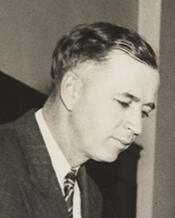
Here you will find contact information for Representative Joe Starnes, including email address, phone number, and mailing address.
| Name | Joe Starnes |
| Position | Representative |
| State | Alabama |
| District | 5 |
| Party | Democratic |
| Status | Former Representative |
| Term Start | January 3, 1935 |
| Term End | January 3, 1945 |
| Terms Served | 5 |
| Born | March 31, 1895 |
| Gender | Male |
| Bioguide ID | S000816 |
About Representative Joe Starnes
Joe Starnes (March 31, 1895 – January 9, 1962) was a Democratic U.S. Representative from Alabama who served five terms in the United States Congress from 1935 to 1945. Over the course of a public career that spanned education, military service, state government, and national office, he represented the interests of his Alabama constituents during a transformative period in American history, including the Great Depression and World War II.
Starnes was born on March 31, 1895, in Guntersville, Marshall County, Alabama, where he attended the public schools. After completing his early education, he remained in his home region and began his professional life in the classroom. From 1912 to 1917 he taught school in Marshall County, Alabama, gaining experience in public education that would later inform his service on the State board of education.
With the United States’ entry into World War I, Starnes entered military service. In 1918 he was commissioned a second lieutenant in the Fifty-third Infantry, Sixth Division, and served overseas in 1918 and 1919. Following the war, he continued his association with the military. In 1923 he became a member of the One Hundred and Sixty-Seventh Infantry, Alabama National Guard, and advanced through the ranks to colonel. In 1931, while holding the rank of major, he commanded Alabama National Guard troops assigned to protect the African American defendants known as the Scottsboro Boys from a hostile mob gathered outside the Jackson County, Alabama, courthouse during their widely publicized trial on charges of raping white women Ruby Bates and Victoria Price.
After returning from World War I, Starnes pursued legal training. He graduated from the law department of the University of Alabama at Tuscaloosa in 1921, was admitted to the bar that same year, and commenced the practice of law in his hometown of Guntersville, Alabama. Alongside his legal work, he remained active in public affairs. He served as a member of the Alabama State board of education from 1933 to 1949, reflecting his long-standing interest in public schooling, and in January 1948 he became vice chairman of that body. His civic engagement extended to service in organizations such as Civitan, in which he was an active participant.
Starnes entered national politics as a member of the Democratic Party. He was elected as a Democrat to the Seventy-fourth Congress and to the four succeeding Congresses, serving in the U.S. House of Representatives from January 3, 1935, to January 3, 1945. His decade in Congress coincided with the New Deal era, the later years of the Great Depression, and the nation’s mobilization for World War II. As a member of the House of Representatives, he participated in the legislative process and represented the interests of his Alabama constituents in national debates. In 1938 he served on the Special Committee on Un-American Activities, commonly known as the Dies Committee, the precursor to the House Un-American Activities Committee (HUAC). During those hearings he gained national notoriety and subsequent ridicule for questioning Federal Theatre Project director Hallie Flanagan about whether the Elizabethan playwright Christopher Marlowe and the ancient Greek tragedian “Mr. Euripides” were communists. Starnes was an unsuccessful candidate for renomination in 1944, bringing his congressional career to a close after five consecutive terms.
Following his departure from Congress, Starnes again entered military service during the final phase of World War II. He served as a colonel of Infantry in the European Theater of Operations and in the Army of Occupation from January 4, 1945, until his discharge on February 22, 1946. After leaving active duty, he returned to Guntersville, Alabama, where he resumed the practice of law and continued his involvement in civic and educational affairs, including his ongoing role on the State board of education.
Joe Starnes died in Washington, D.C., on January 9, 1962, at the age of 66. He was interred in City Cemetery in Guntersville, Alabama, the community where he had been born, practiced law, and maintained his political base. In recognition of his local prominence and long record of public service, the airport in Guntersville, Alabama, was named Joe Starnes Field.