Representative John Bassett Alley
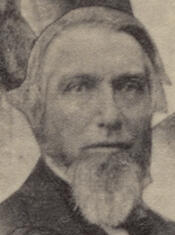
Here you will find contact information for Representative John Bassett Alley, including email address, phone number, and mailing address.
| Name | John Bassett Alley |
| Position | Representative |
| State | Massachusetts |
| District | 5 |
| Party | Republican |
| Status | Former Representative |
| Term Start | December 5, 1859 |
| Term End | March 3, 1867 |
| Terms Served | 4 |
| Born | January 7, 1817 |
| Gender | Male |
| Bioguide ID | A000155 |
About Representative John Bassett Alley
John Bassett Alley (January 7, 1817 – January 19, 1896) was an American businessman and politician who served as a U.S. Representative from Massachusetts from 1859 to 1867. A member of the Republican Party, he contributed to the legislative process during four terms in office, representing the interests of his constituents during a critical period in American history that encompassed the Civil War and the beginning of Reconstruction.
Alley was born on January 7, 1817, in Lynn, Massachusetts, to John Alley Sr. and Mercy (née Buffum) Alley. He attended the common schools of Lynn and later studied at Phillips Academy in Andover, Massachusetts. At the age of fourteen he was apprenticed to a shoemaker, a trade closely associated with Lynn’s emerging industrial economy, and he remained in that apprenticeship until he was released at the age of nineteen. In 1832, his parents and his younger sister Sarah joined the Church of Christ, later known as the Church of Jesus Christ of Latter Day Saints, and moved to Nauvoo, Illinois. In that community, his sister Sarah became one of the first women to enter into a polygamous marriage and was the first Mormon woman reported to bear a child as a polygamist, a circumstance that placed the Alley family in the midst of early Latter Day Saint history, although John himself did not follow them to Nauvoo.
In 1836, Alley moved west to Cincinnati, Ohio, where he worked in the freighting business, transporting merchandise along the Mississippi River. This experience in commerce and transportation broadened his understanding of trade and logistics in the growing American economy. In 1838 he returned to his native Lynn and entered the shoe manufacturing business, capitalizing on the city’s expanding footwear industry. Demonstrating entrepreneurial initiative, he later established a hide and leather house in Boston in 1847, building a substantial business career that provided the foundation for his subsequent public life.
Alley’s political career began in Massachusetts state and local government. He served as a member of the Massachusetts Governor’s Council from 1847 to 1851, participating in the executive advisory body that counseled the governor on appointments and policy. In 1850 he was elected to the first Board of Aldermen of Lynn, reflecting his prominence in local affairs at a time when the city was formalizing its municipal government. He represented Lynn in the Massachusetts State Senate in 1852 and took part in the Massachusetts Constitutional Convention of 1853, which considered revisions to the state’s fundamental law. In 1852 he ran for the U.S. House of Representatives as a candidate of the Free Soil Party, an organization opposed to the expansion of slavery into the western territories, but he was unsuccessful in that bid.
With the collapse of the Free Soil Party and the rise of the Republican Party in the 1850s, Alley joined the new Republican organization and soon became one of its congressional standard-bearers from Massachusetts. He was elected as a Republican to the Thirty-sixth and to the three succeeding Congresses, serving in the U.S. House of Representatives from March 4, 1859, to March 3, 1867. His service in Congress thus spanned the secession crisis, the entirety of the Civil War, and the early phase of Reconstruction. During this period he participated in the democratic process at the national level and represented the interests of his Massachusetts constituents on issues ranging from war policy to economic development. In the Thirty-eighth and Thirty-ninth Congresses he served as chairman of the House Committee on the Post Office and Post Roads, a key committee overseeing the rapidly expanding postal system and the development of transportation routes that were vital to national communication and commerce. After four consecutive terms, he was not a candidate for renomination in 1866.
Following his departure from Congress, Alley returned to business pursuits and became connected with the Union Pacific Railroad, one of the principal enterprises involved in constructing the first transcontinental railroad. His involvement with the railroad industry reflected both his earlier experience in transportation and his interest in the economic integration of the nation after the Civil War. However, his later years were overshadowed by extensive legal and financial difficulties. During the 1880s and 1890s he was embroiled in a protracted lawsuit known as the Snow–Alley case, a complex and lengthy legal dispute that consumed much of his time, damaged his health, and cost him a large part of his fortune.
By 1886, as a result of declining health and the strain of litigation, Alley abandoned active business pursuits. He spent his final years in relative retirement in Massachusetts. John Bassett Alley died in West Newton, Massachusetts, on January 19, 1896. He was interred in Pine Grove Cemetery in his native Lynn, Massachusetts, closing the life of a figure who had risen from a shoemaker’s apprenticeship to prominence in business, state politics, and national legislative service during one of the most consequential eras in American history.