Representative John Allison
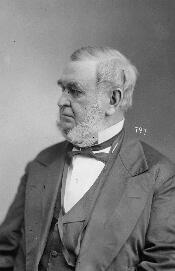
Here you will find contact information for Representative John Allison, including email address, phone number, and mailing address.
| Name | John Allison |
| Position | Representative |
| State | Pennsylvania |
| District | 23 |
| Party | Independent |
| Status | Former Representative |
| Term Start | December 1, 1851 |
| Term End | March 3, 1857 |
| Terms Served | 2 |
| Born | August 5, 1812 |
| Gender | Male |
| Bioguide ID | A000158 |
About Representative John Allison
John Allison, known in historical records as John Allison (Representative), was a United States Representative from Pennsylvania who served in Congress from 1851 to 1857 and again later in the decade, representing Pennsylvania’s 20th and 23rd congressional districts. Born in 1812, he emerged as a political figure during a period of mounting sectional tension in the United States, and his service in the House of Representatives placed him at the center of the national debate in the years leading up to the Civil War. Although often associated with shifting party alignments characteristic of the era, he is described in existing records as a member of the Independent Party, reflecting the fluid and evolving nature of political affiliations in mid-nineteenth-century America.
Details of Allison’s early life and education are sparse in surviving accounts, but his birth in 1812 placed him in the generation that came of age in the aftermath of the War of 1812, during a time of westward expansion and economic development in Pennsylvania. Like many politicians of his era, he likely gained prominence through local affairs and professional or business pursuits before entering national politics. His eventual election to Congress from Pennsylvania suggests that he had established himself as a figure of some standing in his community and within the state’s political networks.
Allison’s national career is most clearly defined by his service in the United States House of Representatives. He was elected as a Representative from Pennsylvania and served in Congress from 1851 to 1857, a span that covered two full terms and portions of additional service. During this time he represented, at different points, Pennsylvania’s 20th and 23rd congressional districts. His tenure coincided with the Thirty-second, Thirty-third, and early Thirty-fourth Congresses, a period marked by intense debate over slavery, territorial expansion, and the balance of power between free and slave states. As a member of the House of Representatives, Allison participated in the legislative process and represented the interests of his constituents at a time when Pennsylvania’s industrial and transportation sectors were growing rapidly and questions of tariffs, internal improvements, and banking policy were central to the state’s concerns.
The years 1851 to 1857 were a significant period in American history, encompassing the Compromise of 1850’s aftermath, the enforcement of the Fugitive Slave Act, and the controversies surrounding the Kansas–Nebraska Act of 1854. Serving as a member of the Independent Party as reflected in existing records, Allison’s role in Congress placed him within the broader realignment of American politics that saw the decline of the Whig Party, the rise of the Republican Party, and the emergence of various independent and fusion movements. Within this shifting landscape, he contributed to the democratic process by casting votes, serving on committees, and engaging in deliberations that shaped federal policy during a volatile decade.
Allison’s representation of both the 20th and 23rd districts of Pennsylvania underscores the changing nature of congressional apportionment and district boundaries in the mid-nineteenth century, as population growth and migration within the state prompted periodic redistricting. His ability to secure election in more than one district suggests a measure of political adaptability and a reputation that extended beyond a single locality. Throughout his service, he acted as a conduit between his constituents and the federal government, addressing local economic interests while also confronting the national issues that increasingly divided North and South.
After leaving Congress following his period of service in the 1850s, Allison returned to private life. While detailed records of his later activities are limited, his post-congressional years unfolded against the backdrop of the Civil War and Reconstruction, eras in which former members of Congress often remained influential in state and local affairs, business, or law. John Allison died in 1878, closing the life of a mid-nineteenth-century legislator whose congressional career coincided with some of the most consequential debates in the nation’s history.