Representative John Emory Andrus
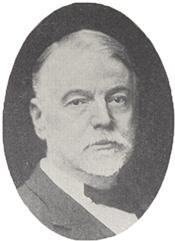
Here you will find contact information for Representative John Emory Andrus, including email address, phone number, and mailing address.
| Name | John Emory Andrus |
| Position | Representative |
| State | New York |
| District | 19 |
| Party | Republican |
| Status | Former Representative |
| Term Start | December 4, 1905 |
| Term End | March 3, 1913 |
| Terms Served | 4 |
| Born | February 16, 1841 |
| Gender | Male |
| Bioguide ID | A000254 |
About Representative John Emory Andrus
John Emory Andrus (February 16, 1841 – December 26, 1934) was an American businessman, philanthropist, mayor of Yonkers, New York, and a Republican Representative from New York in the United States Congress from 1905 to 1913. He is also noted as the founder of the SURDNA Foundation, a major philanthropic organization established from his fortune. Over four consecutive terms in the House of Representatives, he contributed to the legislative process during a significant period in American history, participating in the democratic process and representing the interests of his constituents in New York’s 19th congressional district.
Andrus was born in Pleasantville, New York, the son of Loyal B. Andrus, a Methodist minister, and Ann (Palmer) Andrus. Raised in a religious household, he was strongly influenced by Methodist values of discipline, thrift, and service, which would later shape both his business practices and his philanthropy. He attended Charlotteville Seminary in Schoharie County, New York, before enrolling at Wesleyan University in Middletown, Connecticut. He graduated from Wesleyan in 1862, maintaining a lifelong connection to the institution and later serving as a trustee. On June 23, 1869, he married Julia Maria Dyckman. The couple had nine children—Mary, William, Edith, Margaret, Jesamine, John, Hamlin, Ida, and Helen—forming a large family that would remain closely associated with his business and charitable legacy.
After completing his education, Andrus began his career in education, teaching school in New Jersey for four years. He soon turned to business, where he discovered and developed his considerable talents as an investor and entrepreneur. His primary operating enterprise became the Arlington Chemical Company, which manufactured typical medicines of the late nineteenth century and distributed them worldwide. Under his leadership, Arlington Chemical grew into a significant pharmaceutical concern. Andrus also became an investor in railroads and utilities, as well as in real estate, mining claims, and the Standard Oil Company. His business activities extended across the country, and he gained a reputation for shrewd judgment and conservative financial management.
Andrus’s particular skill lay in identifying and acquiring undervalued assets, usually in partnership with knowledgeable operating managers. Over time, his holdings came to include several buildings and parcels of land in Minneapolis, Minnesota, large timber tracts in California, mineral-rich acreage in New Mexico, and significant land holdings in Florida, New Jersey, and Alaska. In addition to his role at Arlington Chemical, he served as president of the New York Pharmaceutical Association and of the Palisade Manufacturing Company of Yonkers, in Westchester County, New York. He also held a prominent position in the insurance industry as a director of the New York Life Insurance Company. These diverse interests made him one of the more substantial businessmen of his era and provided the financial base for his later philanthropic endeavors, including the SURDNA Foundation.
Andrus’s success in business led naturally to civic involvement and public office. In 1903 he was elected mayor of Yonkers, New York, where he applied his business acumen to municipal affairs and gained a reputation for careful, efficient administration. His tenure as mayor brought him wider recognition within the Republican Party and among voters in the region. In 1904 he was elected as a Republican to the Fifty-ninth Congress as the representative of New York’s 19th congressional district, and he was subsequently reelected to the three succeeding Congresses, serving from March 4, 1905, to March 3, 1913. During these four terms in the House of Representatives, Andrus served at a time of rapid industrial growth, progressive-era reforms, and expanding federal responsibilities, and he participated in the legislative deliberations that marked this transformative period in American history. He chose not to be a candidate for renomination in 1912.
After leaving Congress in March 1913, Andrus resumed his former business pursuits in Yonkers, continuing to oversee and expand his wide-ranging investments. He remained active in the Methodist Church as a lay leader and sustained his long-term service as a trustee of Wesleyan University, reflecting his enduring commitment to religious and educational causes. His philanthropy, later institutionalized through the SURDNA Foundation, focused on education, health, and community welfare, and was rooted in the fortune he had accumulated through decades of disciplined investment and enterprise. Even in advanced age he remained engaged with public affairs and economic developments; an early sound interview recorded on February 27, 1930, captures him discussing his health, offering his opinion on the Wall Street crash of 1929, and reflecting on aging.
John Emory Andrus died of pneumonia in Yonkers, Westchester County, New York, on December 26, 1934, at the age of 93 years and 313 days. He was interred in a private Corinthian mausoleum at Kensico Cemetery in Valhalla, New York. By the time of his death, he was widely recognized not only as a multimillionaire businessman and former congressman, but also as a significant benefactor whose philanthropic legacy, particularly through the SURDNA Foundation, continued to influence educational, religious, and civic institutions long after his public service and business career had ended.