Senator John Armstrong
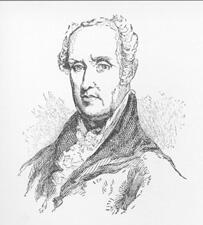
Here you will find contact information for Senator John Armstrong, including email address, phone number, and mailing address.
| Name | John Armstrong |
| Position | Senator |
| State | New York |
| Party | Republican |
| Status | Former Representative |
| Term Start | November 6, 1800 |
| Term End | June 30, 1804 |
| Terms Served | 3 |
| Born | November 25, 1758 |
| Gender | Male |
| Bioguide ID | A000282 |
About Senator John Armstrong
John Armstrong Jr. (November 25, 1758 – April 1, 1843) was an American soldier, diplomat, and statesman who served as a delegate to the Continental Congress, a United States Senator from New York, and United States Secretary of War under President James Madison. A member of the Republican, later Democratic-Republican, Party, he also served as United States Minister to France from 1804 to 1810. His service in the United States Senate from New York, beginning in 1800, extended over three terms in office during a formative period in the early republic, and he contributed actively to the legislative process while representing the interests of his constituents.
Armstrong was born in Carlisle, Pennsylvania, the younger son of General John Armstrong Sr., a noted Pennsylvania soldier of Irish birth and Scottish descent, and Rebecca (Lyon) Armstrong. His older brother, James Armstrong, became a physician and later a member of the United States House of Representatives. Raised in a family deeply involved in public and military affairs, John Armstrong Jr. received his early education in Carlisle before enrolling at the College of New Jersey (now Princeton University). In 1775, as the American Revolution intensified, he broke off his studies at Princeton and returned to Pennsylvania to join the patriot cause.
Armstrong first entered military service in a Pennsylvania militia regiment and soon thereafter was appointed aide-de-camp to General Hugh Mercer of the Continental Army. He was present at the Battle of Princeton, where he helped carry the mortally wounded General Mercer from the field; Mercer died on January 12, 1777. After Mercer’s death, Armstrong joined the staff of General Horatio Gates as an aide and served through the Saratoga campaign, a turning point of the Revolutionary War. Owing to health problems, he resigned for a time, but at Gates’s request he returned to service in 1782 as an aide with the rank of major, a commission he held through the end of the war.
While encamped with Gates at Newburgh, New York, in 1783, Armstrong became involved in what came to be known as the Newburgh Conspiracy. He is generally acknowledged as the author of two anonymous circular letters addressed to officers of the Continental Army. The first, “An Address to the Officers,” dated March 10, 1783, called for a meeting to consider grievances over back pay and other issues and to formulate a plan of action toward Congress. After George Washington countermanded that meeting and called for a more orderly assembly on March 15, a second anonymous address appeared, implying that Washington supported the officers’ pressure tactics. Washington’s personal intervention defused the crisis and prevented a potential mutiny. Although Armstrong later, in private correspondence, acknowledged his role in drafting the letters, no official action was ever taken to connect him formally with the episode.
After the war, in 1783 Armstrong returned to Carlisle and became an Original Member of the Pennsylvania Society of the Cincinnati, reflecting his status as a Continental Army officer. He was appointed Adjutant General of the Pennsylvania militia and served as Secretary of the Commonwealth of Pennsylvania under Presidents John Dickinson and Benjamin Franklin. In 1784 he led a force of about four hundred Pennsylvania militiamen into the Wyoming Valley to assert Pennsylvania’s claims in a land dispute with Connecticut settlers. His aggressive tactics provoked strong reactions in neighboring Vermont and Connecticut, which sent their own militia units into the region. The federal government dispatched Timothy Pickering to negotiate a settlement, and the Connecticut settlers ultimately retained title to much of the land. Armstrong represented Pennsylvania as a delegate to the Congress of the Confederation in 1787 and 1788. The Congress offered him the post of chief justice of the Northwest Territory, which he declined, as he did all other public offices for roughly the next twelve years.
Armstrong’s political career resumed in New York at the turn of the nineteenth century. After the resignation of John Laurance as United States Senator from New York, Armstrong, by then aligned with the Jeffersonian Republican (Democratic-Republican) Party, was elected in November 1800 to fill the remainder of Laurance’s term, which was to end in March 1801. He took his seat on November 6, 1800. He was then re-elected on January 27, 1801, for a full term running from 1801 to 1807, but he resigned on February 5, 1802. DeWitt Clinton was chosen to fill the vacancy but resigned in 1803, and Armstrong was appointed temporarily to his former seat. In February 1804 he was again elected to the United States Senate, this time to fill the vacancy created by the resignation of Theodorus Bailey, thereby moving from the Class 3 to the Class 1 seat on February 25, 1804. In all, Armstrong served as a Senator from New York in the United States Congress from 1800 to 1804, during which time he completed three separate terms in office and participated in the legislative and democratic processes of the early republic. He served only a few months of his final Senate term before President Thomas Jefferson appointed him United States Minister to France.
As Minister to France, Armstrong arrived in Paris in 1804 and remained in that post until September 1810. He brought with him as private secretary the United Irish exile David Bailie Warden, who later served as United States Consul and authored an important early reference work for the diplomatic corps, a pioneering contribution to the emerging literature of international law. During Armstrong’s tenure, he dealt with the complex diplomatic environment of Napoleonic Europe and, in 1806, briefly represented the United States at the court of Spain in addition to his duties in France. His service coincided with a period of intense maritime and commercial tensions that would eventually contribute to the War of 1812.
When war with Great Britain began in 1812, Armstrong was recalled to military service. He was commissioned a brigadier general and placed in charge of the defenses of the port of New York, a critical strategic point on the Atlantic seaboard. In 1813 President James Madison nominated him to serve as United States Secretary of War. His confirmation in the Senate was contentious, passing by a narrow vote of 18 to 15, reflecting longstanding suspicions about his character and political style. Historian Henry Adams later wrote that, despite Armstrong’s evident abilities, education, and connections, he suffered from a reputation for indolence and intrigue that made many in Washington wary of him. As Secretary of War, Armstrong instituted several valuable reforms and administrative changes in the Army, but he remained convinced that the British would not mount a direct attack on Washington, D.C. His failure to prepare adequate defenses for the capital, even as evidence mounted of a British advance, contributed to the American defeat at the Battle of Bladensburg and the subsequent burning of Washington in August 1814. Deeply angered by this disaster, President Madison, ordinarily inclined to leniency, compelled Armstrong to resign in September 1814.
Following his resignation, Armstrong retired from national public life and returned to his agricultural pursuits in Dutchess County, New York. His first estate in the region, known as “Altmont” or “The Meadows,” had been carved from the Schuyler patent; he purchased part of the property from the Van Benthuysen family in 1795 and converted an existing barn into a two-story Federal-style residence of twelve rooms. Around 1800 he sold this property to Andrew and Anna Verplanck Deveaux; it later became known as “Deveaux Park,” passed to John Stevens in 1816, and the mansion ultimately burned around 1879. After the death of Margaret Beekman Livingston, widow of Judge Robert Livingston, the extensive Clermont estate on the Hudson River was divided among the heirs. Armstrong’s wife, Alida Livingston Armstrong, inherited a tract just south of the “Messena” estate of her brother John R. Livingston. There the Armstrongs established “La Bergerie” (“the sheepfold”), where they raised Merino sheep, a flock said to have been presented to Armstrong by Emperor Napoleon Bonaparte upon his departure from France. The estate was later purchased by members of the Astor family as a summer residence and renamed “Rokeby,” and it eventually passed into the Aldrich family through Margaret Chanler Aldrich, a great-granddaughter of Margaret Armstrong Astor.
Armstrong also devoted his later years to writing and intellectual pursuits. He published several historical works, biographies, and treatises on agriculture, drawing on his long experience in public life and on the land. His personal life was closely tied to one of New York’s most prominent families. In 1789 he married Alida Livingston (1761–1822), the youngest child of Judge Robert Livingston (1718–1775) and Margaret (Beekman) Livingston, and sister of Chancellor Robert R. Livingston and Edward Livingston. John and Alida Armstrong had seven children: Major Horatio Gates Armstrong (1790–1858), a soldier in the War of 1812; Henry Beekman Armstrong (1791–1854), also a soldier in the War of 1812; John Armstrong (1794–1852), who became a gentleman farmer at La Bergerie; Robert Livingston Armstrong (1797–1834); Margaret Rebecca Armstrong (1800–1872), who married William Backhouse Astor Sr. (1792–1875); James Kosciuszko Armstrong (1801–1868); and William Armstrong (1814–1902), who married Lucy A. Hickernell (1816–1894).
John Armstrong Jr. died at La Bergerie, later known as Rokeby, in Red Hook, New York, on April 1, 1843. He was buried in Rhinebeck Cemetery in Rhinebeck, New York. With the death of Paine Wingate in 1838, Armstrong had become the last surviving delegate to the Continental Congress and is believed to have been the only one ever photographed, providing a rare visual link to the revolutionary generation he had served in war and in government.