Representative John M. Ashbrook
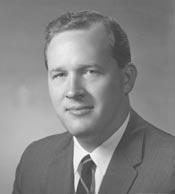
Here you will find contact information for Representative John M. Ashbrook, including email address, phone number, and mailing address.
| Name | John M. Ashbrook |
| Position | Representative |
| State | Ohio |
| District | 17 |
| Party | Republican |
| Status | Former Representative |
| Term Start | January 3, 1961 |
| Term End | January 3, 1983 |
| Terms Served | 11 |
| Born | September 21, 1928 |
| Gender | Male |
| Bioguide ID | A000221 |
About Representative John M. Ashbrook
John Milan Ashbrook (September 21, 1928 – April 24, 1982) was an American politician, newspaper publisher, and prominent conservative figure who served as a Republican Representative from Ohio in the United States House of Representatives from 1961 until his death in 1982. Over 11 consecutive terms in Congress, he was closely associated with the emerging New Right and became known nationally for his staunchly conservative positions and his challenge to President Richard Nixon in the 1972 Republican presidential primaries. At the time of his death, he was a leading candidate for the Republican nomination for the United States Senate from Ohio in the 1982 election.
Ashbrook was born on September 21, 1928, in Johnstown, Licking County, Ohio, to William A. Ashbrook, a newspaper editor, Johnstown businessman, and former U.S. Congressman, and his wife Marie Swank Ashbrook. Growing up in a politically active family rooted in both journalism and public service, he was exposed early to the workings of politics and the press. He attended local schools in Johnstown before pursuing higher education at Harvard University, from which he graduated in 1952. He continued his studies in law at Ohio State University, earning a law degree in 1955. On July 3, 1948, he married Joan Needels; the couple had three children before divorcing in 1971. In 1974, he married Jean Spencer, who would later succeed him in Congress for the remainder of his final term.
While still a young man, Ashbrook entered the newspaper business that had long been associated with his family. In 1953, he became publisher of his father’s newspaper, the Johnstown Independent, a position that reinforced his ties to his community and provided a platform for his developing conservative views. His involvement in journalism complemented his growing interest in Republican politics, particularly among younger party activists. During the 1950s, he became active in the Young Republicans, forming associations with figures such as William A. Rusher and F. Clifton White, relationships that would later play a key role in national conservative organizing.
Ashbrook’s formal political career began at the state level. In 1956, he was elected to the Ohio House of Representatives, where he served two terms. His legislative experience in Columbus helped prepare him for national office and connected him more deeply with Ohio’s Republican organization. In 1960, when the U.S. House seat once held by his father in central Ohio was vacated, Ashbrook ran for and won the position, entering the 87th Congress in January 1961. He would be reelected ten times, serving continuously until his death in 1982. As a member of the House of Representatives, he participated actively in the legislative process during a significant period in American history, representing the interests of his Ohio constituents while becoming a recognized voice of conservative opposition on a range of national issues.
Throughout his congressional service, Ashbrook developed a record that reflected both his conservative ideology and the complex legislative environment of the civil rights era. He voted against the Civil Rights Act of 1964, but supported the Civil Rights Act of 1968, the 24th Amendment to the U.S. Constitution banning the poll tax in federal elections, and the Voting Rights Act of 1965. His positions placed him among those conservatives who opposed certain federal civil rights measures while backing others aimed at protecting voting rights. In the early 1960s, he worked with William Rusher and F. Clifton White in the creation of the Draft Goldwater Committee in 1961, an effort that helped propel Senator Barry Goldwater’s conservative presidential candidacy in 1964 and that marked Ashbrook as an early architect of the modern conservative movement. In 1966, journalist Drew Pearson reported that Ashbrook was one of four congressmen to receive the “Statesman of the Republic” award from the Liberty Lobby for what it termed their “right-wing activities,” further underscoring his reputation on the right.
Ashbrook’s national prominence increased during the Nixon and post-Nixon years. Although he had supported Richard Nixon in the 1968 presidential election, he became disillusioned with the administration’s policies, which he and other conservatives viewed as insufficiently faithful to conservative principles. On December 29, 1971, he announced that he would oppose Nixon in the 1972 Republican presidential primaries as an alternative conservative candidate. Backed by leading conservative figures, including William F. Buckley Jr., Ashbrook ran under the slogan “No Left Turns,” symbolized by a mock traffic sign showing a barred left-turn arrow. The campaign criticized Nixon’s policies on budget deficits, affirmative action, the creation of the Environmental Protection Agency, wage and price controls, and especially détente and the administration’s efforts to improve relations with the Soviet Union and the People’s Republic of China. Ashbrook competed in several primaries, receiving 9.8 percent of the vote in New Hampshire, 9 percent in Florida, and 10 percent in California. After the California primary, he withdrew from the race and, “with great reluctance,” endorsed Nixon. Though he failed to win any statewide contests, his campaign was remembered by conservatives as a principled stand, and he later remarked, “I still believe it in the best American tradition to speak out even when it is in criticism of your party’s actions.” During the unfolding of the Watergate scandal, Ashbrook became the first Republican member of the House to call for President Nixon’s resignation, underscoring his willingness to break with party leadership when he believed it necessary.
Ashbrook continued to serve in Congress through the 1970s and into the early 1980s, maintaining his identity as a leading figure of the New Right and a consistent advocate of limited government, strong national defense, and traditional social values. His legislative work and public speeches made him a respected voice among conservative activists nationwide. In 1982, he sought to extend his political career to the Senate by running for the Republican nomination to challenge Democratic incumbent Senator Howard Metzenbaum of Ohio. Early polling indicated that Ashbrook was the frontrunner in the Republican primary, positioning him as a serious contender for statewide office and potentially a more prominent national role.
Ashbrook’s career was cut short on April 24, 1982, when he suffered a gastric hemorrhage at the offices of the Johnstown Independent in Johnstown, Ohio. He was taken to Licking Memorial Hospital in nearby Newark, Ohio, where he died the same day at the age of 53. His death occurred while he was still serving in the House and actively campaigning for the Senate. President Ronald Reagan memorialized him, stating that “John Ashbrook was a man of courage and principle. He served his constituents and his country with dedication and devotion, always working towards the betterment of his fellow man. His patriotism and deep belief in the greatness of America never wavered and his articulate and passionate calls for a return to old-fashioned American values earned him the respect of all who knew him.” In a special election following his death, his widow, Jean Spencer Ashbrook, was chosen to serve the remaining seven months of his congressional term, continuing the family’s representation of the district.
Ashbrook’s legacy within conservative politics and public affairs was further recognized in 1983 with the establishment of the Ashbrook Center for Public Affairs at Ashland University in Ashland, Ohio, named in his honor. The center, dedicated to the study and promotion of constitutional government and American political principles, inaugurated a periodic John M. Ashbrook Memorial Dinner that has featured leading conservative speakers, including President Ronald Reagan at the center’s dedication in 1983, former British Prime Minister Margaret Thatcher in 1993, and later figures such as Mitt Romney in April 2010 and John Boehner in June 2011. His long service in the House, his role in the rise of the New Right, and his willingness to challenge his own party’s leadership have secured him a place in the history of late twentieth-century American conservatism and in the annals of Ohio’s congressional delegation.