Representative John Durant Ashmore
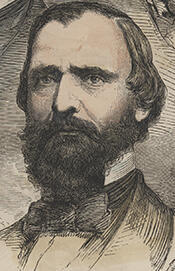
Here you will find contact information for Representative John Durant Ashmore, including email address, phone number, and mailing address.
| Name | John Durant Ashmore |
| Position | Representative |
| State | South Carolina |
| District | 5 |
| Party | Democratic |
| Status | Former Representative |
| Term Start | December 5, 1859 |
| Term End | March 3, 1861 |
| Terms Served | 1 |
| Born | August 18, 1819 |
| Gender | Male |
| Bioguide ID | A000316 |
About Representative John Durant Ashmore
John Durant Ashmore (August 18, 1819 – December 5, 1871) was a U.S. Representative from South Carolina and a member of the Democratic Party who served one term in the United States Congress from 1859 to 1861. He was a cousin of Robert T. Ashmore, who would later also serve as a U.S. Representative from South Carolina in the twentieth century, linking the family name to congressional service across different eras.
Ashmore was born on August 18, 1819, in Greenville District, South Carolina. He grew up in the antebellum South during a period of mounting sectional tension over slavery, states’ rights, and the balance of power between free and slave states. His early life unfolded in a predominantly agrarian society in which political and economic power was closely tied to landholding and the plantation system, influences that would shape the outlook of many South Carolina politicians of his generation.
Details of Ashmore’s formal education are sparse in the historical record, but like many Southern political figures of his time, he likely received a basic classical education that prepared him for public life. Such an education would have emphasized rhetoric, law, history, and political philosophy, providing a foundation for participation in state and national affairs. His subsequent rise to public office suggests he was well integrated into the social and political networks of South Carolina’s upcountry region.
By the late 1850s, Ashmore had entered national politics as a member of the Democratic Party, which then dominated South Carolina’s political landscape and strongly defended the institution of slavery and the doctrine of states’ rights. He was elected as a Democrat to the Thirty-sixth Congress and served as a Representative from South Carolina from 1859 to 1861. During this single term in office, he participated in the legislative process at a time when the Union was fracturing over the issues of slavery and secession. As a member of the House of Representatives, John Durant Ashmore represented the interests of his South Carolina constituents and took part in the debates and votes that preceded the outbreak of the Civil War.
Ashmore’s service in Congress occurred during a particularly significant period in American history, as the election of Abraham Lincoln in 1860 and the subsequent secession of Southern states transformed the national political landscape. South Carolina led the movement to secede from the Union in December 1860, and its representatives in Washington were drawn directly into the crisis. Ashmore’s term concluded in 1861 as South Carolina left the Union and its congressional delegation withdrew, marking the end of his brief but historically situated tenure in the national legislature.
After leaving Congress, Ashmore returned to private life in South Carolina. Like many former Southern officeholders whose national careers were cut short by secession and war, he lived out his later years in a region devastated by the Civil War and undergoing the upheavals of Reconstruction. Although the surviving record does not detail extensive subsequent public office or major professional ventures, his earlier service placed him among those South Carolina leaders who had participated in the final national debates before disunion.
John Durant Ashmore died on December 5, 1871. His life spanned from the high tide of the antebellum South through the Civil War era and into the early years of Reconstruction. Remembered primarily for his single term in the U.S. House of Representatives from 1859 to 1861 and for his connection to the later congressman Robert T. Ashmore, his career reflects the trajectory of many mid-nineteenth-century Southern politicians whose national service was closely intertwined with the sectional crisis that led to the dissolution of the Union and the remaking of the American political order.