Representative John DeWitt Clinton Atkins
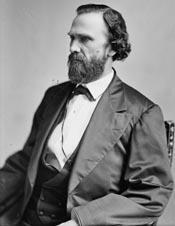
Here you will find contact information for Representative John DeWitt Clinton Atkins, including email address, phone number, and mailing address.
| Name | John DeWitt Clinton Atkins |
| Position | Representative |
| State | Tennessee |
| District | 8 |
| Party | Democratic |
| Status | Former Representative |
| Term Start | December 7, 1857 |
| Term End | March 3, 1883 |
| Terms Served | 6 |
| Born | June 4, 1825 |
| Gender | Male |
| Bioguide ID | A000327 |
About Representative John DeWitt Clinton Atkins
John DeWitt Clinton Atkins (June 4, 1825 – June 2, 1908) was an American slave owner, lawyer, and Democratic politician from Tennessee who served as a member of both the United States House of Representatives and the Confederate Congress. His long public career spanned the antebellum era, the Civil War, Reconstruction, and the late nineteenth century, and included six terms in the U.S. Congress between 1857 and 1883.
Atkins was born on June 4, 1825, in Tennessee, where he spent his early life in the agrarian society of the antebellum South. He was raised in a slaveholding environment that shaped his social and political outlook in the decades leading up to the Civil War. Details of his early family life are sparse in the historical record, but his subsequent professional path indicates that he received sufficient preparatory education to pursue the study of law and enter public life at a relatively young age.
Educated in Tennessee, Atkins read law and was admitted to the bar, beginning a legal career that would serve as the foundation for his later political activities. As a lawyer, he practiced in Tennessee and became involved in local affairs, building a reputation that facilitated his entry into elective office. His legal training and familiarity with state and federal issues positioned him to participate in the increasingly contentious national debates of the 1850s over slavery, states’ rights, and the future of the Union.
Atkins entered national politics as a Democrat and was elected to the United States House of Representatives from Tennessee, beginning his congressional service in 1857. Serving as a Representative from Tennessee in the United States Congress from 1857 to 1883, he contributed to the legislative process during six terms in office. His tenure in the House of Representatives coincided with a significant period in American history, encompassing the final years before the Civil War, the conflict itself, and the turbulent Reconstruction era. As a member of the House, he participated in the democratic process and represented the interests of his Tennessee constituents, aligning with the Democratic Party’s positions on issues central to the South, including slavery and federal authority.
With the secession of Southern states and the onset of the Civil War, Atkins cast his lot with the Confederacy. He served as a member of the Confederate Congress from Tennessee, continuing his legislative career in the government formed by the seceded states. In that capacity, he took part in shaping Confederate policy and legislation during the war years, reflecting the perspectives of a Tennessee slaveholding politician committed to the Confederate cause. His service in the Confederate Congress underscored his alignment with Southern Democratic leadership and its defense of slavery and states’ rights.
After the Civil War, Atkins resumed his role in national politics as Tennessee was readmitted to representation in Congress. Returning to the U.S. House of Representatives as a Democrat, he again represented Tennessee during Reconstruction and the post-Reconstruction period. His later terms in Congress, extending into the early 1880s, placed him at the center of debates over the reintegration of the former Confederate states, the status and rights of formerly enslaved people, and the reconfiguration of federal–state relations. Throughout this period, he remained an active participant in the legislative process, reflecting the priorities of his party and his region as the South adapted to the new political and social order.
In his later years, Atkins withdrew from national office and returned to private life in Tennessee. He continued to be identified with the generation of Southern leaders whose careers bridged the antebellum, Confederate, and Reconstruction eras. John DeWitt Clinton Atkins died on June 2, 1908, two days short of his eighty-third birthday, leaving a long record of service in both the United States Congress and the Confederate Congress that reflected the complex and often divisive currents of nineteenth-century American political life.