Representative John Wilbur Atwater
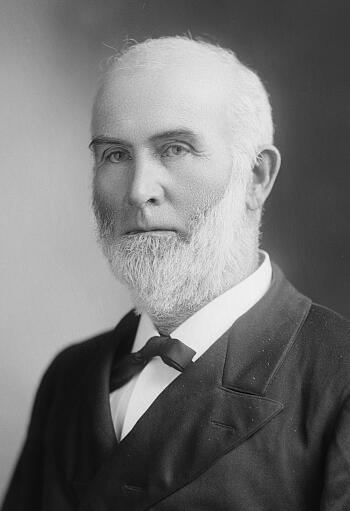
Here you will find contact information for Representative John Wilbur Atwater, including email address, phone number, and mailing address.
| Name | John Wilbur Atwater |
| Position | Representative |
| State | North Carolina |
| District | 4 |
| Party | Populist |
| Status | Former Representative |
| Term Start | December 4, 1899 |
| Term End | March 3, 1901 |
| Terms Served | 1 |
| Born | December 27, 1840 |
| Gender | Male |
| Bioguide ID | A000334 |
About Representative John Wilbur Atwater
John Wilbur Atwater (December 27, 1840 – July 4, 1910) was an American farmer, Confederate Civil War veteran, and Populist politician who served one term as a U.S. Representative from North Carolina between 1899 and 1901. A member of the Populist Party during his congressional service, he represented his constituents in the United States House of Representatives during a significant period in American political and economic history.
Atwater was born near Fearrington, in Chatham County, North Carolina, on December 27, 1840. He was raised in a rural farming community and attended the local common schools. Seeking further education, he studied at the William Closs Academy, a regional institution that prepared young men for professional and civic life. His early years were shaped by the agrarian environment of central North Carolina, which would later influence his political alignment with farmers’ movements and agrarian reform.
Before entering public office, Atwater worked as a farmer, a vocation he maintained throughout much of his life. With the outbreak of the American Civil War, he enlisted in the Confederate Army, serving in Company D of the First Regiment of the North Carolina Volunteer Infantry. He remained with the Army of Northern Virginia under General Robert E. Lee and served until the end of the conflict, being present with Lee’s forces up to the surrender at Appomattox Court House in April 1865. After the war, Atwater returned to North Carolina and resumed agricultural pursuits, rebuilding his livelihood in the postwar South.
In the decades following Reconstruction, Atwater became active in the agrarian reform movement. In 1887 he joined the Farmers’ Alliance, an organization dedicated to improving the economic conditions of farmers through cooperative action and political advocacy. He quickly emerged as a leader within the movement and became the first president of the Chatham County Alliance. His work with the Alliance brought him into state politics and aligned him with efforts to challenge entrenched economic and political interests on behalf of rural constituents.
Atwater’s political career began in earnest with his election to the North Carolina Senate in 1890 as an Alliance Democrat, reflecting the close relationship between the Democratic Party and agrarian reformers at that time. As political realignments accelerated in the early 1890s, he shifted his affiliation to the Populist Party, which more directly embodied the Farmers’ Alliance program. He was subsequently re-elected to the North Carolina Senate in 1892 and again in 1896 as a Populist, participating in the broader Populist movement that sought monetary reform, railroad regulation, and greater political representation for farmers and laborers.
In 1898 Atwater was elected as an Independent Populist to the Fifty-sixth Congress, representing North Carolina in the U.S. House of Representatives from March 4, 1899, to March 3, 1901. During his single term in Congress, he served as a member of the Populist Party and contributed to the legislative process at the national level, advocating the interests of his agrarian constituency during a time of intense debate over economic policy, currency issues, and political reform. His service in Congress occurred during a significant period in American history, as the nation grappled with the aftermath of the Panic of 1893, the rise of industrial power, and the consolidation of political parties at the turn of the twentieth century. He ran for re-election in 1900 but was unsuccessful, and his congressional service concluded at the end of his term.
After leaving Congress, Atwater returned to his farm in Chatham County and resumed his agricultural pursuits. Although no longer in national office, he remained identified with the causes of rural North Carolinians and the legacy of the Farmers’ Alliance and Populist movements that had shaped his public life. He continued to live near Fearrington until his death on July 4, 1910. John Wilbur Atwater died in Fearrington, North Carolina, and was buried in Mount Pleasant Church Cemetery near Pittsboro, leaving a record of service that linked Civil War military experience, agrarian activism, and Populist political leadership in late nineteenth-century North Carolina.