Representative John Joseph Babka
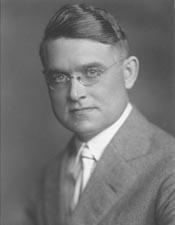
Here you will find contact information for Representative John Joseph Babka, including email address, phone number, and mailing address.
| Name | John Joseph Babka |
| Position | Representative |
| State | Ohio |
| District | 21 |
| Party | Democratic |
| Status | Former Representative |
| Term Start | May 19, 1919 |
| Term End | March 3, 1921 |
| Terms Served | 1 |
| Born | March 16, 1884 |
| Gender | Male |
| Bioguide ID | B000007 |
About Representative John Joseph Babka
John Joseph Babka (March 11, 1884 – March 22, 1937) was an American lawyer and Democratic politician who served as a U.S. Representative from Ohio for one term from 1919 to 1921. He was born on March 11, 1884, at 68 Douse Street in Cleveland, Ohio, to Czech immigrant parents František Babka, from Kostelec nad Vltavou, and Marie Magdalena (née Kozelková), from Hrejkovice. Although official records and later biographical references give his birthdate as March 11, Babka himself at times reported his birthdate as March 16, 1884, a discrepancy noted in historical accounts. Raised in Cleveland in an immigrant household, he grew up in an urban, industrial environment that would shape his understanding of the concerns of working-class and ethnic communities in the city.
Babka received his early education in Cleveland and pursued legal studies locally. He enrolled in the Cleveland Law School, an institution that trained many of the city’s future public officials and attorneys. On January 8, 1908, he married Marie Kubu. Later that same year, he completed his legal education and graduated from Cleveland Law School, positioning himself for a professional career in the law while beginning family life in the city where he had been born and raised.
In 1908, Babka was admitted to the bar and commenced the practice of law in Cleveland. His legal abilities and growing reputation soon led to public responsibilities. He served as special counsel to the Attorney General of Ohio in 1911 and 1912, a role in which he assisted the state’s chief legal officer in representing Ohio’s interests. From 1912 to 1919, he served as assistant prosecuting attorney of Cuyahoga County, gaining extensive experience in criminal law and public prosecution. Through these positions, Babka became a recognized figure in local legal and political circles, and his work in public service laid the groundwork for his subsequent election to national office.
Babka was elected as a Democrat to the Sixty-sixth Congress and served as a Representative from Ohio in the United States House of Representatives from March 4, 1919, to March 3, 1921. His single term in Congress coincided with a significant period in American history, immediately following World War I and during the early years of the postwar adjustment, labor unrest, and social change. As a member of the Democratic Party and the House of Representatives, John Joseph Babka contributed to the legislative process, participated in the democratic governance of the nation, and represented the interests of his Ohio constituents in national affairs. His service in Congress reflected both his legal background and his experience with the concerns of urban and immigrant communities in Cleveland.
In 1920, Babka stood for reelection to the Sixty-seventh Congress but was unsuccessful in his bid to retain his seat. Following his departure from Congress in 1921, he returned to the private practice of law in Cleveland, resuming the professional career that had first brought him to public attention. He remained active in Democratic Party affairs and served as a delegate to the Democratic National Convention in 1920, the year of his unsuccessful reelection campaign, and again in 1932, when the party nominated Franklin D. Roosevelt for the presidency. These roles underscored his continuing influence and engagement in state and national Democratic politics even after his congressional service had ended.
In his later years, Babka combined legal work with specialized public responsibilities. At the time of his death, he was serving as a liquidating attorney for the Division of Savings and Loan Associations in the Ohio Department of Commerce, a position that involved overseeing legal aspects of the winding up and regulation of financial institutions. His professional and civic life also included active participation in fraternal and social organizations; he was a member of the Benevolent and Protective Order of Elks (B.P.O.E.), the Knights of Columbus, and the Loyal Order of Moose, reflecting his ties to both ethnic Catholic and broader civic communities in Cleveland.
John Joseph Babka died in Cleveland, Ohio, on March 22, 1937, while still engaged in public service as a state official. He was interred in Calvary Cemetery in Cleveland. His career encompassed local and state legal service, a term in the United States Congress during a transformative era in American history, and continued involvement in Democratic Party politics and public administration in Ohio.