Representative John Holroyd Bagley
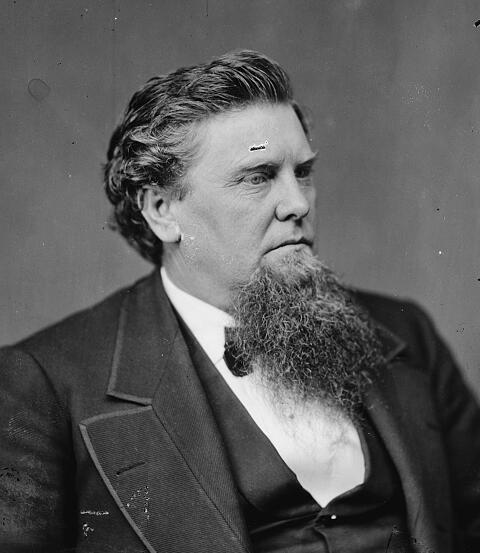
Here you will find contact information for Representative John Holroyd Bagley, including email address, phone number, and mailing address.
| Name | John Holroyd Bagley |
| Position | Representative |
| State | New York |
| District | 15 |
| Party | Democratic |
| Status | Former Representative |
| Term Start | December 6, 1875 |
| Term End | March 3, 1885 |
| Terms Served | 2 |
| Born | November 26, 1832 |
| Gender | Male |
| Bioguide ID | B000033 |
About Representative John Holroyd Bagley
John Holroyd Bagley Jr. (November 26, 1832 – October 23, 1902) was an American politician and a United States Representative from New York, serving two non-consecutive terms in Congress from 1875 to 1877 and from 1883 to 1885. A member of the Democratic Party, he represented his constituents during a significant period in American history, participating in the legislative process in the decades following the Civil War and during the consolidation of Reconstruction-era policies.
Bagley was born on November 26, 1832, and came of age in a nation undergoing rapid territorial expansion and mounting sectional tensions. Details of his early life and family background are sparse in the historical record, but his later public career suggests that he benefited from the educational and civic opportunities available to ambitious young men in the mid-nineteenth century. His formative years coincided with the rise of the Democratic Party as a dominant force in many parts of New York, shaping the political environment in which he would later build his career.
Although specific information about Bagley’s formal education is limited, his subsequent professional and political activities indicate that he acquired the training and experience necessary to participate effectively in public affairs. Like many nineteenth-century politicians, he likely combined practical experience in business or local governance with self-directed study of law, politics, and public policy, preparing him for the responsibilities of national office.
Before entering Congress, Bagley established himself within New York’s Democratic Party and developed a reputation sufficient to secure election to the United States House of Representatives. His rise reflected both his personal political skills and the broader currents of New York politics in the post–Civil War era, when questions of economic development, federal power, and reconciliation between North and South dominated public debate. Through party activity and engagement with local constituencies, he positioned himself as a credible representative of New York interests at the federal level.
Bagley was first elected as a Democrat to the United States House of Representatives for the term beginning in 1875, serving in the Forty-fourth Congress from 1875 to 1877. During this initial term, he contributed to the legislative process at a time when Congress was grappling with the end of Reconstruction, the adjustment of wartime financial policies, and the regulation of a rapidly industrializing economy. As a member of the House of Representatives, John Holroyd Bagley participated in the democratic process and represented the interests of his constituents, working within the committee system and party structure that shaped federal legislation in the late nineteenth century.
After leaving Congress at the end of his first term in 1877, Bagley returned to private life and to political activity in New York, remaining engaged with Democratic Party affairs and the issues affecting his district. His continued involvement in public matters and his standing within the party enabled him to secure election again several years later. He was returned to the House for a second, non-consecutive term, serving in the Forty-eighth Congress from 1883 to 1885. In this later period of service, he again contributed to the legislative process, representing New York during debates over tariffs, civil service reform, and federal oversight of commerce, and reaffirming his role as a Democratic voice in national policymaking.
Following the conclusion of his second term in 1885, Bagley did not return to Congress but remained part of the broader civic and political life of his state. His congressional service, spanning two non-consecutive terms over a ten-year period, reflected both the shifting electoral fortunes of the Democratic Party in New York and his own enduring appeal to voters. John Holroyd Bagley Jr. died on October 23, 1902, closing a career that had placed him at the center of national legislative affairs during a transformative era in American history.