Senator John Hollis Bankhead
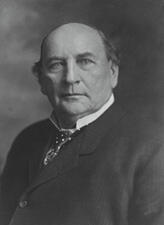
Here you will find contact information for Senator John Hollis Bankhead, including email address, phone number, and mailing address.
| Name | John Hollis Bankhead |
| Position | Senator |
| State | Alabama |
| Party | Democratic |
| Status | Former Representative |
| Term Start | December 5, 1887 |
| Term End | March 3, 1921 |
| Terms Served | 13 |
| Born | September 13, 1842 |
| Gender | Male |
| Bioguide ID | B000110 |
About Senator John Hollis Bankhead
John Hollis Bankhead (September 13, 1842 – March 1, 1920) was an American politician, Confederate Army officer, and long-serving Democratic member of the United States Congress from Alabama. Over the course of a national legislative career that extended from his election to the U.S. House of Representatives in 1887 through his service in the U.S. Senate until his death in 1920, he played a prominent role in federal policy on transportation, waterways, and public works. His congressional tenure, which encompassed service in both chambers, coincided with a transformative period in American history and reflected his sustained engagement in the legislative process on behalf of his Alabama constituents.
Bankhead was born on September 13, 1842, at Moscow in what is now Lamar County, Alabama, near present-day Sulligent. He was the son of Susan Fleming (Hollis) Bankhead and James Greer Bankhead. Through his great-grandfather, James Bankhead (1738–1799), who was born in Ulster and later settled in South Carolina, he was connected to early Scotch-Irish immigration into the American South. Raised in rural Alabama, he was educated in the common schools, receiving the basic formal instruction typical of the region and period before the outbreak of the Civil War.
With the secession of the Southern states and the onset of the Civil War, Bankhead entered the Confederate States Army. He served in the 16th Alabama Infantry, Company K, and rose to the rank of captain. His wartime experience in a front-line Confederate unit helped shape his postwar political identity in a state and region undergoing Reconstruction and the reassertion of Democratic control. After the war, he returned to Alabama as the state rebuilt its political and economic institutions under changing federal and state frameworks.
In the immediate postwar years, Bankhead embarked on a public career in state government. He served as a member of the Alabama House of Representatives from 1865 to 1867, participating in the early Reconstruction-era legislature. He later returned to the Alabama House in 1880 and 1881. Between those periods, he served in the Alabama State Senate in 1876 and 1877. During this time he was also appointed warden of the state penitentiary in Wetumpka. In that role he was associated with Alabama’s convict-leasing system, under which inmates were exploited as cheap labor for industrial and other enterprises, a practice that became a significant and controversial feature of the state’s postwar economy.
Bankhead entered national politics with his election to the United States House of Representatives in 1887. A member of the Democratic Party, he served continuously in the House from 1887 until 1907, a span that covered multiple terms and placed him at the center of legislative debates during the Gilded Age and Progressive Era. His service in Congress during these years coincided with major national developments in industrialization, transportation, and federal economic policy. Throughout this period he contributed to the legislative process and represented the interests of his Alabama constituents, building a reputation that later supported his elevation to the Senate.
At the age of 65, Bankhead was appointed to the United States Senate to fill the vacancy caused by the death of Senator John Tyler Morgan. He took his Senate seat on June 18, 1907, and was subsequently elected and then re-elected twice, serving until his death in office on March 1, 1920, in Washington, D.C. As a U.S. Senator from Alabama from 1907 until 1920, he became particularly noted for his work on transportation and infrastructure. He served on the Inland Waterways Commission in 1907 and was instrumental in the enactment of the Federal Aid Road Act of 1916, the first federal highway funding legislation in the United States, which laid the groundwork for a national system of improved roads. He also served on the Commission on Public Buildings and the Commission on Rivers and Harbors and authored several books relating to post roads, reflecting his sustained interest in internal improvements and national transportation policy. During his Senate tenure, he served as campaign manager for fellow Alabamian Oscar Underwood’s 1912 presidential candidacy. In matters of constitutional change, he opposed the Nineteenth Amendment to the United States Constitution, which mandated nationwide women’s suffrage, aligning himself with conservative elements of his party and region on that issue. Following his death, former Alabama governor B. B. Comer was appointed to serve the remainder of his term until November 2, 1920, when J. Thomas Heflin was elected to complete the unexpired term.
Bankhead’s personal life was closely intertwined with a family that would become one of the most prominent political dynasties in Alabama. He married Tallulah James Brockman, the daughter of James H. Brockman of Greenville District, South Carolina. She was of Revolutionary War ancestry, her father’s great-grandfather, Benjamin Kilgore, having served as a captain of a South Carolina company during the American Revolution. Tallulah Brockman Bankhead was educated in the fashionable schools of Tuskegee and Montgomery, Alabama. The couple’s children included sons John Hollis Bankhead II and William Brockman Bankhead, both of whom became practicing lawyers and later prominent national political figures—John H. Bankhead II as a United States Senator from Alabama and William Brockman Bankhead as Speaker of the U.S. House of Representatives. Their youngest son, Henry McAuley Bankhead, studied at the University of Alabama. Their elder daughter, Louise, married Representative William Hayne Perry of Greenville, South Carolina, son of former South Carolina governor Benjamin Franklin Perry, while their younger daughter, Marie, married Thomas McAdory Owen, a noted historian. Through William Brockman Bankhead, John H. Bankhead was the grandfather of the actress Tallulah Bankhead, who achieved national and international fame in the twentieth century.
Bankhead’s legacy is reflected not only in his long legislative career but also in the physical and commemorative landscape of Alabama and the broader United States. The cross-country Bankhead Highway, one of the earliest transcontinental automobile routes, was named in his honor in recognition of his advocacy for federal road building and improved highways. Bankhead Lake on the Black Warrior River near Birmingham, Alabama, also bears his name, as does the Bankhead Tunnel on U.S. Route 98 in Mobile, Alabama, further underscoring his association with transportation and infrastructure development. Historic properties such as the Bankhead House in Jasper, Alabama, and the James Greer Bankhead House are associated with his family and its regional prominence. His death in office placed him among the members of the United States Congress who died while serving between 1900 and 1949, and his career has been documented in contemporary and later biographical references, including the Biographical Directory of the United States Congress and memorial addresses delivered in Congress following his death.