Representative John Beatty
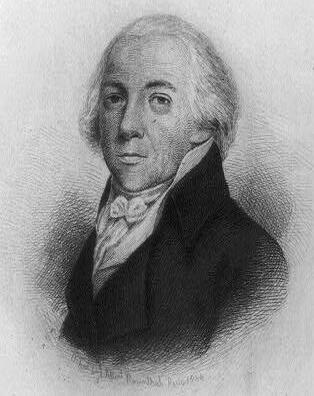
Here you will find contact information for Representative John Beatty, including email address, phone number, and mailing address.
| Name | John Beatty |
| Position | Representative |
| State | New Jersey |
| District | -1 |
| Party | Unknown |
| Status | Former Representative |
| Term Start | December 2, 1793 |
| Term End | March 3, 1795 |
| Terms Served | 1 |
| Born | December 10, 1749 |
| Gender | Male |
| Bioguide ID | B000282 |
About Representative John Beatty
John Beatty was an American Revolutionary War officer, delegate to the Continental Congress, and United States Representative from New Jersey who served in the House of Representatives from 1793 to 1795. Born in 1749, he came of age in the British colonies during the period of rising tension that preceded the American Revolution. Although specific details of his early childhood and family background are not extensively documented in the available sources, his later military and political roles indicate that he emerged from the educated and civically engaged class of colonial New Jersey society.
Beatty’s education, while not fully recorded in surviving accounts, prepared him for both military and public service in an era when formal schooling for future leaders often combined classical learning with practical training in law, commerce, or the ministry. By the time of the Revolutionary crisis, he was sufficiently established to assume responsibility as an officer, suggesting that he had attained a level of education and social standing that enabled him to move readily into leadership roles. His early adult years thus coincided with the transformation of the colonies into an independent republic, and he aligned himself with the Patriot cause.
During the American Revolutionary War, John Beatty served as an officer in the Continental forces, taking an active role in the struggle for independence. His service in the war placed him among the generation of leaders whose military experience underpinned their later political authority. As the conflict progressed, he became known not only for his military duties but also for his capacity to handle public affairs, a reputation that would lead to his involvement in national deliberations. Following the war, his standing as a veteran and officer helped propel him into broader public life at both the state and national levels.
Beatty’s transition from military to political service was marked by his role as a delegate to the Continental Congress, where he participated in the governance of the young nation under the Articles of Confederation. As a delegate, he joined other Revolutionary leaders in addressing the financial, diplomatic, and administrative challenges that confronted the United States in the 1780s. His work in the Continental Congress contributed to the evolving framework of national authority that would eventually be reshaped under the United States Constitution. This experience in early national governance established him as a seasoned public servant from New Jersey.
With the adoption of the Constitution and the establishment of the federal government, John Beatty continued his public career as a New Jersey congressman. He was elected to the United States House of Representatives and served one term in Congress from 1793 to 1795, representing New Jersey during the Third Congress. Although the specific party designation in the surviving record is listed as “Unknown Party,” his service coincided with the formative years of the first American party system, when Federalists and Democratic-Republicans were beginning to crystallize around issues of federal power, finance, and foreign policy. As a member of the House of Representatives, Beatty contributed to the legislative process and participated in debates that helped define the role of the federal government in the early republic.
During his term in Congress, Beatty represented the interests of his New Jersey constituents at a time when the nation was still solidifying its institutions and practices. The years 1793 to 1795 were marked by questions of neutrality in European conflicts, the organization of federal courts and departments, and the ongoing implementation of the Constitution. Within this context, Beatty’s prior experience as a Revolutionary War officer and Continental Congress delegate informed his approach to national issues, and he took part in the democratic process as the new government sought stability and legitimacy at home and abroad.
After leaving Congress in 1795, John Beatty remained a figure identified with New Jersey’s Revolutionary and early national leadership. While detailed records of his later activities are limited in the available sources, his long life, extending until 1826, meant that he witnessed the maturation of the United States from a fragile new republic into a more firmly established nation. John Beatty died in 1826, closing a life that spanned from the colonial era through the Revolution and into the first decades of the nineteenth century, and that encompassed service as an American Revolutionary War officer, delegate to the Continental Congress, and New Jersey congressman in the United States House of Representatives.