Senator John Macpherson Berrien
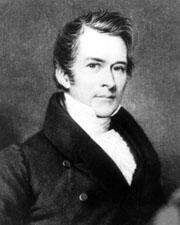
Here you will find contact information for Senator John Macpherson Berrien, including email address, phone number, and mailing address.
| Name | John Macpherson Berrien |
| Position | Senator |
| State | Georgia |
| Party | Whig |
| Status | Former Representative |
| Term Start | December 5, 1825 |
| Term End | March 3, 1853 |
| Terms Served | 3 |
| Born | August 23, 1781 |
| Gender | Male |
| Bioguide ID | B000413 |
About Senator John Macpherson Berrien
John Macpherson Berrien (August 23, 1781 – January 1, 1856) was a United States senator from Georgia, a prominent jurist, and Attorney General of the United States during the presidency of Andrew Jackson. Over the course of three nonconsecutive terms in the Senate between 1825 and 1853, he played a significant role in the legislative debates of his era and was a leading political figure in Georgia and the South.
Berrien was born on August 23, 1781, at Rockingham, his parents’ home in Rocky Hill, New Jersey. He was the son of Major John Berrien and Margaret Macpherson, and the grandson of Judge John Berrien. In 1782, when he was still an infant, his parents moved to Savannah, Georgia. His mother died three years later, leaving him to be raised in a prominent family that was already well connected in legal and public affairs. His early years in Georgia helped shape the regional loyalties and political outlook that would characterize his long public career.
Berrien graduated from the College of New Jersey (now Princeton University) in 1796. After college he read law in Savannah and was admitted to the bar at the age of eighteen. In 1799 he moved to Louisville, then the capital of Georgia, where he began a law practice. His legal abilities quickly brought him to public attention, and he soon emerged as one of the leading young attorneys in the state.
Returning to Savannah, Berrien was elected solicitor of the eastern judicial circuit of Georgia in 1809. The following year, in 1810, he was elected judge of the same circuit, a position he held until his resignation on January 30, 1821. During the War of 1812 he served as captain of the Georgia Hussars, a Savannah volunteer cavalry company, and later held the rank of colonel in the 1st Georgia Cavalry. A leader among Georgia’s Federalists, he supported Federalist presidential candidate Rufus King in the 1816 United States presidential election. He subsequently served in the Georgia Senate from 1822 to 1823, consolidating his reputation as a skilled legislator and advocate of conservative, states’ rights-oriented principles.
Berrien was elected as a Jacksonian Democrat to the United States Senate in 1824 and took his seat on March 4, 1825, succeeding fellow Federalist John Elliott as senator from Georgia. His service in Congress occurred during a significant period in American history, and as a member of the Senate he participated in the democratic process and represented the interests of his constituents in Georgia. In 1824, before entering the Senate, he appeared in the notable Supreme Court case The Antelope, in which he argued against the freedom of enslaved people captured at sea, contending that slavery “lay at the foundation of the Constitution” and that enslaved people “constitute the very foundation of your union.” During the 1820s he was also a member of the Columbian Institute for the Promotion of Arts and Sciences, a prestigious Washington society that included among its members Presidents Andrew Jackson and John Quincy Adams, as well as leading figures from the military, government, and the professions.
On March 9, 1829, Berrien resigned from the Senate to accept appointment as Attorney General of the United States in the Cabinet of President Andrew Jackson. His first major assignment as attorney general was the prosecution of former Treasury Fourth Auditor Tobias Watkins for embezzlement of public funds; Berrien secured a conviction in a widely publicized trial in 1829. In Jackson’s administration he became a prominent defender of states’ rights, notably during the Nullification Crisis. In connection with the so‑called Negro Seamen Acts, which allowed Southern states to detain free Black sailors, he opined that such measures were valid exercises of state police powers and lay beyond the reach of federal authority. His tenure in the Cabinet ended amid the turmoil of the Petticoat affair, a social and political controversy that fractured Jackson’s first Cabinet. Berrien resigned as attorney general on June 22, 1831, following the earlier resignations of Secretary of State Martin Van Buren, Secretary of the Treasury Samuel D. Ingham, and Secretary of the Navy John Branch.
After leaving the Cabinet, Berrien resumed the practice of law in Georgia and remained an influential figure in state and national politics. He was again elected to the United States Senate as a member of the Whig Party, reflecting his shift from Jacksonian Democrat to Whig opposition. He served this second Senate term from March 4, 1841, until May 1845, when he resigned to accept a seat on the Georgia Supreme Court. The Whig Party, however, promptly returned him to the Senate to fill the vacancy created by his own resignation, and he never took his place on the court. Reelected in 1846, he served in the Senate from November 13, 1845, until May 28, 1852, when he resigned for the third time. Across these three terms, from 1825 to 1853, Berrien contributed significantly to the legislative process and became one of the leading Southern voices in the upper chamber. He served as chairman of the Senate Committee on the Judiciary in the 20th, 26th, and 27th Congresses, where he helped shape federal judicial and legal policy.
During his later Senate service, Berrien’s views on sectional issues hardened, and he aligned himself with the short‑lived Southern Rights Party, which opposed the Compromise of 1850 and the Wilmot Proviso. He was a substantial slaveholder: the 1830 U.S. census recorded him as owning 90 enslaved people; by 1840 he held eight enslaved people at his residence in Savannah and an additional 140 in surrounding Chatham County, and in 1850 he owned 143 enslaved people. Beyond elective office, he remained active in civic and intellectual life. In 1839 he was one of the founders of the Georgia Historical Society and became its first president; the Society today preserves a large collection of his papers, including material relating to the Petticoat affair, and annually presents the John Macpherson Berrien Award for lifetime achievement in Georgia history. In 1855 he presided over the American Party (Know-Nothing) convention at Milledgeville, reflecting his late-career association with nativist politics.
John Macpherson Berrien died on January 1, 1856, at his home in Savannah, now known as the John Berrien House, named for his father. He was interred in Laurel Grove Cemetery in Savannah. His legacy is reflected in the places named for him, including Berrien County, Georgia, and Berrien County, Michigan—one of Michigan’s so‑called “Cabinet Counties,” organized during his term as attorney general.