Representative John Anton Blatnik
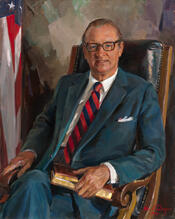
Here you will find contact information for Representative John Anton Blatnik, including email address, phone number, and mailing address.
| Name | John Anton Blatnik |
| Position | Representative |
| State | Minnesota |
| District | 8 |
| Party | Democratic |
| Status | Former Representative |
| Term Start | January 3, 1947 |
| Term End | January 3, 1975 |
| Terms Served | 14 |
| Born | August 17, 1911 |
| Gender | Male |
| Bioguide ID | B000550 |
About Representative John Anton Blatnik
John Anton Blatnik (August 17, 1911 – December 17, 1991) was a United States Congressman from Minnesota who served as a Representative in the United States Congress from 1947 to 1975. A member of the Minnesota Democratic-Farmer-Labor Party (DFL), which is affiliated with the Democratic Party, he represented Minnesota’s 8th Congressional District in the northeastern part of the state for 14 consecutive terms. Over nearly three decades in the House of Representatives, John Anton Blatnik contributed to the legislative process during a significant period in American history, participating in the democratic process and representing the interests of his constituents.
Blatnik was born in Chisholm, Minnesota, to Slovene immigrant parents, growing up in the Iron Range region that would later form the core of his political base. He attended local schools and went on to graduate from Winona State Teachers College (today Winona State University). Following his graduation, he returned to his hometown and worked as a chemistry teacher in Chisholm, gaining firsthand experience with the educational and economic concerns of working families in northern Minnesota.
Blatnik began his political career in state government. From 1940 to 1944, he served in the Minnesota State Senate, where he represented his region during the closing years of the Great Depression and the early years of World War II. In 1942, while still a state senator, he volunteered for service in the United States Army Air Corps, the predecessor to the United States Air Force. During World War II he was assigned to the Office of Strategic Services (OSS), where he served as chief of the OSS mission with Marshal Josip Broz Tito’s Yugoslav partisans for almost a year, working behind enemy lines in support of resistance efforts in the Balkans.
In 1946, running on the newly unified ticket of the Minnesota Democratic-Farmer-Labor Party, Blatnik was elected to Congress from Minnesota’s 8th District. He took his seat in the 80th Congress on January 3, 1947, and was subsequently reelected 13 times without much difficulty. He served in the 80th, 81st, 82nd, 83rd, 84th, 85th, 86th, 87th, 88th, 89th, 90th, 91st, 92nd, and 93rd Congresses, holding office from January 3, 1947, until December 31, 1974. Throughout his tenure, he was identified with the interests of the Iron Range, including mining, transportation, and economic development, and he became known as a diligent and effective legislator.
Blatnik played a notable role in several areas of national policy. He was an early and strong supporter of the Saint Lawrence Seaway and helped develop the original legislation to build it, recognizing its importance for Great Lakes shipping and the industrial economy of his district and the broader Midwest. In the realm of civil rights, he voted for the Civil Rights Act of 1964, aligning himself with the major federal effort to end segregation and discrimination. In 1963, he introduced a bill to make Leif Erikson Day a nationwide observance, reflecting the cultural heritage of many of his constituents; Congress adopted this measure unanimously the following year.
In his later years in the House, Blatnik emerged as a key figure in public works and environmental policy. He served as chairman of the House Public Works Committee—now known as the Committee on Transportation and Infrastructure—during his last two terms in Congress. As chairman, he was instrumental in shaping federal infrastructure and environmental legislation. Most notably, he shepherded the Federal Water Pollution Control Act, better known as the Clean Water Act, to passage in 1972, a landmark law that greatly expanded the federal role in protecting the nation’s waterways from pollution and became a cornerstone of modern environmental policy.
Blatnik’s personal life was rooted in family and his long association with Minnesota and the Washington, D.C., area. In 1955, he married the former Gisela Hager, with whom he had three children. His long-time service in Congress created a close-knit staff, and upon his decision to retire, he endorsed his long-time administrative assistant, Jim Oberstar, to succeed him in representing Minnesota’s 8th District. Oberstar won easily in the 1974 election, ensuring continuity of representation for the region Blatnik had served for so many years.
Blatnik’s contributions were recognized during and after his congressional career. On September 24, 1971, the bridge for Interstate 535 crossing the Superior Bay and the Saint Louis Bay between Wisconsin and Minnesota was renamed the John A. Blatnik Bridge in his honor, commemorating his work on transportation and regional development. After leaving Congress at the end of 1974, he remained a respected figure in public life. John Anton Blatnik died in Forest Heights, Maryland, on December 17, 1991. He was survived by his second wife, the former Evelyn Castiglioni, and by his children, and his papers, including extensive records of his congressional service, were later made available for research at the Minnesota Historical Society.