Representative John Branch
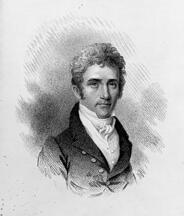
Here you will find contact information for Representative John Branch, including email address, phone number, and mailing address.
| Name | John Branch |
| Position | Representative |
| State | North Carolina |
| District | 2 |
| Party | Jackson |
| Status | Former Representative |
| Term Start | December 1, 1823 |
| Term End | March 3, 1833 |
| Terms Served | 2 |
| Born | November 4, 1782 |
| Gender | Male |
| Bioguide ID | B000763 |
About Representative John Branch
John Branch Jr. (November 4, 1782 – January 4, 1863) was an American politician who served as a Representative from North Carolina in the United States Congress from 1823 to 1833, as a United States Senator, as Secretary of the Navy, as the 19th Governor of North Carolina, and as the sixth and last governor of the Florida Territory. A prominent member of the Jackson Party, later known as the Jacksonian Democrats, he was an influential figure in state and national politics during a formative period in the early nineteenth century.
Branch was born on November 4, 1782, in Halifax County, North Carolina, the son of wealthy landowners. Raised in an environment of relative affluence and local prominence, he received a formal education at the University of North Carolina, where he was a member of the Philanthropic Society, one of the institution’s leading literary and debating organizations. After completing his studies, Branch returned to Halifax County and occupied himself as a planter and civic leader, establishing the social and economic base that underpinned his entry into public life.
Branch’s political career began in North Carolina state government. He served in the North Carolina Senate from 1811 to 1817, gaining experience in legislative affairs and building a reputation as a capable and engaged lawmaker. In 1817 he was elected the 19th Governor of North Carolina, serving until 1820. As governor, he presided over a period of gradual internal development and continued the state’s efforts to improve its institutions and infrastructure. After leaving the governorship, he returned to the North Carolina Senate for further service, consolidating his influence in state politics and aligning himself increasingly with the emerging political movement that would coalesce around Andrew Jackson.
At the national level, Branch represented North Carolina in the United States Senate from 1823 until 1829 and was a strong supporter of Andrew Jackson. During this era, which overlapped with his documented service as a Representative from North Carolina in the United States Congress from 1823 to 1833, he participated actively in the legislative process and represented the interests of his constituents during a significant period in American history. As a member of the Jackson Party, he contributed to debates over federal power, economic policy, and the direction of the young republic, and he was identified with the broader democratic movement that sought to expand political participation among white male citizens.
When Andrew Jackson became President in 1829, he selected Branch as Secretary of the Navy, a post in which Branch sought to modernize and rationalize naval administration. As Secretary, he promoted several reforms in the Navy’s policies and management, many of which were not fully implemented until years later. He reduced the resources devoted to constructing new ships while increasing expenditures on maintaining and repairing existing vessels, aiming to keep the fleet in effective condition. Branch also ordered the frigate USS Potomac to the Far East to punish those responsible for the murder of the crew of a U.S. merchant ship and to promote and protect American commerce in the region, reflecting the growing global reach of U.S. maritime interests.
Branch resigned as Secretary of the Navy in 1831 amid the so‑called Petticoat affair, a social and political controversy centered on the ostracism of Margaret O’Neill Eaton, the wife of Secretary of War John H. Eaton, by a group of Cabinet members and their wives led by Floride Calhoun, the wife of Vice President John C. Calhoun. The dispute contributed to a broader reshuffling of Jackson’s Cabinet, and Branch’s departure marked a turning point in his relationship with the Jackson administration. Later in 1831, he was elected to the U.S. House of Representatives as a Jacksonian, continuing his national legislative service and maintaining his role in the democratic process. He subsequently returned to North Carolina state political offices, where he remained an important figure in the evolving party alignments of the 1830s.
In the mid‑1830s, Branch moved to Leon County, Florida, where he established and lived on his Live Oak Plantation for much of the next decade and a half. His experience and national reputation led President John Tyler in 1844 to appoint him governor of the Florida Territory. As the sixth and last territorial governor, he served until 1845, when Florida adopted a state constitution and elected its first state governor. Branch’s tenure coincided with the final phase of Florida’s transition from territorial status to statehood, and he oversaw the territorial administration during this critical period of institutional and political change.
Branch returned to North Carolina in the early 1850s and spent his later years there, remaining a respected elder statesman. He died on January 4, 1863, and was buried in Elmwood Cemetery in Enfield, North Carolina. Branch married Eliza Fort (1787–1851), with whom he had seven children. His family connections extended into the Confederate leadership during the Civil War era: he was an uncle of Confederate General Lawrence O’Bryan Branch, and his daughter Margaret married Daniel Smith Donelson, a Confederate general and nephew of President Andrew Jackson. His public service and prominence were recognized geographically as well; Branch County, Michigan, and the village of Branch in Branch County were named in his honor, reflecting the national scope of his reputation.