Representative John Bratton
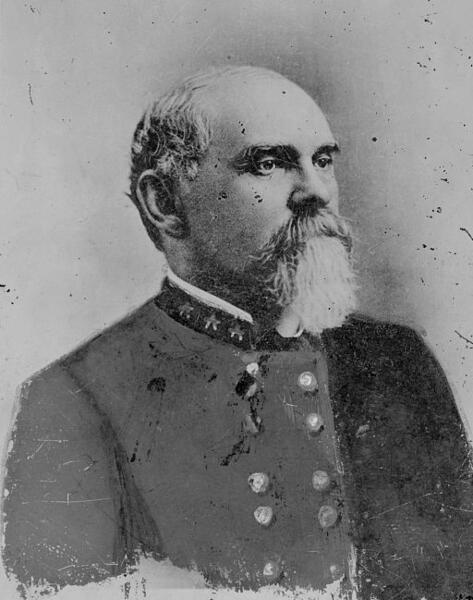
Here you will find contact information for Representative John Bratton, including email address, phone number, and mailing address.
| Name | John Bratton |
| Position | Representative |
| State | South Carolina |
| District | 4 |
| Party | Democratic |
| Status | Former Representative |
| Term Start | December 3, 1883 |
| Term End | March 3, 1885 |
| Terms Served | 1 |
| Born | March 7, 1831 |
| Gender | Male |
| Bioguide ID | B000772 |
About Representative John Bratton
John Bratton (March 7, 1831 – January 12, 1898) was a U.S. Representative from South Carolina and a general in the Confederate States Army during the American Civil War. A member of the Democratic Party, he served one term in the United States Congress from 1883 to 1885, representing the interests of his South Carolina constituents during a significant period in American political and social reconstruction. Over the course of his military and political career, he rose from private to brigadier general in the Confederate Army and later became a national legislator, participating in the federal democratic process in the postwar era.
Bratton was born on March 7, 1831, in Winnsboro, Fairfield District, South Carolina, into a region and society deeply rooted in the antebellum plantation economy. Growing up in the decades preceding the Civil War, he came of age in a slaveholding state whose political and economic life was closely tied to agriculture and states’ rights ideology. These formative surroundings shaped his early outlook and later alignment with the Southern cause during the sectional crisis that culminated in secession and war.
Educated in South Carolina, Bratton pursued the classical and practical training typical of young men of his social standing in the mid-nineteenth century South. His education prepared him for both civic leadership and military service, and he entered adulthood at a time when political tensions between North and South were intensifying. By the late 1850s and early 1860s, as national debates over slavery and federal authority sharpened, he was positioned to take an active role in the conflict that followed.
With the outbreak of the American Civil War, Bratton entered Confederate service as a private and advanced through the ranks to become a brigadier general, a rise that reflected both his leadership abilities and the demands of wartime. Serving in the Army of Northern Virginia, he commanded a regiment and later a brigade, participating in several important engagements in both the Eastern Theater and the Western Theater of the war. His combat record placed him among the numerous Confederate officers later listed in compilations of American Civil War generals, and his service helped define his public reputation in the decades that followed.
After the Confederacy’s defeat and the end of Reconstruction, Bratton emerged as a Democratic political figure in South Carolina, part of the broader movement of white Southern leaders who reasserted control over state and local governments. Drawing on his wartime prominence and local standing, he became involved in public affairs during a period marked by the reconfiguration of Southern politics, the entrenchment of Democratic dominance in the region, and the ongoing struggle over civil and political rights in the postwar South.
Bratton’s national political career culminated in his election as a Democrat to the United States House of Representatives, where he served from 1883 to 1885. During this single term in the Forty-eighth Congress, he contributed to the legislative process and participated in debates over economic policy, federal authority, and the lingering issues of the post–Civil War settlement. As a member of the House of Representatives, he represented South Carolina’s interests in Washington, D.C., at a time when the state was rebuilding its economy and political institutions and when former Confederate states were redefining their relationship with the federal government.
Following his congressional service, Bratton returned to South Carolina, where he remained a figure of local and regional prominence. He continued to be associated with the Democratic Party and with the generation of former Confederate officers who shaped Southern public life in the late nineteenth century. John Bratton died on January 12, 1898, closing a life that spanned the antebellum era, the Civil War, Reconstruction, and the emergence of the post-Reconstruction South.