Representative John Hart Brewer
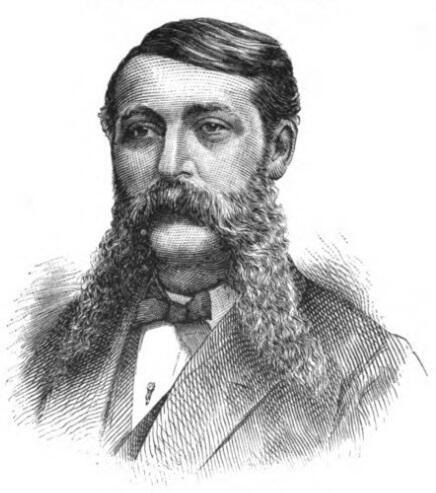
Here you will find contact information for Representative John Hart Brewer, including email address, phone number, and mailing address.
| Name | John Hart Brewer |
| Position | Representative |
| State | New Jersey |
| District | 2 |
| Party | Republican |
| Status | Former Representative |
| Term Start | December 5, 1881 |
| Term End | March 3, 1885 |
| Terms Served | 2 |
| Born | March 29, 1844 |
| Gender | Male |
| Bioguide ID | B000810 |
About Representative John Hart Brewer
John Hart Brewer (March 29, 1844 – December 21, 1900) was an American Republican Party politician and businessman who represented New Jersey’s 2nd congressional district in the United States House of Representatives from 1881 to 1885. A descendant of a prominent Revolutionary-era family, he was the great-great-great grandson of John Hart, a New Jersey delegate to the Continental Congress and signer of the United States Declaration of Independence.
Brewer was born in Hunterdon County, New Jersey, on March 29, 1844. He was educated in New Jersey and New York, attending the Lawrenceville School and Trenton Academy before pursuing further studies in upstate New York. He graduated from the Delaware Literary Institute in Franklin, New York, in 1862, completing his formal education as the Civil War was beginning to reshape the political and economic life of the nation.
In 1865 Brewer moved to Trenton, New Jersey, where he entered the ceramics industry, engaging in the manufacture of pottery. Trenton was emerging as a major center of pottery and ceramic production in the United States, and Brewer became one of the industrial figures associated with that growth. His involvement in the industry extended beyond his own business: by 1879 he had risen to national prominence among his peers and served as president of the National Potters’ Association, reflecting both his business success and his leadership within the trade.
Brewer’s public career began at the state level. He served as a member of the New Jersey General Assembly in 1876, representing his constituency during a period of post–Civil War economic and political adjustment. His legislative service in Trenton provided him with experience in public affairs and helped establish his reputation within the Republican Party in New Jersey, positioning him for higher office.
Building on his state legislative experience and business standing, Brewer was elected as a Republican to the Forty-seventh and Forty-eighth Congresses. He represented New Jersey’s 2nd congressional district in the United States House of Representatives from March 4, 1881, to March 3, 1885. During his two terms in Congress, he served in an era marked by debates over tariffs, industrial regulation, and civil service reform, issues of particular relevance to a representative with a background in manufacturing and commerce. He did not continue in Congress after the expiration of his second term in 1885.
After leaving Congress, Brewer returned to private life in Trenton and resumed the manufacture of pottery, remaining in that line of work until 1895. At that time he shifted his focus to the insurance business, reflecting the broader diversification of professional and commercial opportunities in the late nineteenth century. His experience in both manufacturing and finance contributed to his continued prominence in business circles.
In the later phase of his career, Brewer reentered federal service in an appointed capacity. President William McKinley appointed him assistant appraiser of merchandise at the port of New York City, one of the nation’s most important customs and commercial gateways. Brewer held this position from the time of his appointment until his death, overseeing aspects of the valuation of imported goods at a critical hub of American trade.
John Hart Brewer died in Trenton, New Jersey, on December 21, 1900, while still serving as assistant appraiser at the port of New York. He was interred in Riverview Cemetery in Trenton, New Jersey. His life reflected the intersection of industry and politics in the post–Civil War United States, and his lineage linked him directly to the generation that founded the nation.