Senator John William Bricker
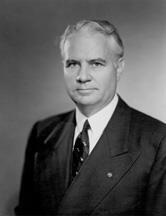
Here you will find contact information for Senator John William Bricker, including email address, phone number, and mailing address.
| Name | John William Bricker |
| Position | Senator |
| State | Ohio |
| Party | Republican |
| Status | Former Representative |
| Term Start | January 3, 1947 |
| Term End | January 3, 1959 |
| Terms Served | 2 |
| Born | September 6, 1893 |
| Gender | Male |
| Bioguide ID | B000820 |
About Senator John William Bricker
John William Bricker (September 6, 1893 – March 22, 1986) was an American politician and attorney who served as a United States senator from Ohio and as the 54th governor of Ohio. A member of the Republican Party, he served in the U.S. Senate from 1947 to 1959 and was the Republican nominee for vice president in 1944. Over the course of a long public career, he became a prominent figure in Ohio and national politics, noted particularly for his opposition to aspects of the New Deal and for his efforts to limit presidential treaty-making powers.
Bricker was born on September 6, 1893, on a farm in Madison County, Ohio. He was raised in a rural environment that emphasized hard work and self-reliance, influences that would later shape his political philosophy and public rhetoric. After attending local schools, he pursued higher education at Ohio State University in Columbus, where he studied law. He completed his legal education at Ohio State and was admitted to the bar, beginning a legal practice in Columbus, Ohio. His early professional life as an attorney provided the foundation for his later roles in public office and helped establish his reputation within the state’s Republican circles.
During World War I, Bricker served in the United States Army. His military service, though not lengthy, coincided with the nation’s broader mobilization and contributed to his identification with themes of patriotism and national service that would recur throughout his political career. After the war, he returned to Ohio and resumed his legal work in Columbus, deepening his involvement in civic and political affairs.
Between 1920 and 1937, Bricker held a series of public offices in Ohio that steadily elevated his profile. He served as a county prosecutor and later rose to statewide office, most notably as Ohio Attorney General. In these roles he developed a reputation as a conservative, law-and-order Republican and a careful legal practitioner. His performance in these positions helped pave the way for his successful campaigns for governor and established him as a leading figure in Ohio’s Republican Party during the interwar and New Deal eras.
Bricker was elected governor of Ohio in 1938 and served three consecutive two-year terms from 1939 to 1945. As governor, he emphasized fiscal conservatism, administrative efficiency, and opposition to what he viewed as federal overreach under President Franklin D. Roosevelt’s New Deal. His tenure coincided with both the later years of the Great Depression and the Second World War, and he dealt with issues ranging from state finances and public works to wartime mobilization and veterans’ concerns. By the early 1940s, his prominence as a conservative Midwestern governor made him a significant figure in national Republican politics.
In 1944, Bricker unsuccessfully sought the Republican presidential nomination but was defeated by New York Governor Thomas E. Dewey. At the Republican National Convention, he was instead nominated for vice president as Dewey’s running mate. In the general election campaign against President Franklin D. Roosevelt and his running mate, Senator Harry S. Truman, Bricker focused much of his critique on Roosevelt’s New Deal programs and on the president’s judicial appointments, arguing that the administration had expanded federal power beyond constitutional limits. The Dewey–Bricker ticket was defeated in the November 1944 election, but Bricker emerged from the race with a national profile as a leading conservative voice within the party.
Bricker won election to the United States Senate from Ohio in 1946 and took office on January 3, 1947. He served two full terms, remaining in the Senate until January 3, 1959. His service in Congress occurred during a significant period in American history, encompassing the early Cold War, the Truman and Eisenhower administrations, and major debates over foreign policy and executive power. As a senator, Bricker participated in the legislative process and represented the interests of his Ohio constituents while also becoming closely associated with efforts to curb presidential authority in international affairs. He introduced the proposed constitutional amendment that came to be known as the Bricker Amendment, which would have created explicit limitations on the scope of the president’s power to enact treaties and executive agreements with foreign governments. The proposal attracted support from some members of both parties and reflected widespread concern over the implications of postwar international commitments, but it ultimately failed to secure passage in Congress. Bricker was re-elected to the Senate in 1952, but in 1958 he was narrowly defeated for a third term by Democrat Stephen M. Young, ending his twelve years of service in the chamber.
Even before leaving public office, Bricker had maintained close ties to the legal profession. In 1945, he founded the Columbus law firm that would later become known as Bricker & Eckler. After his departure from the Senate in 1959, he resumed the full-time practice of law with this firm. Under his name and influence, the firm grew substantially and eventually established additional offices in Cleveland, Cincinnati, Dayton, Marietta, Barnesville, and Lebanon, becoming one of the ten largest law firms in the state of Ohio. The firm maintained an office and conference room in Bricker’s honor in its Columbus headquarters, featuring memorabilia from his political career and underscoring his enduring legacy in both law and public service.
Bricker’s personal life was rooted in Ohio, and he was married to the former Harriet Day. In his later years, he remained a respected elder statesman within Ohio Republican circles and a symbol of mid‑twentieth‑century conservatism. John William Bricker died in Columbus, Ohio, on March 22, 1986, at the age of 92. He was interred at Green Lawn Cemetery in Columbus, closing a life that had spanned from the late nineteenth century through the height of the Cold War and that had included service as governor, senator, national candidate, and prominent attorney.