Representative John Morgan Bright
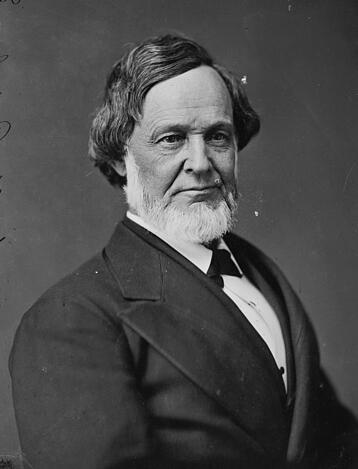
Here you will find contact information for Representative John Morgan Bright, including email address, phone number, and mailing address.
| Name | John Morgan Bright |
| Position | Representative |
| State | Tennessee |
| District | 5 |
| Party | Democratic |
| Status | Former Representative |
| Term Start | March 4, 1871 |
| Term End | March 3, 1881 |
| Terms Served | 5 |
| Born | January 20, 1817 |
| Gender | Male |
| Bioguide ID | B000836 |
About Representative John Morgan Bright
John Morgan Bright (January 20, 1817 – October 2, 1911) was an American politician and lawyer who served as a U.S. Representative from Tennessee. A member of the Democratic Party, he represented his state in the United States House of Representatives for five consecutive terms from 1871 to 1881, participating actively in the legislative process during a significant period in American history and representing the interests of his constituents during the post–Civil War and Reconstruction era.
Born on January 20, 1817, Bright came of age in the early nineteenth century South, a region undergoing rapid political and economic change. Details of his early life, including his family background and childhood environment, are consistent with the experience of many Tennesseans of his generation, who were shaped by the expansion of the frontier and the evolving political culture of the Jacksonian era. These formative years influenced his later commitment to public service and his alignment with the Democratic Party, which was then dominant in much of the South.
Bright pursued an education that prepared him for a professional career, studying the law and gaining admission to the bar. His legal training provided the foundation for his later work as a legislator, equipping him with familiarity in statutory interpretation, civil procedure, and the constitutional questions that would become central in the decades following the Civil War. As a practicing attorney, he developed a reputation for diligence and advocacy, which helped establish his standing in his community and laid the groundwork for his entry into politics.
Before his election to Congress, Bright built a career that combined law and public affairs, reflecting the common nineteenth-century pattern in which local prominence and legal expertise served as a pathway to higher office. His involvement in civic and political matters at the state and local level aligned him with the Democratic Party’s positions in Tennessee, particularly on issues of states’ rights, economic development, and the reorganization of Southern society after the war. By the time he sought national office, he was a recognized figure within his party and among his constituents.
Bright was elected as a Democrat to the United States House of Representatives and served five terms from 1871 to 1881. His decade in Congress coincided with the later years of Reconstruction and the beginning of the post-Reconstruction era, a time marked by intense debates over federal authority, civil rights, economic policy, and the reintegration of the former Confederate states into the political life of the Union. As a member of the House of Representatives, John Morgan Bright contributed to the legislative process, participated in the democratic governance of the nation, and worked to represent the interests and concerns of Tennesseans in a period of political realignment and social change.
During his congressional service, Bright took part in deliberations on measures affecting the South’s recovery, national fiscal policy, and the evolving balance of power between the federal government and the states. His role as a Democratic representative from Tennessee placed him among those Southern lawmakers who sought to influence the terms under which their states reasserted control over local affairs while navigating the broader national agenda of industrial growth and westward expansion. Through committee work, floor debates, and constituency service, he helped shape the legislative record of the 42nd through the 46th Congresses.
After leaving Congress in 1881, Bright returned to private life, resuming pursuits consistent with his legal and political background. In his later years, he remained a respected elder statesman within his community, his long life allowing him to witness the transformation of the United States from the antebellum period through the Civil War and into the early twentieth century. John Morgan Bright died on October 2, 1911, closing a life that spanned nearly a century and included a decade of service in the national legislature during one of the most consequential eras in American history.