Representative John Martin Broomall
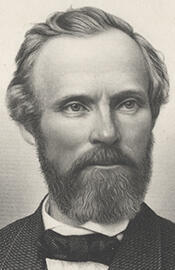
Here you will find contact information for Representative John Martin Broomall, including email address, phone number, and mailing address.
| Name | John Martin Broomall |
| Position | Representative |
| State | Pennsylvania |
| District | 7 |
| Party | Republican |
| Status | Former Representative |
| Term Start | December 7, 1863 |
| Term End | March 3, 1869 |
| Terms Served | 3 |
| Born | January 19, 1816 |
| Gender | Male |
| Bioguide ID | B000889 |
About Representative John Martin Broomall
John Martin Broomall (January 19, 1816 – June 3, 1894) was an American lawyer, jurist, and Republican politician from Pennsylvania who served as a member of the U.S. House of Representatives from Pennsylvania’s 7th congressional district from 1863 to 1869. Over three consecutive terms in Congress, he represented his constituents during the Civil War and early Reconstruction. He also served earlier as a member of the Pennsylvania House of Representatives for the Delaware County district from 1851 to 1852, and later held judicial and civic leadership positions in Delaware County.
Broomall was born in Upper Chichester Township, Pennsylvania, to John and Sarah (Martin) Broomall, and was the twin brother of Elizabeth Martin Broomall. Raised in a Quaker family, he attended Samuel Smith’s Quaker boarding school in Wilmington, Delaware, where he received a rigorous education grounded in the traditions of the Society of Friends. After completing his schooling, he began the study of law under John Bouvier, a prominent Philadelphia lawyer and noted legal scholar. He subsequently continued his legal training under Samuel Edwards, a former U.S. Congressman, and was admitted to the Delaware County bar in 1840. Following his admission, he commenced the practice of law in Chester, Pennsylvania, establishing himself as a capable attorney in the region.
Broomall’s early public career developed alongside his growing legal practice. In 1848 he was appointed deputy attorney general for Delaware County by Pennsylvania Attorney General Cooper, a position that gave him responsibility for representing the Commonwealth in local legal matters. He entered elective office as a member of the Pennsylvania House of Representatives, serving Delaware County from 1851 to 1852. In 1854 he served on the State revenue board, contributing to fiscal and taxation policy. He was an unsuccessful candidate for election to higher office in both 1854 and 1858, but remained active in Republican politics. A committed opponent of slavery, he was chosen as a delegate to the 1860 Republican National Convention, where the party nominated Abraham Lincoln for the presidency. In 1860 he moved to the newly established county seat of Media, Pennsylvania, and continued the practice of law there.
During the Civil War, Broomall combined political activity with direct military service. In 1863 he served briefly in the Union Army as captain of Company C, Twenty-ninth Regiment, Pennsylvania Emergency Militia Infantry, from June 18 to August 1, 1863, a unit raised in response to the Confederate invasion of Pennsylvania. His political fortunes rose the previous year when, in 1862, he was elected as a Republican to the Thirty-eighth Congress, and he was subsequently reelected to the Thirty-ninth and Fortieth Congresses, serving from March 4, 1863, to March 3, 1869. His tenure in the House of Representatives coincided with the Civil War and the early years of Reconstruction, a significant period in American history during which he participated in the legislative process and represented the interests of his Pennsylvania constituents.
In Congress, Broomall was known as an active opponent of slavery and a supporter of constitutional change to secure civil rights. He signed the Thirteenth Amendment to the Constitution, which abolished slavery throughout the United States, and he also advocated for a universal suffrage amendment, reflecting his support for extending the franchise more broadly in the postwar era. During the Fortieth Congress he served as chairman of the United States House Committee on Accounts, overseeing administrative and financial matters of the House. A member of the Republican Party throughout his congressional career, he chose not to be a candidate for renomination in 1868, concluding his service in the national legislature at the end of his third term in 1869.
After leaving Congress, Broomall returned to his legal career and expanded his involvement in public affairs and business. In 1874 he resumed the active practice of law and, together with his law partner William Ward, began investing in real estate in Chester, Pennsylvania, particularly in the south ward, where they were involved in building homes and contributing to the town’s development. That same year he served as a delegate to the Pennsylvania constitutional convention, participating in the revision of the state’s fundamental law. In March 1874, Governor John F. Hartranft appointed him president judge of the newly created Thirty-second Judicial District of Pennsylvania. He served on the bench until January 1875, when he was defeated for election to the position by Thomas J. Clayton.
Beyond law and politics, Broomall played a significant role in the civic and economic life of Delaware County. He was an originator and president of the Delaware County Mutual Insurance Company and served as the first president of the Chester Gas Company, helping to advance local infrastructure and commercial development. Within the legal community, he was elected the first president of the Law Library Association of the Delaware County bar, reflecting his standing among his peers. He also served as president of the Delaware County Institute of Science, demonstrating his interest in scientific and educational endeavors and his engagement with the intellectual life of the region.
Broomall’s personal life was shaped by his Quaker background and family responsibilities. In 1841 he married Elizabeth Booth, with whom he had two children, including Anna Broomall, who became a pioneering woman physician in Pennsylvania. His marriage to a non-Quaker led to his being “read out of meeting” by the Society of Friends, meaning that while he was not shunned and could continue to attend religious meetings, he was no longer permitted to participate in the business affairs of the meeting. He was known to attend the Providence Friends Meetinghouse and to speak there regularly. After Elizabeth’s early death, he married Caroline Larkin in 1852; they had five additional children, three of whom survived to adulthood.
John Martin Broomall died in Philadelphia, Pennsylvania, on June 3, 1894. He was interred in Media Cemetery in Upper Providence Township, Pennsylvania, reflecting his long association with Media and Delaware County. His legacy is commemorated in the community of Broomall, Pennsylvania, which was named in his honor. In 1868, toward the end of his time in Congress, he established a new post office at the crossroads of West Chester Pike and Sproul Road; the post office was named for him, and as the surrounding settlement grew, it retained the name Broomall. His memory was further honored in 1967 when the Media Swimming and Rowing Club was renamed Broomall’s Lake Country Club, underscoring his enduring association with the region he served in law, politics, and civic life.