Representative John Alexander Buchanan
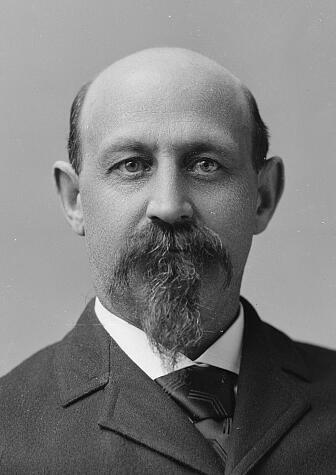
Here you will find contact information for Representative John Alexander Buchanan, including email address, phone number, and mailing address.
| Name | John Alexander Buchanan |
| Position | Representative |
| State | Virginia |
| District | 9 |
| Party | Democratic |
| Status | Former Representative |
| Term Start | December 2, 1889 |
| Term End | March 3, 1893 |
| Terms Served | 2 |
| Born | October 7, 1843 |
| Gender | Male |
| Bioguide ID | B001007 |
About Representative John Alexander Buchanan
John Alexander Buchanan, born on March 4, 1887, in Alberta, Canada, emerged as both a civil engineer and a politician whose career ultimately bridged professional practice and public service. Although details of his early childhood are not extensively documented, his Canadian origins and later engineering work indicate that he came of age during a period of rapid development in Western Canada, when expanding infrastructure and settlement were transforming the region. His early life in Alberta would have exposed him to the challenges of building communities and transportation links across a vast and often difficult landscape, experiences that likely informed his later professional and political pursuits.
Buchanan pursued training and work as a civil engineer, a profession that placed him at the center of the physical development of Alberta. In this capacity, he would have been involved in planning, designing, or overseeing projects essential to the province’s growth, such as roads, bridges, or other public works. His technical background provided him with a practical understanding of the needs of a growing province and the importance of sound infrastructure to economic and social development. This combination of technical expertise and public-minded outlook laid the groundwork for his eventual transition into political life.
In addition to his engineering career, Buchanan entered public service and became active in Canadian politics. His professional reputation and engagement with civic affairs brought him to national attention, and he was eventually selected for appointment to the upper chamber of the federal Parliament. His political alignment placed him within the broader currents of mid‑20th‑century Canadian public life, in which questions of national development, resource management, and regional representation were central concerns.
Separately, there was also a John Alexander Buchanan who served as a Representative from Virginia in the United States Congress from 1889 to 1893. A member of the Democratic Party, this John Alexander Buchanan served two terms in the U.S. House of Representatives, participating in the legislative process during a significant period in American history. As a member of the House, he represented the interests of his Virginia constituents and took part in the democratic process at the federal level. His service in Congress coincided with an era marked by post‑Reconstruction adjustments, industrial expansion, and evolving debates over federal authority and economic policy, and he contributed to the deliberations that shaped national legislation in that context.
Returning to the Canadian statesman, John Alexander Buchanan’s most prominent political role began when he was appointed to the Senate of Canada on January 15, 1959, on the advice of Prime Minister John Diefenbaker. As a senator, he represented Alberta in the federal legislative process, bringing his civil engineering background and regional experience to bear on national issues. His tenure in the Senate spanned a period of considerable change in Canada, including growing attention to Western Canadian interests, resource development, and modernization of federal institutions. He served in the Senate until his retirement on October 2, 1965, at which point he concluded his formal legislative career.
In his later life, Buchanan’s contributions were recognized in a tangible way through the renaming of a geographic feature in his honor. Bear Creek, a tributary flowing into the Peace River in Alberta, was formally renamed Buchanan Creek, commemorating his service to the province and the country. His family connections also extended his political legacy: his stepson, Robert George Mason, was the father of Brian Mason, who would go on to serve as leader of the Alberta New Democratic Party from 2004 to 2014, thereby continuing a tradition of public engagement across generations. John Alexander Buchanan died on May 9, 1976, in Alberta, leaving behind a record of professional achievement in civil engineering, distinguished service in the Senate of Canada, and a name that endures both in the parliamentary record and on the map of his home province.