Representative John Lawson Burnett
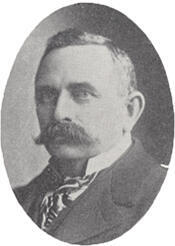
Here you will find contact information for Representative John Lawson Burnett, including email address, phone number, and mailing address.
| Name | John Lawson Burnett |
| Position | Representative |
| State | Alabama |
| District | 7 |
| Party | Democratic |
| Status | Former Representative |
| Term Start | December 4, 1899 |
| Term End | March 3, 1921 |
| Terms Served | 11 |
| Born | January 20, 1854 |
| Gender | Male |
| Bioguide ID | B001121 |
About Representative John Lawson Burnett
John Lawson Burnett (January 20, 1854 – May 13, 1919) was a Democratic U.S. Representative from Alabama who served in the United States Congress from 1899 until his death in 1919, completing eleven consecutive terms in office. His long tenure in the House of Representatives spanned a transformative period in American history, including the Progressive Era and World War I, during which he played a prominent role in shaping federal immigration policy.
Burnett was born in Cedar Bluff, Cherokee County, Alabama, on January 20, 1854. He was educated in the common schools of Cherokee County and continued his studies at the Wesleyan Institute in Cave Spring, Georgia. He later attended the local high school at Gaylesville, Alabama. This early education in small Southern communities provided the foundation for his later professional training and political career, and kept him closely tied to the region he would go on to represent in Congress.
After completing his preparatory schooling, Burnett studied law and enrolled at Vanderbilt University in Nashville, Tennessee, from which he graduated in law. In 1876 he was admitted to the bar in Cherokee County, Alabama, and soon thereafter commenced the practice of law in Gadsden, Alabama. Establishing himself as an attorney in Gadsden, he became an active figure in local affairs and built the professional and political connections that would lead him into state and national public service.
Burnett’s political career began at the state level. He served in the Alabama House of Representatives in 1884, where he gained his first legislative experience. Two years later, in 1886, he was elected to the Alabama State Senate. These positions in the state legislature allowed him to develop a reputation as a capable Democratic lawmaker and to deepen his engagement with issues affecting his constituents in northeastern Alabama, paving the way for his eventual election to the United States Congress.
In national politics, Burnett was elected as a Democrat to the Fifty-sixth Congress and to the ten succeeding Congresses, serving in the U.S. House of Representatives from March 4, 1899, until his death on May 13, 1919. Representing Alabama in the House for eleven terms, he participated actively in the legislative process and consistently advocated for the interests of his district and state. His service in Congress coincided with major national developments, including debates over industrial regulation, social reform, and America’s emerging role on the world stage.
Burnett became particularly influential in the field of immigration policy. He served as chairman of the House Committee on Immigration and Naturalization during the Sixty-second through Sixty-fifth Congresses, a period when Congress enacted increasingly restrictive immigration laws. From 1907 to 1910 he was also a member of the United States Immigration Commission, a federal body charged with studying immigration and recommending policy changes. His views on immigration were strongly restrictionist; in 1907 he publicly described Syrians as “the most undesirable of the undesirable peoples of Asia Minor,” a statement that reflected and helped shape the nativist and exclusionary attitudes that informed early twentieth-century U.S. immigration legislation.
During World War I, Burnett’s congressional record included a notable dissent from the prevailing sentiment in Congress. On April 5, 1917, he was one of the fifty representatives who voted against declaring war on Germany, opposing U.S. entry into World War I. This vote placed him in a minority that questioned or resisted the move toward full-scale American involvement in the European conflict, even as the nation was moving decisively toward war.
John L. Burnett died in Gadsden, Alabama, on May 13, 1919, while still serving in the House of Representatives, making him one of the members of the United States Congress who died in office in the early twentieth century. He was interred in Forest Cemetery in Gadsden. His career, marked by long service, leadership on immigration issues, and a controversial record on both immigration and wartime policy, left a significant imprint on the legislative history of his era.