Representative John Cornelius Butler
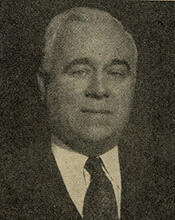
Here you will find contact information for Representative John Cornelius Butler, including email address, phone number, and mailing address.
| Name | John Cornelius Butler |
| Position | Representative |
| State | New York |
| District | 44 |
| Party | Republican |
| Status | Former Representative |
| Term Start | January 3, 1941 |
| Term End | January 3, 1953 |
| Terms Served | 5 |
| Born | July 2, 1887 |
| Gender | Male |
| Bioguide ID | B001179 |
About Representative John Cornelius Butler
John Cornelius Butler (July 2, 1887 – August 13, 1953) was a Republican politician from New York who served as a Representative from New York in the United States Congress from 1941 to 1953. Over the course of five terms in office, he contributed to the legislative process during a significant period in American history, most notably through his service as a member of the United States House of Representatives from 1941 to 1949 and again from 1951 to 1953.
Butler was born in Buffalo, New York, on July 2, 1887. He attended the public schools of Buffalo and graduated from Buffalo’s Central High School. Raised in an industrial city closely tied to Great Lakes commerce, he grew up in an environment shaped by shipping, grain handling, and waterfront industry, influences that would later inform his political positions and his advocacy for the economic interests of his home region.
After completing his education, Butler worked in businesses on Buffalo’s Lake Erie waterfront, primarily as an electrician. He became active in several labor unions, including those representing longshoremen, grain elevator employees, and electrical workers. His experience in these trades and unions gave him firsthand knowledge of the concerns of working men and women in Buffalo’s port and industrial sectors and helped shape his understanding of labor, infrastructure, and economic policy. In 1908, he married Frances T. Pachowiak; the couple had three sons, George, John, and Henry.
Butler entered national politics during World War II. In 1941, he was elected to the U.S. House of Representatives as a Republican in a special election held to fill the vacancy caused by the death of Representative Pius Schwert. He took his seat on April 22, 1941, and served continuously until January 3, 1949. During these years, which encompassed the United States’ involvement in World War II and the immediate postwar period, Butler participated in the democratic process and represented the interests of his Buffalo-area constituents in Congress. A member of the Republican Party, he contributed to the legislative process over four consecutive terms, engaging in debates on wartime mobilization, postwar economic adjustment, and domestic policy. He failed to be reelected in the 1948 election, ending this initial period of congressional service.
Following his defeat in 1948, Butler returned to private life in Buffalo but remained active in local business. He was employed as sales manager for the Fire Equipment Sales Company and as an estimator for the Beacon Electrical Engineering and Construction Company, both based in Buffalo. These positions kept him connected to the city’s commercial and industrial life and maintained his visibility in the community as he considered a return to public office.
In 1950, Butler successfully sought election to Congress once more. He was again elected to the U.S. House of Representatives and served from January 3, 1951, to January 3, 1953, adding a fifth term to his congressional career. His service in Congress during this period occurred in the early years of the Cold War and the Korean War, when issues of national security, defense spending, and economic stability were at the forefront of the legislative agenda. As a member of Congress, Butler was best known for his opposition to the Saint Lawrence Seaway, a major proposed navigation project linking the Great Lakes to the Atlantic Ocean. He believed the seaway would have a detrimental effect on Buffalo’s shipping and cargo handling industries by diverting maritime traffic and undermining the city’s longstanding role as a key transshipment and industrial hub.
Butler’s final term in Congress ended amid changes to New York’s congressional districts following the 1950 census. His district was eliminated in the subsequent reapportionment, and in 1952 he ran instead in the newly drawn 42nd District. In that race he sought the Republican nomination but was defeated by John R. Pillion, bringing his congressional career to a close. After leaving Congress, Butler lived in retirement in Buffalo, remaining in the city where he had been born, worked, and long represented in public office.
John Cornelius Butler died in Buffalo on August 13, 1953. He was buried at Forest Lawn Cemetery in Buffalo. His career reflected the trajectory of a waterfront tradesman and union participant who rose to represent his community in the United States House of Representatives during a transformative era in American economic and political life.