Representative John Levi Cable
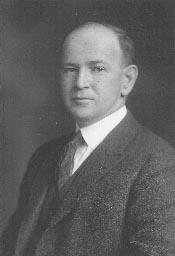
Here you will find contact information for Representative John Levi Cable, including email address, phone number, and mailing address.
| Name | John Levi Cable |
| Position | Representative |
| State | Ohio |
| District | 4 |
| Party | Republican |
| Status | Former Representative |
| Term Start | April 11, 1921 |
| Term End | March 3, 1933 |
| Terms Served | 4 |
| Born | April 15, 1884 |
| Gender | Male |
| Bioguide ID | C000007 |
About Representative John Levi Cable
John Levi Cable (April 15, 1884 – September 15, 1971) was a Republican U.S. Representative from Ohio who served four terms in the United States House of Representatives between 1921 and 1933 and was a great-grandson of early Ohio congressman Joseph Cable. Born in Lima, Allen County, Ohio, he was raised in that community and attended the public schools there. His family background and early life in Lima helped root his later political career in the concerns of his hometown and surrounding region.
Cable pursued higher education at Kenyon College in Gambier, Ohio, where he completed his undergraduate studies. He then moved to Washington, D.C., for legal training, earning an LL.B. in 1906 and a J.D. in 1909 from George Washington University Law School. Admitted to the bar in 1909, he returned to Lima to commence the practice of law. His growing reputation as an attorney led to his election as prosecuting attorney of Allen County, a post he held from 1917 to 1921, during which he gained experience in public service and local administration.
Cable’s legal and prosecutorial work provided the foundation for his entry into national politics. A member of the Republican Party, he was elected to the Sixty-seventh Congress and reelected to the Sixty-eighth Congress, serving from March 4, 1921, to March 3, 1925. His tenure in these early terms coincided with a significant period in American history marked by the aftermath of World War I, the onset of Prohibition, and major debates over economic and social policy. In the Sixty-eighth Congress he served as chairman of the Committee on Alcoholic Liquor Traffic, placing him at the center of legislative oversight and policy discussions related to the enforcement and implications of Prohibition. He chose not to be a candidate for renomination in 1924 and returned to the private practice of law in Lima.
Cable reentered Congress at the end of the 1920s, again elected as a Republican to the Seventy-first Congress and then reelected to the Seventy-second Congress, serving from March 4, 1929, to March 3, 1933. These later terms spanned the onset of the Great Depression, during which he participated in the legislative process and represented the interests of his Ohio constituents amid profound economic turmoil. His service in Congress thus extended across a transformative era in American political and economic life. In 1932 he was an unsuccessful candidate for reelection to the Seventy-third Congress, concluding his congressional career after four terms in the House of Representatives.
Following his departure from Congress, Cable resumed his law practice and continued to hold important public and quasi-public positions. From 1933 to 1937 he served as special assistant to the Ohio Attorney General, contributing his legal expertise to the state’s work during the New Deal era. He later served as special counsel to the Reconstruction Finance Corporation in connection with the liquidation of the Lima First American Bank & Trust Co., a role that reflected the federal government’s efforts to stabilize and reorganize financial institutions in the wake of the Depression. From 1948 to 1960 he was appointed Government appeal agent of Selective Service Board No. 2 in Lima, Ohio, acting as an intermediary and reviewer in matters related to military conscription in the post–World War II and early Cold War period.
Cable was particularly interested in questions of citizenship and nationality, an interest that extended beyond his legislative service and into his work as an author and publisher. He wrote several books on citizenship, and his expertise and advocacy in this area made him the motivating force behind the Cable Act of 1922, a landmark statute that reformed the laws governing the citizenship status of American women who married foreign nationals. His involvement in this legislation underscored his broader engagement with civil status, individual rights, and the evolving relationship between citizens and the federal government.
In his personal life, Cable married Rhea Watson of Lima, Ohio, in 1911, and the couple had two children. He was active in fraternal life as a Freemason, reflecting his participation in civic and community organizations in addition to his professional and political commitments. John Levi Cable died in Lima, Ohio, on September 15, 1971. Although he passed away in his hometown, he is entombed in a niche in St. Boniface Episcopal Church in Sarasota, Florida, symbolizing the geographic breadth of his life’s connections beyond the Ohio community where his career began and to which he repeatedly returned.