Representative John Henry Capstick
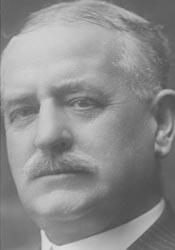
Here you will find contact information for Representative John Henry Capstick, including email address, phone number, and mailing address.
| Name | John Henry Capstick |
| Position | Representative |
| State | New Jersey |
| District | 5 |
| Party | Republican |
| Status | Former Representative |
| Term Start | December 6, 1915 |
| Term End | March 3, 1919 |
| Terms Served | 2 |
| Born | September 2, 1856 |
| Gender | Male |
| Bioguide ID | C000136 |
About Representative John Henry Capstick
John Henry Capstick (September 2, 1856 – March 17, 1918) was an American Republican Party politician who represented New Jersey’s 5th congressional district in the United States House of Representatives from 1915 until his death in 1918. A member of the Republican Party, he served in Congress during a significant period in American history, contributing to the legislative process over two terms in office and participating in the democratic governance of the nation while representing the interests of his New Jersey constituents.
Capstick was born in Lawrence, Essex County, Massachusetts, on September 2, 1856. He attended the local public schools in Lawrence, receiving a basic education in the community where he spent his early childhood. In 1868 he moved with his parents to Providence, Rhode Island, where he continued his schooling and pursued further training at a business college. This business education provided him with the commercial and administrative skills that would later support his career in manufacturing and public service.
In his youth, Capstick also engaged in military service at the state level. He was a member of the Rhode Island Militia in 1870 and 1871, an experience that introduced him to organized public service and discipline at an early age. On May 1, 1880, he married Ella F. Blake, establishing a family life that accompanied his growing professional and civic responsibilities.
Capstick relocated to New Jersey in the early 1880s, moving to Montville, Morris County, in 1883. That same year he entered the field of manufacturing, engaging in the manufacture of textile fabrics. His work in industry placed him within the expanding industrial economy of northern New Jersey. In 1899 he was a co-founder of the Morris County Traction Company, which went on to build street railways in Morris County. This enterprise contributed to the development of local transportation infrastructure and reflected his interest in modernizing and improving public services in the region.
Capstick’s involvement in public affairs in New Jersey grew steadily in the early twentieth century. He served as a member of the New Jersey State sewerage commission from 1905 to 1908, participating in efforts to address public sanitation and environmental concerns at a time when such issues were becoming increasingly important in growing communities. From 1908 to 1914 he was president of the New Jersey State Board of Health, a position that placed him at the forefront of state-level public health policy and administration. In this capacity he helped oversee measures aimed at improving sanitary conditions and protecting the health of New Jersey residents.
Building on his record in state and local affairs, Capstick was elected as a Republican to the Sixty-fourth and Sixty-fifth Congresses. He represented New Jersey’s 5th congressional district in the United States House of Representatives from March 4, 1915, until his death in 1918. His service in Congress thus extended over two terms, during which he participated in the legislative process at the federal level. His tenure coincided with a transformative era in American history, including the period of World War I, when Congress addressed issues of national defense, economic mobilization, and domestic policy. As a member of the House of Representatives, he took part in debates and votes that shaped national policy and worked to represent the interests and concerns of his district in northern New Jersey.
John Henry Capstick died in office in Montville, New Jersey, on March 17, 1918, while still serving in the Sixty-fifth Congress. His death placed him among the members of the United States Congress who died in office in the first half of the twentieth century. He was interred in Greenwood Cemetery in Boonton, New Jersey, closing a career that had spanned business, state public health leadership, and national legislative service.