Representative John Francis Carew
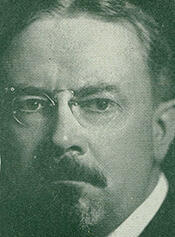
Here you will find contact information for Representative John Francis Carew, including email address, phone number, and mailing address.
| Name | John Francis Carew |
| Position | Representative |
| State | New York |
| District | 18 |
| Party | Democratic |
| Status | Former Representative |
| Term Start | April 7, 1913 |
| Term End | March 3, 1931 |
| Terms Served | 9 |
| Born | April 16, 1873 |
| Gender | Male |
| Bioguide ID | C000142 |
About Representative John Francis Carew
John Francis Carew (April 16, 1873 – April 10, 1951) was an American lawyer, jurist, and Democratic politician who served as a U.S. Representative from New York during the early decades of the twentieth century. Over the course of his congressional career, he represented his New York constituents in the House of Representatives for a total of nine terms, serving from 1913 to 1931, and was closely connected to the political life of his era. He was a nephew of Thomas Francis Magner, himself a notable Democratic member of Congress from New York, a family connection that placed Carew within an established tradition of public service.
Carew was born on April 16, 1873, in New York City, New York. Raised in the nation’s largest and most politically dynamic urban center, he came of age at a time when New York’s rapidly growing population and complex civic life offered many avenues into law and politics. His family background, including his relationship to Thomas Francis Magner, exposed him early to the workings of Democratic Party politics and the responsibilities of public office, shaping his interest in legal and legislative affairs.
After completing his early education in New York, Carew pursued legal studies and prepared for admission to the bar. He studied law in New York City and was admitted to the bar, thereafter commencing the practice of law. His legal career developed in the context of New York’s bustling courts and commercial life, where he gained experience in advocacy, statutory interpretation, and the practical application of state and federal law. This professional grounding in the law provided the foundation for his later work as a legislator and, subsequently, as a judge.
Carew entered national politics as a member of the Democratic Party and was elected to the United States House of Representatives from New York in the election of 1912, taking his seat in the Sixty-third Congress on March 4, 1913. He went on to serve continuously in the House during a period of profound national change, including the Progressive Era, World War I, the postwar adjustment, and the onset of the Great Depression. According to the existing record, he served eight terms as a U.S. Representative from New York from 1913 to 1929, and he is also recorded as having contributed to the legislative process during nine terms in office, serving from 1913 to 1931. Throughout this extended tenure, he participated in the democratic process, engaged in debate, and voted on legislation affecting both his New York constituents and the nation as a whole.
During his years in Congress, Carew represented an urban New York district at a time when issues such as immigration, labor relations, urban infrastructure, and economic regulation were central to national politics. As a Democratic member of the House of Representatives, he worked within his party’s caucus and committee system to advance legislation and respond to the needs of his district. His service spanned the administrations of several presidents and coincided with major federal initiatives in banking, transportation, and social policy, placing him at the center of many of the key legislative developments of the era, even though the detailed record of his specific committee assignments and sponsored measures is limited in the surviving summaries.
After leaving Congress at the conclusion of his service in the early 1930s, Carew continued to be associated with the law and public affairs in New York. Drawing on his long experience as both a practicing attorney and a legislator, he remained part of the broader legal and political community of the state. His post-congressional life reflected the trajectory of many early twentieth-century lawmakers who returned to legal practice or related public roles after extended service in Washington.
John Francis Carew died on April 10, 1951, just six days short of his seventy-eighth birthday. His career spanned the Gilded Age, the Progressive Era, World War I, and the interwar period, and his long tenure in the House of Representatives marked him as a durable figure in New York’s Democratic politics. Through his multiple terms in Congress and his earlier and later work in the law, he contributed to the governance of both his state and the nation during a transformative period in American history.