Representative John Joseph Casey
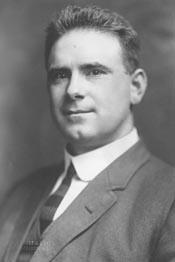
Here you will find contact information for Representative John Joseph Casey, including email address, phone number, and mailing address.
| Name | John Joseph Casey |
| Position | Representative |
| State | Pennsylvania |
| District | 12 |
| Party | Democratic |
| Status | Former Representative |
| Term Start | April 7, 1913 |
| Term End | March 3, 1931 |
| Terms Served | 6 |
| Born | May 26, 1875 |
| Gender | Male |
| Bioguide ID | C000223 |
About Representative John Joseph Casey
John Joseph Casey (May 26, 1875 – May 5, 1929) was a Democratic member of the U.S. House of Representatives from Pennsylvania whose congressional service extended, in six separate terms, from 1913 to 1931. A prominent advocate for organized labor and immigrant workers, he represented a heavily industrial and mining region during a significant period in American history, and became known as one of the most forceful pro-labor voices in Congress.
Casey was born in 1875 in the Georgetown section of Wilkes-Barre Township, Pennsylvania, the oldest son of an Irish immigrant family. His early life was marked by hardship and the dangers of the anthracite coal industry that dominated northeastern Pennsylvania. When he was seven years old, his father, Andrew Casey, was killed in a mining accident in the Wilkes-Barre coal mines. Under prevailing company policy, the oldest son of a deceased miner was required to take his father’s place in the mine if the family was to retain its company-owned home and credit, since mining companies commonly owned workers’ housing and paid wages in company credit rather than cash. In 1883, at the age of eight, Casey began work as a breaker boy in Plymouth, Pennsylvania, picking slate and slag from coal as it emerged from the mine. By the age of twelve he was working as a “mule skinner,” responsible for driving the mules that hauled coal cars in and out of the mines. Family accounts later recalled his realization that the rare, longer noontime breaks he initially welcomed were often used to remove the bodies of dead miners from the work areas, as had been done for his own father. These harrowing experiences in the coal mines of the 1880s and 1890s profoundly shaped his lifelong commitment to improving working conditions and securing collective bargaining rights for laborers.
Without the benefit of extensive formal education, Casey’s schooling came largely from his work and his involvement in the emerging labor movement. In 1900, when United Mine Workers of America president John Mitchell visited the Pennsylvania anthracite region, Casey quickly distinguished himself as an energetic and effective union organizer. His organizing efforts, undertaken at a time when labor organizing was often treated as a criminal offense punishable by imprisonment, brought him into direct conflict with mine operators and their agents. During this period he was frequently pursued by private detective agencies, including the Pinkerton National Detective Agency, and by company-owned police forces that sought to intimidate or arrest labor leaders. His reputation as a determined organizer and his close identification with the struggles of miners and industrial workers laid the groundwork for his entry into electoral politics.
Casey’s political career began in state government. Running on the Labor Party ticket, he was elected to the Pennsylvania House of Representatives and served from 1907 to 1909. His success as a labor-backed candidate in a region increasingly dominated by Republican interests demonstrated both his personal popularity and the strength of the labor vote. In the 1912 general election he won his first race for the U.S. House of Representatives, inaugurating what would become six congressional victories over the next two decades. Although he was closely associated with labor and sometimes ran under labor designations, he served in Congress as a Democrat and was frequently endorsed by one or both major parties because of his strong local support and populist appeal.
In Congress, Casey was first elected as a Democrat to the Sixty-third Congress, which convened on March 4, 1913, and he also served in the Sixty-fourth Congress. He was an unsuccessful candidate for reelection in 1916, but his expertise in labor matters led to important federal appointments during and after World War I. In 1918 he was appointed a member of the advisory council to the United States Secretary of Labor, and during the First World War he served as labor advisor and executive of the labor adjustment division for the Emergency Fleet Corporation of the United States Shipping Board. He returned to elective office when he was again elected to the Sixty-sixth Congress, though he failed to secure reelection in 1920. He won another term in the Sixty-eighth Congress but was again an unsuccessful candidate for reelection in 1924. After this defeat he worked as a business agent for the Plumbers and Steam Fitters’ Union, maintaining his close ties to organized labor. He was later elected to the Seventieth and Seventy-first Congresses and continued in office until his death at Balboa in the Panama Canal Zone. Across these nonconsecutive terms, spanning from 1913 to 1931, he consistently represented Pennsylvania as a Democratic member of the House of Representatives and participated actively in the legislative process on behalf of his constituents.
Throughout his congressional service, Casey was recognized as a staunch champion of organized labor and the poorer classes of society. Drawing on his own background in the mines, he was aggressive in educating both colleagues and the general public about the need for safe working conditions, particularly for miners, and for legal protections for unions and collective bargaining. He also emerged as a vocal opponent of restrictive immigration measures, especially those targeting immigrants from eastern and southern Europe, whom he saw as sharing the struggles of earlier Irish and other immigrant laborers. His populist stance and his willingness to challenge powerful industrial interests often earned him cross-party support and endorsements, even in the early 1920s, when his pro-labor positions made him an outlier in a region then dominated by Republican politics.
Casey’s later years were marked by chronic health problems, particularly high blood pressure, at a time when effective medical treatments for hypertension were not yet available. Seeking rest and improved health, he undertook a Caribbean trip, but his health-related vacation ended abruptly on May 5, 1929, when he suffered a fatal stroke at the age of fifty-three in the Panama Canal Zone at Balboa while still serving in Congress. His death placed him among the members of the United States Congress who died in office during the first half of the twentieth century. His body was returned to Pennsylvania, and his funeral, held nine days later in his hometown of Wilkes-Barre, drew an estimated 20,000 people who lined the streets to pay their respects. He was interred in St. Mary’s Cemetery in Hanover Township, Luzerne County, Pennsylvania. His tombstone bears two inscriptions: “United States Congressman” and, above it, “Labor Man,” a deliberate tribute to the ideals that had guided his public life.
Casey was survived by his wife and nine of his eleven children. Determined that his children would not endure the hardships he had faced, he ensured that none of them ever worked in the mines, and several of his sons went on to attend the United States Military Academy at West Point and the United States Naval Academy at Annapolis. Contemporary accounts describe him as gregarious, with bright red hair and an imposing physical presence; he reportedly stood about six feet five inches tall and weighed roughly 250 pounds. His congressional staff was said to keep an extra desktop on hand because the powerful former miner was reputed to split desks in half with a single blow of his fist when animated in discussion. From his first days as a breaker boy walking under the Susquehanna River between mine shafts to his final years as a nationally known legislator, John Joseph Casey’s life and career remained closely bound to the cause of American labor and the welfare of working people.