Senator John Chandler
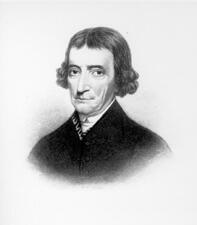
Here you will find contact information for Senator John Chandler, including email address, phone number, and mailing address.
| Name | John Chandler |
| Position | Senator |
| State | Maine |
| Party | Jackson |
| Status | Former Representative |
| Term Start | December 2, 1805 |
| Term End | March 3, 1829 |
| Terms Served | 4 |
| Born | February 1, 1762 |
| Gender | Male |
| Bioguide ID | C000291 |
About Senator John Chandler
John Chandler (February 1, 1762 – September 25, 1841) was an American soldier and politician whose career spanned the Revolutionary era, the War of 1812, and the formative decades of Maine statehood. He was born in Epping, in the Province of New Hampshire, one of 69 children and the third-oldest son of Joseph Chandler (1725–1776), a blacksmith, and his wife Lydia (née Eastman; 1726–1820). His father, who had fought in the French and Indian War and later served as a captain in the Continental Army during the American Revolutionary War, died at Mount Independence in 1776. Chandler’s early youth was marked by limited formal schooling and the economic hardships that followed his father’s death, circumstances that shaped both his self-reliance and his later commitment to public service.
Largely self-educated, Chandler enlisted in the Continental Army at age 15. In the year of his enlistment he was captured by British forces but soon escaped, only to be captured again in May 1779. He escaped a second time in September of that year and made his way back to Epping, where he immediately reenlisted in the Continental Army. During his Revolutionary War service he became the protégé of General Henry Dearborn (1751–1829), who would later serve as the fifth U.S. Secretary of War from 1801 to 1809 and as a senior commander in the War of 1812. On August 27, 1783, shortly after the conclusion of the war, Chandler married Mary Whittier; the couple had seven children—three sons and four daughters—whose upbringing coincided with his gradual rise from tradesman to public figure.
Following the Revolutionary War, Chandler found himself without financial resources. With money borrowed from Henry Dearborn, he purchased a farm near Monmouth in the District of Maine, then still part of Massachusetts, and settled there with his family in 1784. A local schoolmaster assisted him in rapidly improving his education, and Chandler supported his household by working as a blacksmith. Over the years he prospered, acquiring land and standing in the community, and became a respected local leader. His growing prominence led naturally into public life, and he began to assume positions of responsibility in the political institutions of Massachusetts, which then governed the District of Maine.
Chandler’s formal political career began in the Massachusetts Senate, where he served from 1803 to 1805. He was then elected to the United States House of Representatives as a Democratic-Republican, serving from March 4, 1805, to March 3, 1809. This period of national service, which overlapped with the existing record that he served in Congress beginning in 1805, marked his first tenure in the federal legislature. Although the earlier account characterizes him as a member of the Jackson Party and notes four terms in office, contemporary records identify him in this phase as a Democratic-Republican representative rather than a Jacksonian senator. Chandler was not a candidate for renomination in 1808 and, upon leaving the House, was appointed Sheriff of Kennebec County in the same year. On February 27, 1812, he was commissioned a major general of the Massachusetts Militia, reflecting his continued involvement in military affairs alongside his civil responsibilities.
At the outbreak of the War of 1812, President James Madison appointed Chandler to command the 17th Division, a brigade of U.S. Volunteers raised for one year of service, while he still held his militia commission. On July 8, 1812, he resigned his office in the Massachusetts Militia and was commissioned a brigadier general in the United States Army. Initially serving under Major General Henry Dearborn as commander of one of three brigades of the Army of the North, Chandler took part in the Niagara campaign. In early June 1813 he accompanied Brigadier General William H. Winder in an advance into Canada, and at the Battle of Stoney Creek he was wounded and captured, along with Winder, after the two officers inadvertently wandered into British lines, mistaking them for their own. Exchanged in 1814, Chandler subsequently oversaw the defense of the coasts of New Hampshire and Maine, coordinating operations between local militia units and federal forces until the end of the war. After his military service concluded, he returned to state politics as a member of the Massachusetts General Court in 1819.
Chandler played a pivotal role in the transition of the District of Maine to statehood. He served as the first president of the Maine Senate and was a member of the Maine Constitutional Convention, helping to frame the fundamental law of the new state. Upon the admission of Maine to the Union, he was elected to the United States Senate. He began his senatorial service on June 14, 1820, and was reelected in 1823. During this period, which the earlier account summarizes as service from 1805 to 1829 and describes as four terms in office, Chandler in fact served two full terms as a U.S. senator from Maine, aligning in national politics with the Democratic-Republicans and, in the evolving party system of the 1820s, with the Jacksonian movement. As a senator, he participated actively in the legislative process and represented the interests of his Maine constituents during a significant period in American history, when questions of internal improvements, military preparedness, and the balance between federal and state authority were at the forefront of national debate.
While in the Senate, Chandler chaired the Committee on Militia during the 18th through the 20th Congresses, drawing on his extensive military background to shape national defense policy. He was instrumental in securing the establishment of the federal arsenal at Augusta, Maine, and in promoting the construction of the military road from Bangor to Houlton, a strategic route intended to improve communications and defense along the northeastern frontier. His work in these areas reflected both his longstanding concern for regional security and his broader commitment to strengthening the infrastructure of the young republic. Chandler resigned from the Senate on March 3, 1829, concluding his service in Congress, which the earlier account notes as ending in 1829, in order to accept an executive appointment that would keep him closely connected to Maine’s commercial life.
After leaving the Senate, Chandler was appointed collector of customs at Portland, Maine, a position he held from 1829 until 1837. In this capacity he oversaw federal revenue collection and maritime regulation at one of New England’s key ports, further extending his record of public service. He also served as a trustee of Bowdoin College from 1821 to 1838, contributing to the governance of one of Maine’s principal institutions of higher learning. Chandler spent his later years in Augusta, Maine, where he remained a figure of considerable local and state esteem. He died there on September 25, 1841, at the age of 79, and was buried in Mount Pleasant Cemetery. His legacy endures in Maine’s political and military history, and his name is commemorated in places such as Chandler’s Wharf, reflecting the lasting imprint of a life that bridged war, frontier settlement, and the maturation of American democratic institutions.