Representative John Daniel Clardy
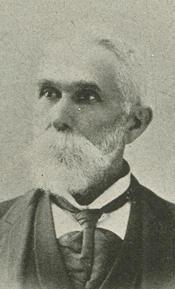
Here you will find contact information for Representative John Daniel Clardy, including email address, phone number, and mailing address.
| Name | John Daniel Clardy |
| Position | Representative |
| State | Kentucky |
| District | 2 |
| Party | Democratic |
| Status | Former Representative |
| Term Start | December 2, 1895 |
| Term End | March 3, 1899 |
| Terms Served | 2 |
| Born | August 30, 1828 |
| Gender | Male |
| Bioguide ID | C000415 |
About Representative John Daniel Clardy
John Daniel Clardy (August 30, 1828 – August 20, 1918) was a Democratic U.S. Representative from Kentucky who served two terms in the United States Congress from 1895 to 1899. His congressional service occurred during a significant period in American history marked by debates over monetary policy, economic reform, and the evolving role of the federal government, and he represented the interests of his constituents in Kentucky’s Second Congressional District in the Fifty-fourth and Fifty-fifth Congresses.
Clardy was born in Smith County, Tennessee, on August 30, 1828, one of six sons and two daughters of John C. and Elizabeth (Cayce) Clardy. In 1831, when he was still a small child, the Clardy family moved to Christian County, Kentucky, where he was raised. He received his early education in the local county schools of Christian County. The family was deeply affected by the Civil War; three of Clardy’s brothers served in the Confederate States Army, and two of them were killed in action. He was brought up in the Baptist faith, in which he would remain active throughout his life.
Pursuing higher education, Clardy matriculated at Georgetown College in Georgetown, Kentucky, and graduated in 1848. Following his graduation, he taught school for one year before turning to the study of medicine. He began his medical training under Dr. Nicholas Thomas of Tennessee, then enrolled at the University of Louisville for one year of formal medical study. He completed his professional education at the University of Pennsylvania School of Medicine, receiving his medical degree in 1851. This combination of classical collegiate training and advanced medical study prepared him for a dual career in medicine and agriculture that would precede his entry into public life.
After earning his medical degree, Clardy returned to Kentucky and commenced the practice of medicine in Long View, Kentucky. After approximately three years, he relocated his medical practice to Blandville, Kentucky, where he remained until the outbreak of the Civil War. During the war years he spent most of his time in New York City as a member of the firm of Bacon, Clardy, and Company, marking a shift from rural medical practice to commercial pursuits in a major urban center. In 1866, following the end of the conflict, he returned to Christian County, Kentucky. There he practiced medicine only irregularly and devoted increasing attention to agricultural pursuits. Over time he purchased several tracts of land in Christian County and developed his estate, known as “Oakland,” into a substantial farm of approximately 550 acres. Alongside his professional and agricultural activities, Clardy was active in his church life, serving as a deacon in the Baptist church in which he had been raised.
In his personal life, Clardy married Ann F. Bacon in 1854. The couple had three children: John F. Clardy, Fleming Cayce Clardy, and Fannie C. (Clardy) Prestridge. His marriage linked him to the Bacon family, with whom he would later be associated in business during his time in New York. His role as a husband, father, landowner, and church deacon anchored him in the social and civic life of Christian County and provided a base of local standing that would support his later political career.
Clardy’s formal political career began in state-level public service. In 1890 he was chosen as a delegate to the Kentucky state constitutional convention, which was convened to revise and modernize the state’s fundamental law. The following year, in 1891, he sought the Democratic nomination for governor of Kentucky. His campaign for the gubernatorial nomination was hampered by the demands of his ongoing duties at the constitutional convention, and he ultimately lost the nomination to John Y. Brown. Despite this setback, he remained a respected figure in Democratic politics. In 1893 he was appointed one of the State commissioners to the World’s Columbian Exposition in Chicago, a role that reflected his prominence in Kentucky public affairs and his engagement with broader economic and cultural developments of the era.
In 1894 Clardy turned his attention to national office. That year he sought and won the Democratic nomination to represent Kentucky’s Second District in the U.S. House of Representatives, defeating Judge Samuel Vance and William McClain for the party’s nomination. In the general election he faced Republican nominee Elijah G. Sebree and prevailed by a majority of about three thousand votes. A member of the Democratic Party, he entered Congress on March 4, 1895, and served in the Fifty-fourth and Fifty-fifth Congresses, holding office until March 3, 1899. During his two terms in the House of Representatives, Clardy participated in the legislative process at a time when issues such as monetary policy, tariffs, and economic regulation were at the forefront of national debate. He advocated for the free coinage of silver, a central Democratic and Populist issue of the 1890s, while insisting that silver should be kept on parity with gold, reflecting his support for bimetallism within a stable monetary framework. He represented the interests of his Kentucky constituents during this contentious period but chose not to seek renomination in 1898 and thus concluded his congressional service after two terms.
After leaving Congress, Clardy retired from public life and returned to his home and agricultural interests near Hopkinsville in Christian County, Kentucky. He lived quietly in retirement on his “Oakland” estate, remaining a figure of local respect as a former physician, farmer, church deacon, and congressman. John Daniel Clardy died at his home near Hopkinsville on August 20, 1918, just ten days short of his ninetieth birthday. He was interred in Clardy’s County Cemetery in Bells, Kentucky, closing a long life that spanned from the antebellum era through the Civil War and Reconstruction to the early twentieth century.