Senator John Hopkins Clarke
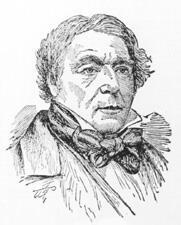
Here you will find contact information for Senator John Hopkins Clarke, including email address, phone number, and mailing address.
| Name | John Hopkins Clarke |
| Position | Senator |
| State | Rhode Island |
| Party | Whig |
| Status | Former Representative |
| Term Start | December 6, 1847 |
| Term End | March 3, 1853 |
| Terms Served | 1 |
| Born | April 1, 1789 |
| Gender | Male |
| Bioguide ID | C000466 |
About Senator John Hopkins Clarke
John Hopkins Clarke (April 1, 1789 – November 23, 1870) was a United States senator from Rhode Island and a member of the Whig Party who served one term in the Senate from 1847 to 1853. He was born in Elizabeth, New Jersey, and in his youth moved to Providence, Rhode Island, where he pursued his early education under a private teacher. His relocation to Providence placed him within the intellectual and commercial center of early nineteenth-century Rhode Island, shaping the professional and political career he would later undertake.
Clarke pursued higher education at Brown University in Providence, from which he graduated in 1809. Following his graduation, he studied law and was admitted to the bar, commencing legal practice in Providence in 1812. His early legal career coincided with the period of the War of 1812, during which New England’s commercial and maritime interests were under strain, providing a complex backdrop for a young attorney. In 1813 he was appointed clerk of the supreme court of Providence County, a position that gave him practical experience in judicial administration and exposed him to the workings of Rhode Island’s legal system.
In addition to his legal and judicial work, Clarke became involved in business and manufacturing, sectors that were increasingly important in Rhode Island’s economy. He was proprietor of a distillery in Cranston until 1824, participating in one of the state’s significant early industrial and commercial enterprises. After leaving the distilling business, he turned to textile manufacturing, becoming a cotton manufacturer in Providence, Pontiac, and Woonsocket. His engagement in cotton manufacturing reflected the broader rise of the textile industry in Rhode Island and New England, and it established him as a figure in the state’s developing industrial economy.
Clarke’s experience in law and manufacturing led naturally into public service at the state level. He was a member of the Rhode Island House of Representatives from 1836 to 1842 and again from 1845 to 1847. His legislative service occurred during a period of political and constitutional change in Rhode Island, including the years surrounding the Dorr Rebellion and the adoption of a new state constitution, when questions of suffrage, representation, and governance were vigorously contested. As a state legislator, he participated in shaping policy for a state transitioning from a mercantile and agrarian base to a more industrialized economy.
In 1847, Clarke advanced to national office when he was elected as a Whig to the United States Senate from Rhode Island. He served one full term, from March 4, 1847, to March 3, 1853. His tenure in the Senate coincided with a significant period in American history marked by the Mexican–American War, the acquisition of new territories, and intensifying national debates over the expansion of slavery and the balance between free and slave states. As a member of the Senate, Clarke contributed to the legislative process and represented the interests of his Rhode Island constituents within the broader framework of Whig Party principles, which generally emphasized congressional authority, economic development, and internal improvements.
After leaving the Senate at the conclusion of his term in 1853, Clarke did not seek further national office but instead resumed his former manufacturing pursuits. He returned to his business interests in Rhode Island’s industrial sector, reflecting the common nineteenth-century pattern of alternating between public service and private enterprise. Remaining in Providence, he lived through the tumultuous years leading up to and including the Civil War, although he did not hold federal office during that later period.
John Hopkins Clarke died in Providence, Rhode Island, on November 23, 1870. He was interred in the North Burial Ground in Providence, a historic cemetery that is the resting place of many of the city’s political, commercial, and civic leaders. His life and career spanned the early national, antebellum, and post–Civil War eras, and he left a record of service as a lawyer, manufacturer, state legislator, and United States senator representing Rhode Island during a formative period in the nation’s political and economic development.