Senator John Ewing Colhoun
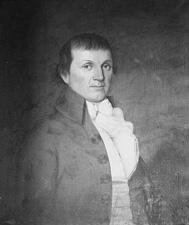
Here you will find contact information for Senator John Ewing Colhoun, including email address, phone number, and mailing address.
| Name | John Ewing Colhoun |
| Position | Senator |
| State | South Carolina |
| Party | Republican |
| Status | Former Representative |
| Term Start | December 7, 1801 |
| Term End | March 3, 1803 |
| Terms Served | 1 |
| Gender | Male |
| Bioguide ID | C000627 |
About Senator John Ewing Colhoun
John Ewing Colhoun (c. 1749 – October 26, 1802) was a United States senator, lawyer, legislator, and planter from South Carolina who served in the United States Senate from 1801 to 1802. A member of the Republican Party, later known as the Democratic-Republican Party, he represented South Carolina in the 7th United States Congress and contributed to the legislative process during one term in office. His service in Congress occurred during a formative period in American political history, as the young republic was consolidating its institutions and debating the structure of the federal judiciary.
Colhoun was born in Staunton, Virginia, to Ulster Scots immigrants from County Donegal, Ireland. His family name, originally Colquhoun, traced its origins to Dumbarton, Dunbartonshire, Scotland, from which his great-great-great-grandfather Robert Colquhoun had migrated to Ulster. Over time, the family name evolved through the forms Calhoun and Colhoun, and John Ewing Colhoun himself appears to have changed the spelling of his surname from Calhoun to Colhoun. He attended common schools in his youth before pursuing higher education. In 1774, he graduated from the College of New Jersey, later renamed Princeton University, an institution that produced a number of early American political leaders.
With the outbreak of the American Revolution, Colhoun entered military service. On August 16, 1775, he joined Captain Charles Drayton’s company of volunteer militia in Charleston, South Carolina, participating in the patriot cause during the war. After the Revolution, he turned to the study of law and, in 1783, was admitted to the bar. He commenced legal practice in Charleston, South Carolina, where he worked primarily in estate settlements and personal injury suits. His legal training and Revolutionary service helped establish his standing in South Carolina society and laid the groundwork for his subsequent political career.
Colhoun’s public service in state government was extensive. He was elected to the South Carolina House of Representatives in 1778 and served continuously in that body until 1800, a span of approximately twenty-two years. During this period, he participated in the reconstruction and governance of South Carolina in the post-Revolutionary era. In 1785, he was elected a member of the state privy council, an advisory body to the executive, and in the same year he was appointed a commissioner of confiscated estates, a position that involved the administration and disposition of properties seized from Loyalists and others during and after the war. Alongside his legal and legislative work, he engaged in farming and gradually expanded his interests as a planter.
Colhoun rose to greater prominence through his marriage and subsequent landholdings. He married Floride Bonneau, a member of a prominent Huguenot family of Charleston and an heiress to extensive plantation property. Through this marriage and his own acquisitions, Colhoun became a substantial planter and eventually owned several plantations across South Carolina. Among these were Santee Plantation in St. Stephen’s Parish; Keowee and Twelve Mile Plantations in the Old Pendleton District, where a slave plot was discovered in 1798; and Pimlico and Bonneau’s Ferry Plantations in St. John’s Parish. Another plantation he owned, whose precise location is unclear, was called Mount Prospect. On these properties he cultivated indigo, rice, oats, and vegetables, raised cattle, and bred horses. By the time of his death, he owned thousands of acres and held 108 enslaved people. His Keowee Plantation, later incorporated into the Old Pendleton Historic District in Pendleton, South Carolina, is listed on the National Register of Historic Places.
In addition to his own career, Colhoun was connected by blood and marriage to several notable figures in South Carolina and national politics. He was a first cousin of Joseph Calhoun, who would later serve in the United States House of Representatives, and a brother-in-law of Revolutionary War officer and congressman Andrew Pickens. John and Floride Bonneau Colhoun had three children: John Ewing Colhoun Jr., who became a planter; Floride Bonneau Colhoun (1792–1866), who married her father’s first cousin John Caldwell Calhoun and later served as Second Lady of the United States beginning in 1825; and James Edward Colhoun (1798–1889), who later changed his surname to Calhoun, became a planter, and served as an officer in the U.S. Navy in the 1820s. These family ties linked Colhoun to the emerging Calhoun political dynasty in South Carolina.
Colhoun’s long tenure in the South Carolina House of Representatives culminated in his election to the United States Senate. In 1801, after twenty-two years of service in the state legislature, he defeated incumbent Senator Jacob Read by a vote of 75 to 73 in the state legislature, securing a seat in the federal Senate. He was elected as a Democratic-Republican, often referred to at the time simply as a Republican, and took his seat in the 7th United States Congress on March 4, 1801. During his time in the Senate, he served on the committee that was instructed to report a modification of the judiciary system of the United States, participating in debates over the structure and powers of the federal courts at a time when the Jeffersonian Republicans were seeking to reshape the judiciary established under the Federalists. As a senator from South Carolina, he represented the interests of his state’s constituents and participated in the broader democratic process of the early republic.
John Ewing Colhoun’s service in the United States Senate was cut short by his death in office. He died on October 26, 1802, in Pendleton, South Carolina, while still serving as a senator. He was interred in the family cemetery in the Old Pendleton District. His death placed him among the early members of Congress who died while in office between 1790 and 1899. Colhoun left behind a legacy as a Revolutionary-era patriot, a long-serving state legislator, a planter of considerable means, and a United States senator whose brief national service coincided with a critical period in the development of the American political and judicial systems.