Representative John Blaisdell Corliss
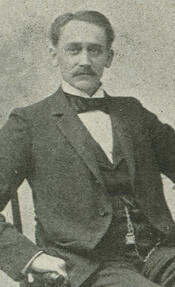
Here you will find contact information for Representative John Blaisdell Corliss, including email address, phone number, and mailing address.
| Name | John Blaisdell Corliss |
| Position | Representative |
| State | Michigan |
| District | 1 |
| Party | Republican |
| Status | Former Representative |
| Term Start | December 2, 1895 |
| Term End | March 3, 1903 |
| Terms Served | 4 |
| Born | June 7, 1851 |
| Gender | Male |
| Bioguide ID | C000779 |
About Representative John Blaisdell Corliss
John Blaisdell Corliss (June 7, 1851 – December 24, 1929) was an American attorney, historian, and Republican politician from Detroit, Michigan, who served four terms as a Representative from Michigan in the United States Congress from 1895 to 1903. Over the course of his public career he held significant local and national offices, including service as Detroit City Attorney for four years and as chairman of a key House committee concerned with federal elections.
Corliss was born in Richford, Franklin County, Vermont, on June 7, 1851, the son of Hezekiah and Lydia (Rounds) Corliss. He attended the common schools of his native state and the Fairfax Preparatory School before pursuing higher education. He graduated from Vermont Methodist University at Montpelier in 1871, receiving a classical education that prepared him for the study of law. He then moved to Washington, D.C., where he enrolled in the law department of Columbian College (now the George Washington University Law School) and completed his legal studies there in 1875.
In 1875, immediately after his graduation from Columbian College, Corliss settled in Detroit, Michigan. He was admitted to the bar that same year and commenced the practice of law in the city. On December 5, 1877, in Barnard, Vermont, he married Elizabeth N. Danforth. The couple had four children: John B. Corliss Jr.; Elizabeth D. Holley, who married Earl Holley; Margaryt M. Holley, who married George M. Holley; and Cullen Danforth Corliss. Elizabeth N. Danforth Corliss died in 1886. In addition to his legal work, Corliss became active in Detroit’s civic and commercial life, serving as president of the Michigan Lubricator Company and of the Shipman Koal Company of Pennsylvania, and as a member of the Detroit Board of Commerce.
Corliss’s formal public career began at the municipal level. He was city attorney of Detroit from 1882 to 1886, during which time he prepared the first complete charter for the city. This charter, which reorganized and clarified the structure of Detroit’s municipal government, was enacted by the Michigan State Legislature in 1884. His work on the charter enhanced his reputation as a skilled lawyer and municipal reformer and helped establish his standing in Republican politics in Michigan.
Parallel to his legal and political activities, Corliss was deeply involved in Masonic affairs. Made a Mason in Union Lodge of Detroit in 1880, he advanced rapidly through the York and Scottish Rite bodies over the next five years, becoming a Chapter and Commandery Mason and attaining the thirty-second degree of the Scottish Rite. From 1887 to 1892 he served as commander-in-chief of the Michigan Sovereign Consistory and was a leading promoter of the consolidation of Masonic organizations in the Valley of Detroit. His efforts contributed to the creation of the Masonic Temple Association and the construction of the Masonic Temple on Lafayette Avenue, for which he had exclusive charge of the legislative and legal work. In 1890 the honorary thirty-third degree was conferred upon him. He served for many years on the board of trustees of the Temple Association, was president of the Old Guard of Detroit Commandery, and was the prime organizer and first president of the Pioneer Association of Michigan Sovereign Consistory. He also organized and served as the first president of the Past Potentates, Moslem Temple, and during 1887 and 1888 was the first active potentate of Moslem Temple, the social branch of the higher degrees of Masonry in Detroit.
Corliss entered national politics in the 1890s. In 1894 he ran as a Republican for the United States House of Representatives from Michigan’s 1st congressional district and defeated the incumbent Democrat, Levi T. Griffin. He was elected to the Fifty-fourth Congress and reelected to the three succeeding Congresses, serving from March 4, 1895, to March 3, 1903. As a member of the House of Representatives during a significant period in American history marked by industrial expansion, the Spanish–American War, and debates over imperial policy and monetary standards, he participated in the legislative process and represented the interests of his Detroit constituents. Corliss served as chairman of the Committee on Election of President, Vice President, and Representatives in the Fifty-fifth, Fifty-sixth, and Fifty-seventh Congresses, giving him a central role in matters relating to federal election procedures and contested elections. A loyal member of the Republican Party, he contributed to the party’s legislative program during his four terms in office. In the 1902 general election he was defeated for reelection by Democrat Alfred Lucking, ending his congressional service.
After leaving Congress in March 1903, Corliss returned to Detroit and reengaged in the practice of law. He became the senior member of the firm of Corliss, Leete & Moody, continuing to be an influential figure in the city’s legal community. On November 17, 1917, he married his second wife, Dorothy Montgomery. His professional activities extended beyond local practice; in 1920 he was chosen a member of the executive committee of the American Bar Association, reflecting his standing in the national legal profession. That same year he issued an authoritative history of the Detroit lodge of the Scottish Rite, detailing the early struggles and eventual establishment of the lodge in Detroit, thus combining his interests as both attorney and historian.
John Blaisdell Corliss died in Detroit on December 24, 1929, at the age of seventy-eight. He was interred in Woodlawn Cemetery in Detroit. His career encompassed service as a municipal officer, business executive, prominent Mason, and four-term Republican member of Congress, and he remained an active participant in the legal and civic life of Detroit until his later years.