Representative John Covode
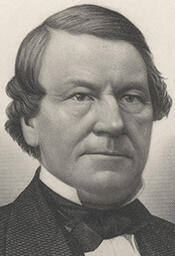
Here you will find contact information for Representative John Covode, including email address, phone number, and mailing address.
| Name | John Covode |
| Position | Representative |
| State | Pennsylvania |
| District | 21 |
| Party | Republican |
| Status | Former Representative |
| Term Start | December 3, 1855 |
| Term End | March 3, 1871 |
| Terms Served | 6 |
| Born | March 17, 1808 |
| Gender | Male |
| Bioguide ID | C000818 |
About Representative John Covode
John Covode (March 17, 1808 – January 11, 1871) was an American businessman, abolitionist politician, and Republican Representative from Pennsylvania who served in the United States Congress during a critical period in American history. Born near West Fairfield, in Fairfield Township, Westmoreland County, Pennsylvania, he grew up in a rural setting in western Pennsylvania in the early decades of the nineteenth century. His early life was shaped by the economic and social conditions of the region, and he entered working life at a young age, gaining practical experience that would later inform both his business ventures and his political career.
Covode’s formal education was limited, as was common for many in his time and region, and he was largely self-taught. He worked in various trades in his youth, including employment in the woolen manufacturing business. Through diligence and practical aptitude, he advanced from wage work into ownership and management, laying the foundation for his later prominence as a businessman. His early exposure to commerce and industry in western Pennsylvania helped him develop a reputation for energy and enterprise, and it positioned him to take advantage of the expanding transportation and industrial networks of the mid-nineteenth century.
Before entering national politics, Covode became a successful businessman, particularly in the fields of manufacturing and transportation. He engaged in the construction and operation of mills and later became involved with the Pennsylvania Railroad and related enterprises, reflecting the broader industrial growth of the state. His business activities brought him into contact with leading figures in regional development and strengthened his standing in his community. At the same time, he became increasingly active in public affairs, aligning himself with the growing antislavery and reform movements that were reshaping the political landscape in the years leading up to the Civil War.
Covode’s political career developed as the national debate over slavery intensified. Initially associated with the Whig Party, he gravitated toward the emerging Republican Party in the 1850s as it coalesced around opposition to the expansion of slavery. A committed abolitionist politician, he brought strong antislavery convictions to his public life and became known for his willingness to challenge entrenched interests. His reputation as a reform-minded businessman and his advocacy for free labor principles helped secure his election to Congress, where he would serve multiple terms and play a visible role in the legislative struggles of the era.
As a member of the United States House of Representatives from Pennsylvania, John Covode served as a Representative from 1855 to 1871, contributing to the legislative process during six terms in office. His service in Congress occurred during a significant period in American history, encompassing the final years of the antebellum era, the Civil War, and the early phase of Reconstruction. In the House of Representatives, he participated in the democratic process and represented the interests of his Pennsylvania constituents while also engaging with the great national questions of union, slavery, and civil rights. He was identified with the Republican Party and supported its efforts to preserve the Union and to reshape the legal and political status of formerly enslaved people in the postwar period.
During his congressional tenure, Covode was particularly noted for his investigative and oversight work. He gained national attention as the driving force behind the so‑called Covode Committee, a House committee established in 1860 to investigate alleged corruption in the administration of President James Buchanan, including matters related to patronage and the influence of the executive branch over legislation. This high-profile inquiry underscored his reputation as a reformer and critic of perceived governmental abuses. Throughout the Civil War, he supported measures to strengthen the Union war effort and backed key Republican initiatives, aligning himself with the party’s more radical elements on questions of slavery and Reconstruction.
Covode’s later years in Congress were devoted to the complex challenges of rebuilding the nation after the Civil War. He supported policies designed to secure the rights of freedmen and to ensure that the outcome of the conflict would be reflected in the political and legal order of the reunited states. His long service, extending from the mid‑1850s through the immediate postwar years, made him a veteran legislator by the time of his final term, and he remained an active participant in debates over reconstruction, economic development, and the role of the federal government in enforcing civil rights.
John Covode died in office on January 11, 1871, in Harrisburg, Pennsylvania, while still serving as a Representative from Pennsylvania. His death brought to a close a public career that had spanned some of the most turbulent years in American history. Remembered as both a businessman and an abolitionist politician, he left a record of sustained engagement in the legislative process over six terms in Congress and a legacy tied to the rise of the Republican Party, the preservation of the Union, and the transformation of the nation in the era of the Civil War and Reconstruction.