Representative John Cradlebaugh
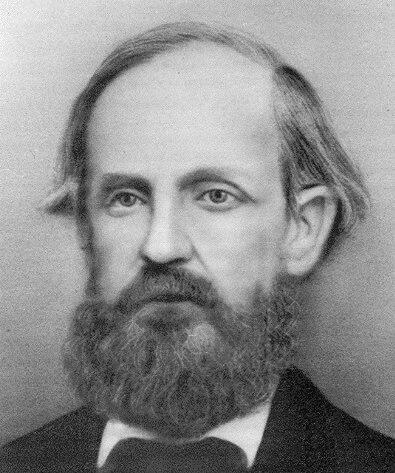
Here you will find contact information for Representative John Cradlebaugh, including email address, phone number, and mailing address.
| Name | John Cradlebaugh |
| Position | Representative |
| State | Nevada |
| District | At-Large |
| Party | Unknown |
| Status | Former Representative |
| Term Start | July 4, 1861 |
| Term End | March 3, 1863 |
| Terms Served | 1 |
| Born | February 22, 1819 |
| Gender | Male |
| Bioguide ID | C000850 |
About Representative John Cradlebaugh
John Cradlebaugh (February 22, 1819 – February 22, 1872) was an American lawyer, jurist, and politician who became the first delegate to the United States House of Representatives from Nevada Territory. He was born in Circleville, Pickaway County, Ohio, where he spent his early years before pursuing legal training and a career in the law. Details of his family background are sparse in the historical record, but his subsequent professional trajectory reflects the pattern of many nineteenth-century lawyers who combined legal practice with political engagement on the expanding American frontier.
Cradlebaugh studied law in Ohio, was admitted to the bar, and began practicing as an attorney. During this period he became active in public affairs and aligned himself with the political currents of the mid-nineteenth century. He established himself professionally in Ohio before accepting federal judicial responsibilities in the West, a move that placed him at the intersection of national policy and territorial development in the years leading up to the Civil War.
Cradlebaugh’s legal and political career advanced significantly when he was appointed an associate justice of the Supreme Court of the Territory of Utah. In that capacity he presided over federal courts in the territory during a turbulent era marked by tension between federal authorities and local leadership. His judicial service in Utah brought him into prominence as a federal official on the frontier and helped position him for later political roles in the neighboring territories as the United States continued to organize and administer its western lands.
With the creation of Nevada Territory in 1861, Cradlebaugh entered territorial politics and was elected as the first delegate to the United States House of Representatives from Nevada Territory. As a member of the Unknown Party representing Nevada, John Cradlebaugh contributed to the legislative process during one term in office. In this non-voting capacity, he served in the House of Representatives during a significant period in American history, participating in the democratic process and representing the interests of his constituents in a territory whose development was closely tied to mining, transportation, and the broader issues of Union preservation during the Civil War era. His tenure reflected the challenges of advocating for a sparsely populated but strategically important region seeking fuller integration into the Union.
After his service in Congress, Cradlebaugh returned to legal and public affairs, remaining identified with the western territories and their evolving political status. While specific details of his later professional activities are limited in surviving records, he continued to be associated with the legal profession and with the civic life of the communities in which he lived, drawing on his experience as both a territorial judge and a congressional delegate.
John Cradlebaugh died on February 22, 1872, his fifty-third birthday. His career spanned a formative period in the history of the American West, from the assertion of federal judicial authority in Utah Territory to the early congressional representation of Nevada Territory. Through his judicial service and his single term as Nevada’s first territorial delegate to the United States House of Representatives, he participated in the legislative and legal processes that shaped the transition of western territories toward statehood and fuller participation in the federal Union.