Representative John Abney Culberson
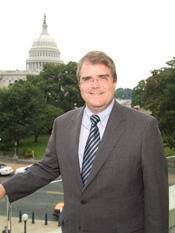
Here you will find contact information for Representative John Abney Culberson, including email address, phone number, and mailing address.
| Name | John Abney Culberson |
| Position | Representative |
| State | Texas |
| District | 7 |
| Party | Republican |
| Status | Former Representative |
| Term Start | January 3, 2001 |
| Term End | January 3, 2019 |
| Terms Served | 9 |
| Born | August 24, 1956 |
| Gender | Male |
| Bioguide ID | C001048 |
About Representative John Abney Culberson
John Abney Culberson (born August 24, 1956) is an American attorney, lobbyist, and Republican politician who represented Texas’s 7th congressional district in the United States House of Representatives from January 3, 2001, to January 3, 2019. Over nine consecutive terms in Congress, he participated in the legislative process during a significant period in American history, representing large portions of western Houston and surrounding Harris County and contributing to the work of the House of Representatives as a member of the Republican Party.
Culberson was born in Houston, Texas, the son of Eleanor (née Abney) and James Vincent Culberson. His family background includes Swedish ancestry through his great-grandmother. He was raised in Houston and attended Lamar High School, a prominent public high school in the city. After completing his secondary education, he enrolled at Southern Methodist University (SMU) in Dallas, where he studied history and graduated with a bachelor’s degree in 1981. He later pursued legal studies at South Texas College of Law in Houston, earning his Juris Doctor in 1989.
Culberson began his political career while still in law school. In 1986 he was elected to the Texas House of Representatives, with his first term beginning in 1987. Serving multiple terms in the state legislature, he represented a district that included much of what would later become the western portion of Texas’s 7th congressional district. During his tenure in the Texas House, he was a member of the Republican Whip team and rose to the position of Minority Whip in 1999 during his final term. Concurrent with his early legislative service, after receiving his law degree he joined the Houston law firm of Lorance and Thompson, where he worked as a civil defense attorney.
When 15-term Republican incumbent Bill Archer announced his retirement from the U.S. House of Representatives, Culberson sought and won the Republican nomination for Texas’s 7th congressional district in 2000. His existing state house district overlapped substantially with the congressional district’s western portion, giving him a strong political base. In the Republican primary, traditionally the decisive contest in this historically heavily Republican district, he finished first and then defeated Peter Wareing in a runoff. In the November 2000 general election he won easily, taking about 75 percent of the vote, and entered the 107th Congress on January 3, 2001. Over the course of his nine terms, he consistently identified himself as a “fiscally conservative ‘Jeffersonian Republican’… committed to Thomas Jefferson’s vision of limited government, individual liberty, and states’ rights.”
During his congressional service, Culberson held key assignments on the House Committee on Appropriations, one of the most influential committees in Congress. Within Appropriations, he served on the Subcommittee on Commerce, Justice, Science, and Related Agencies, eventually becoming its chair, and also served on the Subcommittee on Homeland Security and the Subcommittee on Military Construction, Veterans Affairs, and Related Agencies. He was active in a number of ideological and issue-based caucuses, including the Republican Study Committee, the Tea Party Caucus, the Congressional Constitution Caucus, and the Congressional Caucus on Turkey and Turkish Americans. Throughout his tenure, he was a reliable party-line vote; as of April 2018, he had voted with the Republican Party in 97.6 percent of votes in the 115th Congress and aligned with President Donald Trump’s position in 98.6 percent of recorded votes.
Culberson’s electoral history in the 7th district reflected both the district’s longstanding Republican lean and its gradual political competitiveness. In 2008 he defeated Democratic challenger Michael Peter Skelly, a businessman, with 56 percent of the vote, marking only the second time a Democrat had crossed 40 percent in the district. He faced repeated challenges from Democrat James Cargas, an energy lawyer for the City of Houston, as well as third-party opponents. In the November 4, 2014, general election, after running unopposed in the Republican primary, Culberson again defeated Cargas, who had secured 62.1 percent of the vote in the March 4 Democratic primary. In the 2016 cycle, he defeated James Lloyd and Maria Espinoza in the March 1 Republican primary, receiving 44,202 votes (57.3 percent) to Lloyd’s 19,182 (24.9 percent) and Espinoza’s 13,772 (17.8 percent). In the November 8, 2016, general election, he secured his eighth term with 143,542 votes (56.2 percent) to Cargas’s 111,991 votes (43.8 percent). After Hillary Clinton carried the 7th district in the 2016 presidential election, national Democrats increasingly viewed Culberson as vulnerable in the 2018 midterms.
Culberson also drew attention for his use of emerging technology and social media in congressional advocacy. On August 1, 2008, when the House of Representatives went into summer recess without taking up a pending energy bill, he joined other House Republicans in remaining on the floor to deliver speeches protesting the lack of debate. In response, the Democratic leadership, which controlled the chamber’s services, turned off the microphones and cameras. Culberson used Twitter and the live-streaming service Qik to broadcast events from the floor, offering a real-time account of the proceedings to the public. He later compared this episode to the use of Twitter by dissidents in Iran protesting restrictions on foreign media in June 2009.
In the 2018 election cycle, Culberson defeated Edward Ziegler in the Republican primary with 76 percent of the vote. The Democratic nominee was Lizzie Pannill Fletcher, an attorney from Houston. In the November general election, Fletcher defeated Culberson by a margin of 52.5 percent to 47.5 percent, ending his nine-term tenure in the House. Culberson performed strongly in his longtime base in west Houston and the Memorial area, which he had represented in one capacity or another for more than three decades, but Fletcher won decisively in the portions of southwest Houston added to the district in the 2004 redistricting, as well as in the Bear Creek area. After leaving Congress in January 2019, Culberson transitioned to work as a lobbyist, continuing his involvement in public policy from the private sector.