Representative John Tyler Cutting
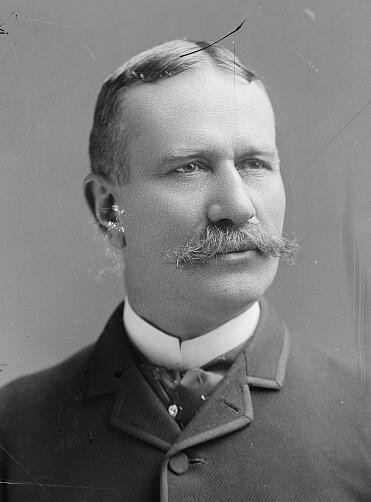
Here you will find contact information for Representative John Tyler Cutting, including email address, phone number, and mailing address.
| Name | John Tyler Cutting |
| Position | Representative |
| State | California |
| District | 4 |
| Party | Republican |
| Status | Former Representative |
| Term Start | December 7, 1891 |
| Term End | March 3, 1893 |
| Terms Served | 1 |
| Born | September 7, 1844 |
| Gender | Male |
| Bioguide ID | C001030 |
About Representative John Tyler Cutting
John Tyler Cutting (September 7, 1844 – November 24, 1911) was an American Civil War veteran, attorney, and politician who served one term as a Republican U.S. Representative from California from 1891 to 1893. His congressional service took place during a significant period in American history marked by post–Civil War reconstruction, industrial expansion, and shifting regional political alignments, and he participated in the legislative and democratic processes on behalf of his constituents.
Cutting was born on September 7, 1844, in New York City. He spent his early years in the East before the outbreak of the American Civil War, coming of age in a nation increasingly divided over slavery and states’ rights. Details of his immediate family background and early schooling are sparse in the public record, but his subsequent military and professional career indicate that he received sufficient education to enter both military service and, later, the legal profession.
During the American Civil War, Cutting served in the Union Army, an experience that shaped his public identity as a Civil War veteran. Like many men of his generation who saw service in the conflict, his wartime experience helped establish his credentials for later public life and aligned him with the Unionist and, ultimately, Republican political tradition that dominated national politics in the decades following the war. His status as a veteran would remain an important part of his public profile throughout his later career.
After the war, Cutting pursued a civilian career that led him westward to California, where he established himself professionally and entered public life. Trained in the law, he became active in legal and civic affairs at a time when California was rapidly developing economically and politically. His move into politics reflected both his professional standing and his alignment with the Republican Party, which was then consolidating its influence in many western states.
Cutting was elected as a Republican to the Fifty-second Congress and served as a Representative from California from March 4, 1891, to March 3, 1893. During his single term in the U.S. House of Representatives, he contributed to the legislative process and participated in debates and votes on issues affecting both California and the nation. As a member of the House, he represented the interests of his constituents during a period of economic growth, regional development in the West, and ongoing national discussion over tariffs, monetary policy, and federal regulation. His service in Congress exemplified the role of a late nineteenth-century western representative working within the broader framework of Republican Party priorities.
After leaving Congress at the close of his term in 1893, Cutting returned to private life. He resumed his professional pursuits and remained part of the generation of former Civil War soldiers who had transitioned into legal, business, and political roles in the postwar United States. Though he did not return to national office, his congressional service and earlier military record placed him among those veterans who briefly carried their wartime experience into the national legislature.
John Tyler Cutting died on November 24, 1911. His life spanned from the antebellum era through the Civil War and into the early twentieth century, reflecting the trajectory of many Americans who fought to preserve the Union and later participated in the political and civic development of a rapidly changing nation.