Representative John Dalzell
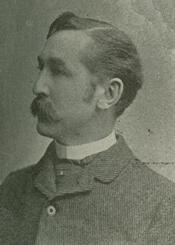
Here you will find contact information for Representative John Dalzell, including email address, phone number, and mailing address.
| Name | John Dalzell |
| Position | Representative |
| State | Pennsylvania |
| District | 30 |
| Party | Republican |
| Status | Former Representative |
| Term Start | December 5, 1887 |
| Term End | March 3, 1913 |
| Terms Served | 13 |
| Born | April 19, 1845 |
| Gender | Male |
| Bioguide ID | D000016 |
About Representative John Dalzell
John Dalzell (April 19, 1845 – October 2, 1927) was an American attorney and Republican politician who represented his hometown of Pittsburgh, Pennsylvania, in the United States House of Representatives from 1887 to 1913. Over the course of thirteen consecutive terms, he became one of the most experienced members of the House, ultimately serving as its longest continuously serving member, or “Father of the House,” after the death of Representative Henry H. Bingham in March 1912. A prominent figure in national politics during the late nineteenth and early twentieth centuries, he was known for his close working relationships with Presidents Benjamin Harrison, William McKinley, and Theodore Roosevelt, and for his persistent opposition to machine politics within his own party.
Dalzell was born in New York City on April 19, 1845, the son of Samuel Dalzell and Mary McDonnell Dalzell. In 1847, when he was still a small child, his family moved to Pittsburgh, Pennsylvania, the city that would remain the center of his professional and political life. He attended the common schools of Pittsburgh and then enrolled at the Western University of Pennsylvania (later the University of Pittsburgh). He subsequently entered Yale College, where he was a member of the Scroll and Key society, and graduated with the class of 1865.
After completing his undergraduate education, Dalzell studied law and was admitted to the bar in 1867. He commenced legal practice in Pittsburgh, building a reputation as a capable attorney. On September 26, 1867, he married Mary Louise Duff, daughter of Peter Duff (February 16, 1802 – September 13, 1869), the founder of Duff’s Business Institute in Pittsburgh (later Everest Institute). The couple had five children: William Sage Dalzell (August 17, 1868 – September 27, 1934), Elizabeth Marter Dalzell (March 4, 1870 – 1961), Samuel Dalzell (April 22, 1873 – 1958), John Dalzell Jr. (August 1, 1875 – May 6, 1877), and Robert Duff Dalzell (August 27, 1882 – November 30, 1967). Their daughter Elizabeth later married Colonel George M. Dunn, one of Theodore Roosevelt’s Rough Riders.
Dalzell’s entry into politics came through the Republican Party in Pennsylvania, where his legal skills and reformist inclinations quickly attracted attention. Encouraged by friends—and, according to later accounts, strongly supported and “aided and abetted” by his politically astute wife—he stood for Congress in 1886. He was elected as a Republican to the Fiftieth Congress and to the twelve succeeding Congresses, serving continuously from March 4, 1887, to March 3, 1913, as a Representative from Pennsylvania. Throughout this period he represented Pittsburgh and its surrounding district, participating actively in the legislative process during a transformative era marked by industrial expansion, tariff debates, and the rise of the Progressive movement.
Within the House of Representatives, Dalzell rose to positions of considerable influence. He served as chairman of the House Committee on Pacific Railroads during the Fifty-first Congress and later as chairman of the powerful House Committee on Rules during the Sixty-first Congress. From 1891 to 1913 he was a member of the House Committee on Ways and Means, where he played a central role in shaping tariff legislation and other key economic measures. His prominence in the House led him to seek higher office: he ran for the United States Senate from Pennsylvania in 1898 and again in 1900, but on both occasions he was defeated by the entrenched party boss and incumbent senator Matthew S. Quay. In 1902 he was an unsuccessful candidate for Speaker of the House, losing to Joseph G. Cannon, whose leadership and style he would later frequently challenge.
Dalzell’s congressional career was marked by his opposition to machine politics and his willingness to confront powerful figures within his own party. He became a constant critic of the Republican political machines led by Matthew Quay in Pennsylvania and Joseph Gurney Cannon in the House. At the same time, he developed a reputation as a trusted intermediary between the executive and legislative branches. During the presidency of Theodore Roosevelt, Dalzell acted as an informal envoy between Roosevelt and Congress, helping to bridge what was often a combative relationship. Contemporary accounts, including those cited in Kathryn E. Beazell’s study of his congressional career, describe him as one of Roosevelt’s most frequent and welcome visitors at the White House. Because many members of Congress avoided Roosevelt’s outspoken style, petitioners seeking presidential favor often turned to Dalzell to intercede. Roosevelt himself reportedly asked on one occasion, “Is Mr. Dalzell in favor of this improvement?” and, upon being told that he was, replied, “Gentlemen, I’ll say this to you. I would do more for John Dalzell than I would for any other man on the floor of the House.”
Beyond his legislative duties, Dalzell was active in national Republican politics and in the broader civic life of the federal government. He served as a delegate to the Republican National Conventions in 1904 and 1908, participating in the nomination of the party’s presidential candidates during a period of internal debate over progressivism and conservatism. From 1906 to 1913 he was a Regent of the Smithsonian Institution, contributing to the governance of one of the nation’s leading scientific and cultural organizations. His long tenure in Congress, his committee leadership, and his national party roles made him a significant figure in the Republican establishment, even as he continued to oppose certain manifestations of party bossism.
Dalzell’s public life was closely intertwined with that of his wife, Mary Louise Duff Dalzell, who became a prominent hostess and an influential, if unofficial, political actor in Washington. Although women did not yet have the right to vote, she played a notable role in managing the political and social demands placed on her husband. As described in genealogical and family histories, she relieved him of many constituent burdens, discreetly arranged campaign contacts, and supervised the detailed work of reelection efforts that many members of Congress found onerous. Her death in 1909 was described as having “broken the mainspring of his political existence,” and it coincided with the waning of his congressional career. In 1912, after more than two decades in office and shortly after he had become “Father of the House,” he was defeated for renomination and left Congress at the expiration of his term in March 1913.
Following his departure from Congress, Dalzell retired from active political life and remained in Washington, D.C., for several years. In 1925 he moved to Altadena, California, to live in the home of his youngest surviving son, Samuel Dalzell. He died there on October 2, 1927, at the age of eighty-two. His body was returned to Pittsburgh, where he was buried in Allegheny Cemetery, closing a life that had been closely bound to the city he represented and to the national legislative institutions in which he served for more than a quarter of a century.