Representative John Joseph Delaney
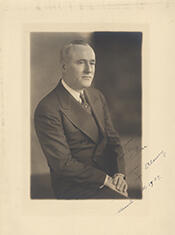
Here you will find contact information for Representative John Joseph Delaney, including email address, phone number, and mailing address.
| Name | John Joseph Delaney |
| Position | Representative |
| State | New York |
| District | 7 |
| Party | Democratic |
| Status | Former Representative |
| Term Start | April 2, 1917 |
| Term End | January 3, 1949 |
| Terms Served | 10 |
| Born | August 21, 1878 |
| Gender | Male |
| Bioguide ID | D000212 |
About Representative John Joseph Delaney
John Joseph Delaney (August 21, 1878 – November 18, 1948) was an American lawyer and Democratic politician who served as a United States Representative from New York for ten terms between 1918 and 1919 and from 1931 to 1948. Over the course of his long tenure in the House of Representatives, he represented the interests of his New York constituents during a period marked by World War I, the Great Depression, World War II, and the early postwar era. He was elected to an eleventh term in 1948 but died shortly after the election, before he could begin that new term.
Delaney was born on August 21, 1878. Details of his early life, including his family background and upbringing, are not extensively documented in the surviving public record, but his subsequent professional path indicates that he pursued a course of study that prepared him for the legal profession and for public service. Growing up in the late nineteenth century, he came of age at a time when New York was rapidly expanding in population and political influence, conditions that would later shape his legal and political career.
Delaney studied law and entered the legal profession, establishing himself as an attorney prior to his entry into national politics. His work as a lawyer provided him with experience in statutory interpretation, advocacy, and public affairs, skills that would prove essential in his later legislative career. As an American lawyer in New York, he was positioned within one of the nation’s most active legal and commercial centers, which exposed him to the complex economic and social issues that would later come before Congress.
Delaney’s congressional service began during World War I. He was first elected as a Democrat to the United States House of Representatives and served from 1918 to 1919, participating in the legislative process at a time when the nation was concluding its wartime mobilization and beginning to address the challenges of demobilization and postwar adjustment. After this initial period in Congress, he left the House but remained active in public and political life in New York, maintaining his ties to the Democratic Party and to the issues affecting his constituents.
He returned to Congress in 1931, at the outset of the Great Depression, and served continuously in the House of Representatives from 1931 to 1948. During these years he was reelected multiple times, ultimately serving ten terms in total. As a Democratic member of the House, Delaney contributed to the legislative process during the New Deal era, World War II, and the immediate postwar period, participating in debates and votes on economic recovery, social welfare, wartime measures, and the restructuring of the postwar international order. Throughout this time, he represented New York in the House, engaging in the democratic process and advocating for the needs and interests of his constituents in a rapidly changing national and global environment.
Delaney’s long service in Congress extended over three major historical eras—World War I, the interwar years and Great Depression, and World War II and its aftermath—giving him a sustained role in shaping federal policy across several decades. In 1948 he stood again for reelection and was chosen by the voters of his district for an eleventh term, underscoring the continued confidence his constituents placed in his representation. However, he did not live to take his seat for that new term.
John Joseph Delaney died on November 18, 1948, shortly after his election to the House for what would have been his eleventh term. His death brought to a close more than three decades of intermittent but substantial service in the national legislature. Remembered as an American lawyer and Democratic representative from New York, his career reflected both the opportunities and the responsibilities of congressional service during some of the most consequential years in modern American history.