Representative John Dow
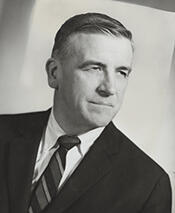
Here you will find contact information for Representative John Dow, including email address, phone number, and mailing address.
| Name | John Dow |
| Position | Representative |
| State | New York |
| District | 27 |
| Party | Democratic |
| Status | Former Representative |
| Term Start | January 4, 1965 |
| Term End | January 3, 1973 |
| Terms Served | 3 |
| Born | May 6, 1905 |
| Gender | Male |
| Bioguide ID | D000462 |
About Representative John Dow
John Goodchild Dow (May 6, 1905 – March 11, 2003) was an American business executive, government administrator, and Democratic politician from New York. He was most notable for his three terms of service as a member of the United States House of Representatives, representing New York from 1965 to 1969 and from 1971 to 1973, during a significant period in American political history marked by the Vietnam War and major domestic change.
Dow was born on May 6, 1905, in New York City, the son of Elizabeth (Goodchild) Dow and Joy Wheeler Dow, an architect, artist, and author. He was raised in New Jersey and in Kennebunkport, Maine, environments that combined exposure to both urban and coastal New England life. He attended Brown University before transferring to Harvard University, where he completed a Bachelor of Arts degree in government in 1927. Demonstrating an early and sustained interest in public affairs and political institutions, he later pursued graduate study and received a Master of Arts degree in political science from Columbia University in 1937.
Following his graduation from Harvard, Dow embarked on a long career in the private sector. From 1929 to 1964 he worked as a business executive and consultant, specializing in strategic planning and systems analysis for large corporations. His work in this field reflected his analytical training and interest in organizational efficiency, and it provided him with extensive experience in complex problem-solving and long-range planning. In addition to his corporate work, Dow became involved in local public administration; from 1950 to 1964 he served as director of civil defense in Grand View, New York, where he was responsible for local preparedness and emergency planning during the Cold War era. From 1964 to 1965 he was chairman of Grand View’s zoning board of appeals, further deepening his engagement with local governance and regulatory issues.
Active in politics as a Democrat, Dow sought elective office several times before entering Congress. He ran unsuccessfully for the New York State Senate in 1954 and for the New York State Assembly in 1956, and he was an unsuccessful candidate for Town Supervisor of Orangetown, New York, in 1963. These early campaigns helped establish his profile within the Democratic Party and his local community, setting the stage for his later congressional career.
Dow was elected to the United States House of Representatives in 1964 as a Democrat from New York, defeating 18-year Republican incumbent Katharine St. George. He served in Congress from January 3, 1965, to January 3, 1969, and again from January 3, 1971, to January 3, 1973, for a total of three terms in office. His service in Congress occurred during a significant period in American history, marked by the escalation of the Vietnam War and major social and political upheaval. As a member of the House of Representatives, John Goodchild Dow participated in the democratic process, contributed to the legislative work of the chamber, and represented the interests of his constituents. He was described as an early opponent of the Vietnam War, aligning himself with the emerging antiwar sentiment within the Democratic Party. In 1968 he served as a delegate to the Democratic National Convention, further underscoring his active role in national party affairs.
Dow’s tenure in Congress was interrupted by electoral defeats that reflected the shifting political landscape of his district. He unsuccessfully ran for re-election to the House in 1968, losing to Republican Martin B. McKneally. From 1968 to 1970 he remained in Washington, working on the staff of the U.S. House of Representatives, which allowed him to continue participating in legislative affairs and policy development. In 1970 he returned to electoral politics and defeated McKneally, regaining his seat and serving a second period in Congress from January 3, 1971, until January 3, 1973. Following the 1970 United States Census and subsequent redistricting, Dow was placed into New York’s 26th congressional district. In the 1972 election he ran in the new district but lost his re-election bid to Republican Benjamin A. Gilman, bringing his congressional service to a close.
After leaving Congress, Dow remained active in public service and political life. He was assistant director of New York State’s Comprehensive Employment and Training Act (CETA) program from 1976 to 1982, working on employment and job-training initiatives during a period of economic transition. In 1980 he founded Americans Against Nuclear War, reflecting his continuing engagement with issues of national security, peace, and arms control. He continued to seek a return to Congress, running unsuccessfully for a House seat in 1974, 1982, and 1990, efforts that underscored his long-standing commitment to public office and Democratic Party principles.
In addition to his public and political career, Dow pursued a range of personal and artistic interests. In 1930 he married Harriet Dow of Maine (1906–2001), with whom he had four children: Thomas, Timothy, Diantha, and Sophia. He and his wife were active in the antiques trade and were regular participants in antique shows throughout the northeastern United States. Dow was also a landscape painter, and his works were exhibited at the Edward Hopper House in Nyack, New York, as well as in other galleries, reflecting a lifelong engagement with the arts alongside his political and professional endeavors.
John Goodchild Dow died in Suffern, New York, on March 11, 2003. Later that year, in recognition of his public service and his role as a representative of the region, the post office in Tappan, New York, was named the John G. Dow Post Office Building.