Senator John A. Durkin
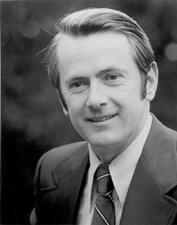
Here you will find contact information for Senator John A. Durkin, including email address, phone number, and mailing address.
| Name | John A. Durkin |
| Position | Senator |
| State | New Hampshire |
| Party | Democratic |
| Status | Former Representative |
| Term Start | September 18, 1975 |
| Term End | January 3, 1981 |
| Terms Served | 3 |
| Born | March 29, 1936 |
| Gender | Male |
| Bioguide ID | D000574 |
About Senator John A. Durkin
John Anthony Durkin (March 29, 1936 – October 16, 2012) was an American politician and attorney who served as a Democratic United States Senator from New Hampshire from 1975 until 1980. Over the course of one term in the Senate, he contributed to the legislative process during a significant period in American history, representing the interests of his New Hampshire constituents and playing a visible role in several high-profile policy debates and one of the most contested Senate elections in modern times.
Durkin was born in Brookfield, Massachusetts, on March 29, 1936, the youngest of four children. He graduated from St. John’s High School in 1954. He later recalled that his parents had told him that the highest callings in life were to become a priest or an honest politician, and he chose the path of politics. At the age of 18, he held his first elective office as Moderator of the Brookfield Town Meeting, an early indication of his interest in public service and local governance.
Durkin attended the College of the Holy Cross in Worcester, Massachusetts, graduating in 1959. Through the U.S. Navy Reserve Officers’ Training Corps (ROTC) program, he received a commission in the United States Navy as an ensign upon graduation. He served on active duty in the Navy from 1959 to 1961, attaining the rank of lieutenant (junior grade). After completing his military service, Durkin enrolled at Georgetown University Law Center in Washington, D.C., where he earned his J.D. degree in 1965. He was admitted to the bar and began practicing law in New Hampshire, establishing the legal foundation for his subsequent career in public office.
Durkin entered state government in New Hampshire as an Assistant State Attorney General, serving from 1966 to 1968. He then became the state’s Insurance Commissioner, a position he held from 1968 to 1973. In that role he gained substantial name recognition throughout New Hampshire, frequently making headlines for his efforts to regulate the insurance industry and for his reputation as a vigorous advocate for consumers in disputes with insurance companies. His work in these posts helped build the public profile and reform-minded image that would support his later bid for the United States Senate.
In 1974, Durkin secured the Democratic nomination for the U.S. Senate seat being vacated by retiring Republican Senator Norris Cotton, who had served for 20 years. The general election on November 5, 1974, against Republican Congressman Louis Wyman produced one of the closest and most protracted Senate election disputes in U.S. history. Initial returns showed Durkin losing by 355 votes, prompting him to request a recount, which reversed the outcome and gave him a 10-vote margin. Governor Meldrim Thomson certified Durkin as the winner, but Wyman sought a second recount, which then showed Wyman ahead by two votes. Senator Cotton resigned on December 31, 1974, and Governor Thomson appointed Wyman to serve the remaining days of the term ending January 3, 1975, a customary move intended to give the apparent incoming senator an advantage in seniority. Durkin appealed the disputed election to the United States Senate, which under the Constitution is the final judge of its own elections.
The Senate Rules Committee initially deadlocked on whether to seat Wyman for the 1975–1981 term and referred the matter to the full Senate. On January 14, 1975, the Senate sent the dispute back to the Rules Committee, which again returned it to the full Senate, identifying 35 specific points of contention involving roughly 3,000 questionable ballots. The Senate remained unable to break the deadlock on any of the disputed points, and after seven months and six unsuccessful attempts by Democratic senators to seat Durkin, the controversy drew intense media attention in New Hampshire and beyond. In August 1975, Wyman proposed that the matter be resolved by a new special election. Durkin, who had initially resisted that idea, ultimately agreed—later recalling that his eight-year-old daughter’s observation that “they can’t make their mind up about anything” helped persuade him. On August 8, 1975, the Senate declared the seat vacant pending the special election, and Governor Thomson again appointed Norris Cotton as a caretaker senator. In the special election held on September 16, 1975, Durkin decisively defeated Wyman by more than 27,000 votes, winning approximately 54 percent to Wyman’s 43 percent, and he took his seat as U.S. Senator from New Hampshire.
During his Senate service, Durkin sat on the Senate Veterans’ Affairs Committee and other assignments, and he participated actively in the legislative process at a time of post–Vietnam War adjustment and growing concern over energy and environmental policy. For the first four years of his term, he served alongside fellow Democrat Thomas J. McIntyre, marking the first time since before the Civil War that New Hampshire was represented in the Senate by two Democrats simultaneously. Durkin authored a successful amendment to the 1976 Veterans Affairs Authorization Act that extended GI Bill educational benefits to veterans of the recently concluded Vietnam War, significantly expanding support for that generation of servicemembers. He also focused on energy independence and the development of alternative energy sources, and he worked to preserve federal lands in Alaska for future generations. As a key Senate supporter of what became the Alaska National Interest Lands Conservation Act, enacted in 1980, Durkin coordinated closely with staff of Secretary of the Interior Cecil D. Andrus and played an important role in securing passage of the landmark conservation legislation.
Durkin’s legislative interests extended to federal oversight and political reform. He called for a Senate investigation into the International Brotherhood of Teamsters’ pension fund and its alleged ties to organized crime, reflecting his concern with corruption and misuse of workers’ retirement assets. He also introduced an amendment to the Federal Election Campaign Act that would have provided public financing of congressional campaigns by granting free television and radio time, postage, and telephone service to all bona fide candidates, an effort aimed at reducing the influence of money in politics and broadening access to electoral competition. In 1976, when the United States Coast Guard sought to assert federal jurisdiction over two major New Hampshire lakes—Lake Winnisquam and Lake Winnipesaukee—on the grounds that they were navigable via the Merrimack River to the Atlantic Ocean, Durkin led a successful congressional effort to block the move. He argued that New Hampshire’s state government provided more effective oversight of those waterways and that the loss of boat registration fee revenue would significantly harm the state.
In 1980, Durkin sought re-election but was defeated by Republican Warren Rudman, a former New Hampshire Attorney General. Demonstrating an awareness of Senate customs and the importance of seniority, Durkin resigned six days before the official end of his term so that Rudman could be appointed early and thereby gain a seniority advantage over other senators elected that year. After leaving the Senate, Durkin resumed the practice of law and resided in Manchester, New Hampshire. He remained active in politics and public affairs and, in 1990, sought New Hampshire’s other Senate seat, but he was defeated by Republican Congressman Bob Smith.
In his later years, Durkin lived at the New Hampshire Veterans Home, where he contended with various health problems. He died on October 16, 2012, at Franklin Regional Hospital in Franklin, New Hampshire, at the age of 76. He was survived by his three children—John, Andrea, and Sheilagh—and was interred with military honors at Arlington National Cemetery, reflecting both his service in the United States Navy and his tenure as a United States Senator.