Representative John Wilbur Dwight
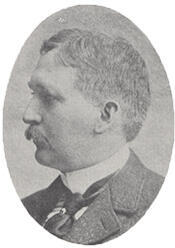
Here you will find contact information for Representative John Wilbur Dwight, including email address, phone number, and mailing address.
| Name | John Wilbur Dwight |
| Position | Representative |
| State | New York |
| District | 30 |
| Party | Republican |
| Status | Former Representative |
| Term Start | December 2, 1901 |
| Term End | March 3, 1913 |
| Terms Served | 6 |
| Born | May 24, 1859 |
| Gender | Male |
| Bioguide ID | D000581 |
About Representative John Wilbur Dwight
John Wilbur Dwight (May 24, 1859 – January 28, 1928) was an American lawyer, businessman, and Republican politician who represented New York in the United States House of Representatives from 1901 to 1913. Over the course of six consecutive terms in Congress, he played an active role in the legislative process and rose to key leadership positions, serving as House majority whip from 1909 to 1911 and House minority whip from 1911 to 1913.
Dwight was born on May 24, 1859, in Dryden, Tompkins County, New York. He was a member of the prominent New England Dwight family. His father, Jeremiah Wilbur Dwight (1819–1885), was a well-known politician and businessman in New York, and his mother was Rebecca Anne Cady. Growing up in a family engaged in public affairs and commerce, Dwight was exposed early to both political life and business enterprise, influences that would shape his later career in law, politics, and railroad administration.
Dwight received his early education in the public schools of Dryden and pursued further study at local academies. He studied law in New York, was admitted to the bar, and began practicing as an attorney. In addition to his legal work, he engaged in business activities, following the example of his father’s involvement in commercial ventures. His professional standing and family background helped establish him as a figure of local prominence in upstate New York, positioning him for entry into elective office.
Dwight’s congressional career began with his election as a Republican to the Fifty-seventh Congress. He took his seat on March 4, 1901, representing a New York district in the U.S. House of Representatives, and was subsequently reelected to the Fifty-eighth, Fifty-ninth, Sixtieth, Sixty-first, and Sixty-second Congresses, serving continuously until March 3, 1913. During these six terms, he represented the interests of his constituents during a transformative period in American history marked by rapid industrialization, the Progressive Era, and expanding federal responsibilities. As a member of the House of Representatives, Dwight participated in debates and votes on issues of national importance, contributing to the legislative process as part of the Republican majority and later minority.
Within the House, Dwight advanced into the Republican leadership. From 1909 to 1911, during the Sixty-first Congress, he served as House majority whip, responsible for helping to marshal party support for legislation and maintain discipline within the Republican ranks. Following the shift in party control after the 1910 elections, he became House minority whip from 1911 to 1913, continuing to play a central role in organizing his party’s legislative strategy from the opposition. His tenure in these positions placed him among the key Republican leaders in the House during the later years of the Theodore Roosevelt and William Howard Taft administrations.
Dwight chose not to seek renomination in 1912 and concluded his congressional service on March 3, 1913. After retiring from Congress, he remained in Washington, D.C., where he continued an active professional life. In 1913 he became president of the Virginia Blue Ridge Railway, a regional railroad enterprise, and held that position from 1913 until his death in 1928. In this capacity he oversaw the management and development of the line, reflecting his longstanding interest in business and infrastructure and extending his influence from the political to the corporate sphere.
John Wilbur Dwight continued to reside in Washington, D.C., during his later years while directing the affairs of the Virginia Blue Ridge Railway. He died there on January 28, 1928. A lifelong Republican, his career spanned law, business, and national politics, and included more than a decade in the House of Representatives and service in both majority and minority leadership roles during a significant era in the evolution of the United States Congress.